

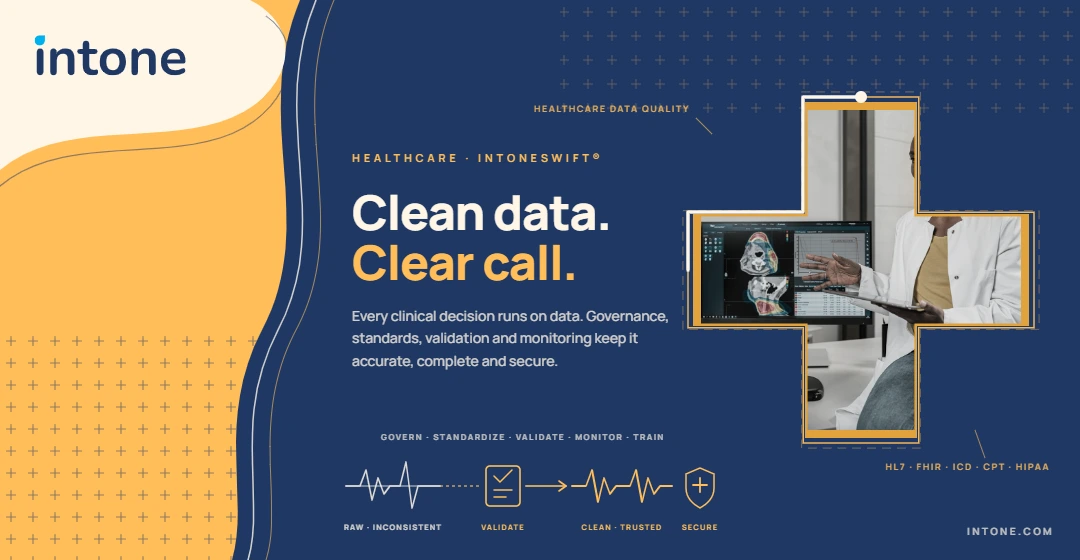
Learn how data quality management in healthcare improves data accuracy, governance, security, decision-making, and patient outcomes.
Data quality management in healthcare involves establishing processes and controls to ensure healthcare data is accurate, complete, consistent, timely, secure, and fit for its intended purpose. Effective data quality management includes data governance, standardization, validation, monitoring, integration, and staff awareness.
Healthcare organizations increasingly rely on data to support clinical decisions, operational processes, research, financial management, and patient care. Medical records, diagnostic information, claims data, laboratory results, patient-generated information, and other healthcare data must be accurate and accessible for organizations to use it effectively.
However, simply collecting large amounts of information does not guarantee useful results. Poor-quality data can lead to inaccurate analysis, inefficient processes, compliance concerns, and potentially negative effects on patient care.
This makes data quality management in healthcare an important organizational priority. Healthcare organizations need processes that help ensure information remains accurate, complete, consistent, secure, and available throughout its lifecycle.
The sensitivity of healthcare information also makes privacy and security essential. Organizations must balance the need to make data accessible for legitimate business and clinical purposes with the need to protect sensitive patient information.
The Significance of Data Quality in Healthcare
Data quality directly affects how healthcare organizations use information to make decisions and deliver services.
For healthcare providers, inaccurate or incomplete medical information can affect diagnoses, treatment decisions, patient records, reporting, and other critical activities. Errors introduced during data collection, entry, transcription, transformation, or processing can also propagate into downstream systems.
High-quality information, by contrast, provides a stronger foundation for evidence-based decision-making and operational improvement.
Data Quality and Patient Outcomes
Accurate healthcare data can contribute to better patient outcomes by giving clinicians and healthcare organizations more reliable information.
For example, complete and accurate patient records can help healthcare professionals understand relevant medical history, identify patterns, and make more informed decisions.
The importance of accurate information extends beyond direct patient care. Healthcare organizations also use data for resource planning, research, quality improvement, financial management, and population health initiatives.
Consequently, maintaining data quality should be considered an ongoing organizational responsibility rather than a one-time cleanup exercise.
Key Components of Data Quality Management
Effective data quality management requires a coordinated framework covering how information is created, stored, processed, integrated, monitored, and used.
The following components provide a foundation for maintaining reliable healthcare data.
Data Governance
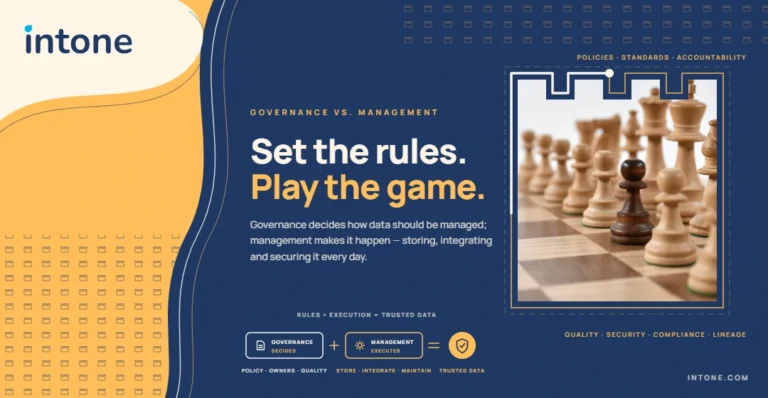
Strong data governance establishes the policies, responsibilities, standards, and processes used to manage information throughout its lifecycle.
A governance framework can define:
- Data ownership and accountability
- Data stewardship responsibilities
- Data quality standards
- Access and usage policies
- Data security requirements
- Retention and lifecycle practices
- Procedures for resolving data-quality issues
Clear governance helps organizations establish accountability for the quality of their information. Rather than treating data quality as the responsibility of one department, organizations can establish shared expectations across clinical, operational, technology, and administrative teams.
Data Standardization
Healthcare organizations often collect information from many systems using different formats, terminology, codes, and classifications.
Data standardization establishes consistent formats and definitions so information can be exchanged and interpreted more reliably.
Standards such as HL7 and FHIR (Fast Healthcare Interoperability Resources) support the structured exchange of healthcare information between different systems. Coding systems such as ICD and CPT also help establish consistency in how diagnoses, procedures, and other clinical information are represented.
Standardization becomes particularly important when organizations integrate information from legacy applications or external systems. Without common definitions and formats, data may be difficult to compare, combine, or analyze.
A structured standardization process can therefore improve interoperability and create a stronger foundation for downstream analytics.
Data Validation and Verification
Data validation and verification help organizations identify information that does not meet established quality requirements.
Validation processes can check whether information follows expected formats, values, ranges, or relationships. Verification can involve comparing information against trusted sources or established requirements.
Healthcare organizations can use techniques such as:
- Data integrity checks
- Consistency checks
- Outlier analysis
- Data profiling
- Duplicate detection
- Cross-referencing
- Automated validation
Automation can make these processes more scalable. Instead of relying entirely on manual reviews, organizations can use technology to identify potential quality issues closer to when they occur.
Data Quality Monitoring and Reporting
Maintaining data quality requires ongoing monitoring.
Organizations can establish key performance indicators (KPIs) for dimensions such as accuracy, completeness, consistency, timeliness, and validity.
Dashboards and reporting tools can help stakeholders identify trends, monitor performance, and prioritize corrective actions.
Continuous monitoring can also help organizations detect anomalies before data-quality problems become widespread.
This approach allows healthcare organizations to move from reactive data cleanup toward proactive data quality management.
Staff Training and Awareness
Technology alone cannot guarantee high-quality data. Employees who create, enter, modify, or use information also play an important role.
Healthcare staff should understand why accurate information matters and how their actions affect downstream systems and processes.
Training can address topics such as data-entry standards, documentation requirements, privacy, security, and organizational data policies.
Creating a culture that values data quality encourages employees to treat accurate information as a shared responsibility.
Data Integration and Data Quality
Modern healthcare environments depend on information moving between multiple applications and systems.
Data integration allows organizations to connect information from different sources, but integration also introduces additional opportunities for errors if data is transformed or mapped incorrectly.
Maintaining Quality Across Systems
Healthcare organizations should consider data quality at every stage of an integration process.
Data should be validated before it enters a target system, transformations should follow established rules, and organizations should maintain visibility into how information changes as it moves between systems.
Data lineage can also help organizations understand where information originated, how it was transformed, and where it is ultimately used.
Maintaining this visibility is especially valuable when organizations manage complex environments containing numerous applications and data sources.
Data Quality, Governance, and Security
Healthcare data is highly sensitive, making security an essential component of data quality management.
Organizations must ensure that information is not only accurate and accessible but also protected from unauthorized access or inappropriate use.
Addressing Security Topics
Relevant security topics include access controls, authentication, encryption, monitoring, data protection, and appropriate handling of sensitive information.
Strong governance can establish who is authorized to access particular information and under what circumstances.
Data-quality initiatives should therefore be aligned with privacy and security requirements rather than operating independently from them.
Data Quality and Healthcare Analytics
Healthcare organizations increasingly use analytics to transform large volumes of information into actionable insights.
Big data analytics can help organizations identify trends and relationships across large and diverse datasets. However, the usefulness of analytical results depends heavily on the quality of the underlying information.
Predictive Analytics
Predictive analytics can help healthcare organizations identify potential patterns and outcomes based on historical and current information.
For example, organizations may use analytical models to identify trends in patient populations, operational performance, or resource utilization.
Poor-quality input data can reduce the reliability of these analyses. Improving data quality therefore creates a stronger foundation for analytics and more informed business decisions.
Supporting Business Decisions
Reliable healthcare data can support decisions across clinical operations, administration, finance, research, and strategic planning.
When decision-makers have access to accurate and timely information, they can better understand current conditions and evaluate potential courses of action.
The relationship between data quality and decision-making makes data management relevant not only to IT teams but also to organizational leadership.
Future Trends in Data Quality Management in Healthcare
The future of data quality management in healthcare will increasingly involve automation, advanced analytics, interoperability, and emerging technologies.
Healthcare organizations are generating information from electronic health records, connected devices, wearables, patient portals, applications, and other sources.
As these data sources expand, organizations will need scalable approaches for validating, integrating, securing, and monitoring information.
AI, Analytics, and Data Quality
Machine learning and predictive analytics can help organizations identify potential quality issues and patterns that may be difficult to detect through manual analysis.
Organizations may also use advanced analytics to identify anomalies, predict potential data problems, and prioritize remediation efforts.
Patient-Generated Data
Patient-generated information and wearable devices are creating additional sources of health information.
Integrating these sources can provide a broader view of an individual’s health, but organizations must also consider consistency, accuracy, privacy, and interoperability when incorporating this information into existing systems.
The Growing Importance of Interoperability
As healthcare becomes increasingly interconnected, organizations need systems that can exchange information consistently.
Improving interoperability can help reduce data silos and make relevant information available across appropriate healthcare environments.
Practical Insights for Improving Healthcare Data Quality
Healthcare organizations can take several practical steps to strengthen their data quality programs.
1. Establish clear ownership. Assign responsibility for important datasets and define who is accountable for maintaining quality.
2. Define measurable standards. Establish clear expectations for accuracy, completeness, consistency, validity, and timeliness.
3. Standardize information. Use consistent definitions, formats, and coding practices across systems where appropriate.
4. Automate validation. Use technology to identify errors and inconsistencies before they affect downstream processes.
5. Monitor data continuously. Track quality metrics and investigate emerging issues rather than waiting for periodic reviews.
6. Train employees. Ensure staff understand the importance of accurate data and the standards they are expected to follow.
7. Protect sensitive information. Integrate privacy and security controls into the overall data management strategy.
8. Review data integrations. Monitor how information is transformed and transferred between applications.
These practices can help organizations establish a sustainable approach to effective data quality management.
Intone Insights: Why Choose IntoneSwift®?
The key components of data quality management—including governance, standardization, validation, monitoring, and staff training—work together to establish a reliable foundation for healthcare information.
Organizations managing complex healthcare environments also need technology capable of connecting disparate systems and handling information efficiently.
IntoneSwift® is designed to support organizations with data integration, data processing, data lineage, encryption, and monitoring capabilities.
Its capabilities include:
- Knowledge graph for data integrations
- 1,000+ data, application, and device connectors
- A graphical no-code/low-code platform
- Distributed in-memory operations designed to improve data operations
- Attribute-level lineage across data integration maps
- Data encryption at every stage
- Centralized password and connection management
- Real-time, streaming, and batch processing of data
- Support for heterogeneous data source combinations
- Real-time monitoring and updates
These capabilities can help healthcare organizations connect data sources, improve visibility, support data operations, and establish more consistent data management processes.
For additional information, see Intone’s related resource, Key Components of Data Quality Management in Healthcare.
Contact Intone to learn more about IntoneSwift® and improving data quality across complex healthcare data environments.
Key Takeaways
- Data quality management in healthcare is essential for maintaining accurate, reliable, and usable information.
- Data governance establishes ownership, standards, policies, and accountability.
- Data standardization helps healthcare organizations exchange and interpret information consistently.
- Data validation and verification can identify errors before they affect downstream processes.
- Continuous monitoring helps organizations identify emerging data-quality issues.
- Data integration should include appropriate validation and quality controls.
- Strong security practices are essential when managing sensitive healthcare data.
- Big data analytics and predictive analytics depend on reliable underlying information.
- Staff training is an important component of sustainable data quality management.
- IntoneSwift® supports data integration, lineage, encryption, processing, and monitoring for complex data environments.
FAQ’s
Data quality management in healthcare is the process of maintaining the accuracy, completeness, consistency, validity, timeliness, and security of healthcare data throughout its lifecycle.
High-quality data supports better decision-making, efficient operations, reliable analytics, regulatory compliance, and improved patient outcomes.
Key components include:
- Data governance
- Standardization
- Validation and verification
- Monitoring and reporting
- Data integration
- Staff training and awareness
Data governance establishes ownership, responsibilities, standards, policies, and processes for managing information. It creates accountability and provides a framework for maintaining consistent data-quality practices.
Data integration connects information from different systems. Without appropriate validation and standardization, integration can introduce inconsistencies. Proper integration practices help maintain reliable information across connected systems.
Predictive analytics can help organizations identify patterns and potential outcomes using historical and current information. Its effectiveness depends on having reliable, accurate, and appropriately structured data.
Organizations can improve data quality by establishing governance, standardizing information, validating data, monitoring quality metrics, improving integrations, training staff, and implementing appropriate security controls.
IntoneSwift® provides data integration, processing, lineage, encryption, and monitoring capabilities that can help organizations manage and connect complex data environments.