

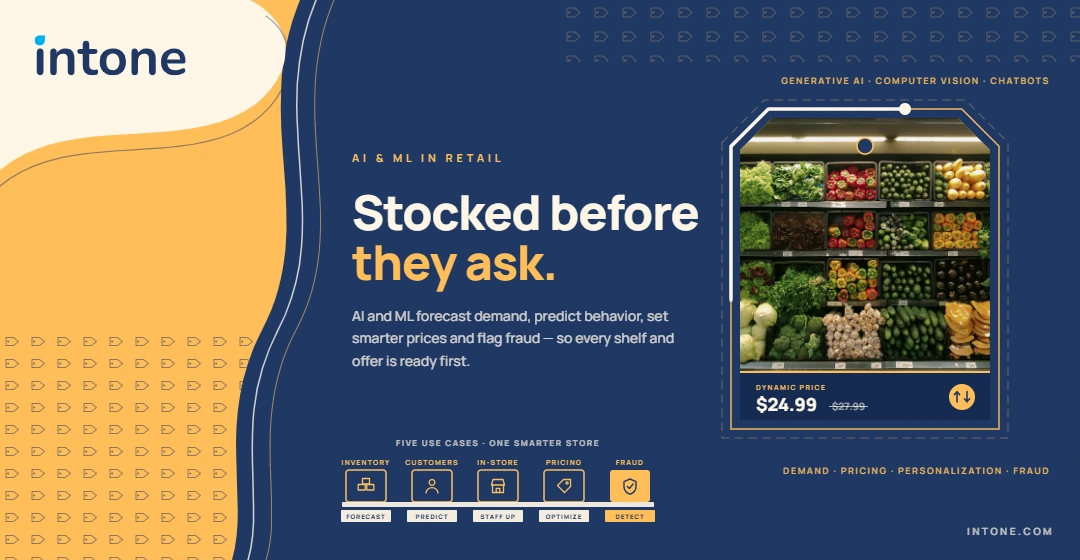
Artificial intelligence and machine learning are transforming the retail industry by improving efficiency, understanding customer behavior, optimizing operations, and enabling faster decisions. From inventory management and personalized experiences to pricing and fraud detection, AI and ML are helping retailers improve performance and adapt to evolving customer and market needs.
Efficient Inventory Management
Maintaining accurate inventory has always been a challenge for retailers. Traditional approaches could result in excess stock, product shortages, and unnecessary wastage. AI and ML can analyze information from sensors, cameras, transactions, and other sources to provide retailers with a more comprehensive view of products and inventory levels. Demand forecasting can also help businesses predict purchasing patterns and plan stock movements more effectively. This allows retailers to reduce unnecessary costs while ensuring that products are available when customers need them.
Predicting Customer Behavior
AI and ML can help retailers understand customer preferences by analyzing information from multiple applications and platforms. Purchase history, preferred brands, price ranges, browsing behavior, and shopping patterns can provide valuable information about potential future behavior. Retailers can use these capabilities to develop more relevant campaigns, personalize recommendations, and improve customer engagement. By turning customer information into practical insights, businesses can make more informed business decisions and create experiences that better match customer expectations.
Improving In-Store Customer Experiences
Long queues and inefficient store processes can negatively affect customer experiences and potentially result in lost sales. AI can help retailers forecast customer traffic at different times of the day, allowing them to plan staffing requirements more effectively. ML-based systems can also analyze customer interactions and behavioral patterns to help retailers understand product preferences. These capabilities allow retailers to create smoother shopping experiences while improving operational efficiency.
Improved Product Pricing Strategy
Pricing is another area where AI and ML can provide significant value. Consumers are often sensitive to price changes, making pricing decisions particularly important in a competitive retail environment. Advanced AI algorithms can analyze sales information, demand, competition, and other variables to help retailers determine appropriate pricing strategies. ML can also support dynamic pricing, where product prices change according to changing market conditions and demand. This flexibility can help retailers optimize sales and improve their return on investment.
Fraud Detection in the Retail Industry
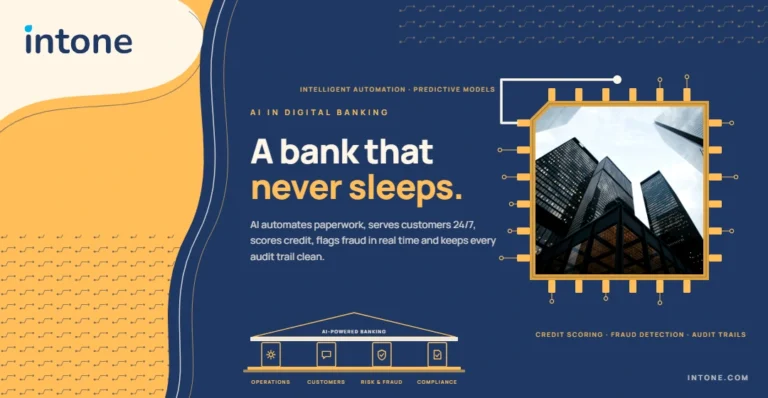
Fraud detection is becoming increasingly important as retailers expand their digital and online operations. AI and ML can analyze transaction patterns and identify unusual activity that may indicate fraudulent behavior. By recognizing patterns across large volumes of transactions, intelligent systems can help businesses identify potentially suspicious activity more quickly.
Fraud detection can support both physical and digital retail environments. Retailers can use AI-based monitoring to identify unusual purchasing behavior, suspicious transactions, account anomalies, or other activities that require investigation. These capabilities can contribute to stronger security while helping organizations protect customers and business operations.
The Future of AI in Retail
The future of AI in retail is likely to involve deeper integration between intelligent technologies, customer experiences, analytics, and business operations. As AI systems become more capable, retailers can use them to automate repetitive activities, generate predictive insights, and respond to changing customer expectations.
The growing availability of data and advanced analytical technologies will also allow retailers to develop increasingly personalized experiences. Retailers can combine AI, ML, real-time analytics, and automation to improve forecasting, customer engagement, inventory planning, and decision-making.
Emerging AI Trends Shaping the Future of Retail
AI is continuing to evolve beyond traditional analytics and automation, creating new possibilities across the retail industry. Key emerging trends include:
- Generative AI: Helps retailers create product descriptions, marketing content, recommendations, and personalized customer experiences at scale.
- AI-Powered Chatbots: Provide instant customer support, answer product questions, assist with orders, and improve engagement across digital channels.
- Computer Vision: Enables applications such as visual product search, shelf monitoring, checkout automation, and loss prevention.
- Autonomous Stores: Combine AI, computer vision, sensors, and automated checkout technologies to create faster, more seamless shopping experiences.
- Hyper-Personalization: Uses customer data and AI models to deliver highly relevant product recommendations, offers, content, and shopping experiences.
- Predictive Analytics: Helps retailers anticipate demand, identify purchasing patterns, optimize inventory, and support data-driven decision-making.
As these technologies mature, retailers can use AI and ML to create more responsive operations, personalized experiences, and efficient business processes while adapting to changing customer expectations.
AI, ML, and Retail Innovation
Artificial intelligence and machine learning in the retail industry have introduced a new level of data processing and business intelligence. These technologies enable retailers to move beyond traditional reporting and use information to identify patterns, anticipate changes, and improve operations.
Ongoing research and technological development will continue to expand the possible applications of AI and ML. Retailers can explore these technologies to identify new opportunities while ensuring that appropriate security and governance practices are considered, particularly when addressing emerging security topics.
Real-World Example: Amazon Go: Amazon demonstrates how AI can reshape the retail experience through its Amazon Go stores. The concept combines computer vision, sensors, and machine learning to track selected items and support checkout-free shopping, showing how AI can connect customer experience with retail automation.
Why Choose Intone?
At Intone, we understand that the new retail environment is increasingly driven by data and analytics, connected customer experiences, modernized operations, technology, and effective supply chains. Today’s customers are increasingly informed and technology-oriented, making innovation an important part of creating connected retail experiences.
We work with retail organizations to develop and execute strategies that optimize the retail value chain. Our capabilities include real-time data analytics, digital CRM, IT integration, and modernization of the IT landscape. By combining technology with industry knowledge, we help businesses use their information more effectively and develop connected customer experiences.
Conclusion
Artificial intelligence and machine learning are reshaping retail by providing businesses with new ways to understand customers, optimize inventory, improve pricing, strengthen fraud detection, and increase operational efficiency. As these technologies continue to develop, retailers that adopt practical AI and ML strategies can position themselves to respond more effectively to changing market expectations.
The future of AI will continue to create opportunities for retailers to improve customer experiences, make better business decisions, and develop more intelligent operations. Organizations that combine innovation with effective data management, security, and technology strategies can build a stronger foundation for long-term growth.
Contact us To learn more about how we can help transform your retail business.
FAQ’s
Artificial intelligence and machine learning are transforming the retail industry by helping businesses improve inventory management, understand customer behavior, optimize product pricing, improve in-store experiences, and strengthen fraud detection. These technologies enable retailers to analyze information more effectively and make faster, data-driven business decisions.
AI and ML can analyze information from sensors, cameras, transactions, and other sources to provide retailers with a better view of inventory levels and product demand. Demand forecasting can help retailers plan purchases and stock movements, reduce excess inventory, minimize wastage, and ensure products are available when customers need them.
AI and ML can analyze transaction patterns and identify unusual purchasing behavior, suspicious transactions, and account anomalies. By recognizing potentially fraudulent patterns across large volumes of transactions, retailers can identify suspicious activity more quickly and strengthen security across physical and digital retail environments.
The future of AI in retail is expected to involve greater integration of intelligent technologies, automation, real-time analytics, predictive insights, and personalized customer experiences. Retailers can increasingly use AI and ML to improve forecasting, inventory planning, customer engagement, pricing, and operational decision-making.
Intone helps retail organizations use technology, data analytics, IT integration, digital CRM, and modernization strategies to optimize the retail value chain. Its capabilities can support real-time data analytics, connected customer experiences, modernized operations, and technology-driven retail transformation.