

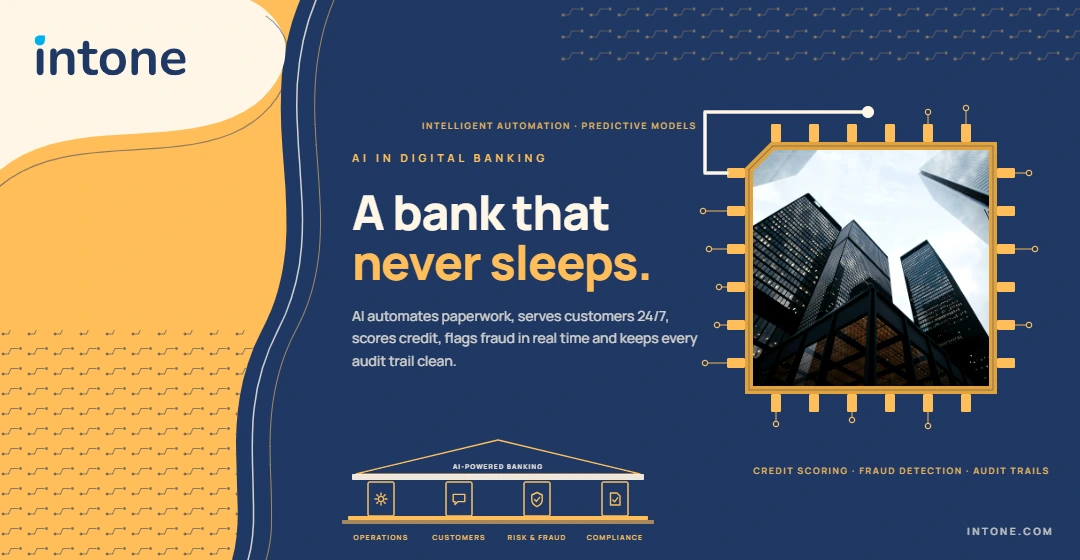
Artificial Intelligence has become an integral force across high-demand, fast-paced global sectors. Within modern operations, the adoption of Artificial Intelligence (AI) and Machine Learning (ML) in the manufacturing industry and financial institutions has delivered incredible performance gains, driving operational efficiency to new heights. Organizations across the world now leverage these advanced technologies to secure long-term enterprise growth, maintain profitability, and achieve meaningful sustainability goals. Among these sectors, the banking industry stands out as one of the most promising environments for intelligent automation, predictive models, and data-driven customer service.
According to market research by Mordor Intelligence, the global AI fintech market was estimated at USD 6.67 billion in 2019 and reached USD 22.6 billion by 2025. Academic studies hosted on platforms like ResearchGate and insights shared by institutions like the Belgrade Banking Academy highlight how technology and banking have become inextricably linked. The rise of AI in finance is not just an incremental upgrade; it represents a complete transformation of the banking sector. Intone modernizes core banking operations with AI automation and actionable insights, helping financial institutions construct better products, evaluate credit risks accurately, optimize workflows, and deliver modern digital banking solutions to millions of customers.
Transform banking operations with enterprise AI.
Navigating Digital Banking Challenges and Operational Efficiency
Modern financial institutions operate in a demanding market defined by changing consumer expectations, complex global compliance laws, and macroeconomic uncertainty. Addressing these digital banking challenges requires banks to balance strict cost control with continuous service innovation. Traditional banking workflows rely heavily on manual verification, paper documentation, and tedious data handling. These outdated processes create significant operational bottlenecks, increase human error, and elevate total operating costs.
AI-powered automation tools and machine learning algorithms directly resolve these legacy inefficiencies. By deploying intelligent document processing systems, banks can automatically index, verify, and store loan applications, tax records, and legal agreements without manual intervention. This level of automated workflow optimization ensures data accuracy, accelerates processing speed, and lowers operational overhead. Consequently, banking staff can shift away from tedious administrative tasks to focus on higher-value advisory roles, strategic financial analysis, and personalized client relationships.
The shift toward structured processes in banking not only cuts unnecessary spending but also opens new capital streams. By putting banking in order through smart automation, institutions can quickly expand their portfolio offerings and keep pace with nimbler digital banks entering the sector.
Elevating Customer Support in the Digital Banking Era
In today’s digital banking era, maintaining high levels of customer satisfaction and retention is essential for banks seeking competitive advantage. Modern consumers expect immediate assistance, frictionless transactions, and proactive financial guidance. Artificial intelligence transforms the customer experience by enabling personalized service delivery across digital channels.
- 24/7 Availability through Conversational AI: Intelligent chatbots and virtual assistants provide round-the-clock guidance, helping customers resolve inquiries, check balances, and track payments at any time.
- Hyper-Personalized Financial Services: By evaluating customer transaction histories, spending patterns, and digital footprints, machine learning models recommend customized financial products. Whether suggesting a suitable credit card tier, tailored mortgage options, or automated savings plans, personalized recommendations foster trust and open up fresh revenue opportunities.
- Rapid Response and Resolution: AI systems process customer requests within milliseconds, dramatically cutting wait times and eliminating repetitive call routing. This speed elevates user satisfaction while reducing load on support call centers.
Advanced Risk Management, Credit Scoring, and Fraud Detection
Managing risk effectively is fundamental to sound banking operations. Financial institutions handle vast volumes of complex, high-velocity transactions every day, making real-time monitoring critical to preventing loss and protecting assets. The introduction of machine learning and predictive analytics has revolutionized risk management frameworks across global financial markets.
Next-Generation Credit Scoring
Traditional credit scoring models rely primarily on historical credit bureau reports, often overlooking non-traditional financial indicators. Machine learning models analyze broad datasets—including cash flow trends, utility payment histories, and microeconomic variables—to build precise credit profiles. This expanded credit risk evaluation allows banks to identify borrower default risk more accurately while safely extending credit access to underserved markets.
Automated Fraud Detection and Security
Financial crime and fraud techniques evolve rapidly, making traditional rule-based detection systems obsolete. AI-driven solutions monitor billions of continuous transactions to spot subtle anomalies, suspicious patterns, identity theft, and money laundering schemes in real time.
Automated Regulatory Compliance and Governance
The global financial industry faces an increasingly intricate web of regulations designed to ensure market stability, data security, and consumer protection. Maintaining full regulatory compliance requires vast resources, continuous monitoring, and ongoing audit readiness. Artificial intelligence simplifies these compliance challenges by automating complex supervisory tasks:
- Real-Time Regulatory Monitoring: AI systems track evolving global, national, and regional compliance standards, automatically aligning internal banking workflows with changing laws.
- Automated Non-Compliance Detection: Machine learning platforms continuously analyze transaction logs and internal communications to identify regulatory deviations, unethical behavior, or unauthorized trading immediately.
- Streamlined Audit Trails: Automated transaction tagging generates clean, transparent audit trails, enabling risk managers to prepare accurate regulatory reports in a fraction of the time required by traditional methods.
Future Outlook: The Ongoing Transformation of the Banking Sector
As financial institutions look ahead to the future of AI, adopting intelligent digital technologies is no longer an optional strategy—it is essential for long-term viability. Future developments in predictive analytics, natural language understanding, and automated decision engines will further streamline daily operations, enabling dynamic frameworks that adapt seamlessly to evolving economic conditions. For smaller institutions looking to adapt, establishing a clear guide to community banks helps align technical investments with local market requirements.
For a broader perspective on modern fintech innovations, explore our detailed analysis on the impact of artificial intelligence in banking sector. Combining decentralized record-keeping with intelligent analytical models gives institutions a robust toolkit to manage risk, streamline payments, and secure operational data. Combining decentralized record-keeping with intelligent analytical models gives institutions a robust toolkit to manage risk, streamline payments, and secure operational data.
How can AI modernize your bank?
At Intone, we deliver the innovative expertise, strategic guidance, and technological capabilities required to navigate the modern banking landscape. We help financial institutions transform core banking operations, optimize risk management, strengthen regulatory compliance, and harness data-driven practical insights to make every critical business decision count in an increasingly digital world.
FAQ’s
Traditional banking operations often face severe operational bottlenecks caused by manual data verification, paper documentation, and tedious record handling. Deploying AI-powered automation tools and machine learning algorithms—such as intelligent document processing systems—allows financial institutions to automatically index, verify, and store loan applications, tax records, and legal agreements without manual intervention. This automated workflow optimization eliminates human error, accelerates processing speeds, and significantly reduces operating overhead, enabling banking staff to redirect their focus toward high-value advisory roles, strategic financial analysis, and personalized client relationship management.
Artificial intelligence transforms customer satisfaction and retention by delivering immediate, frictionless, and personalized services across digital channels around the clock. Intelligent chatbots and conversational AI assistants provide 24/7 availability to resolve inquiries, check balances, and track payments instantaneously. Furthermore, machine learning models evaluate customer transaction histories and spending patterns to offer hyper-personalized financial product recommendations—such as tailored credit card tiers, mortgage options, or automated savings plans—while millisecond processing times cut wait times and eliminate repetitive call routing.
Machine learning revolutionizes risk management by expanding beyond static, traditional credit bureau reports and manual oversight. Next-generation credit scoring models analyze broad, non-traditional datasets—including cash flow trends, utility payment histories, and microeconomic variables—to build precise credit risk profiles that help extend credit access safely to underserved markets. For fraud detection and security, AI-driven solutions continuously monitor billions of high-velocity transactions in real time to identify subtle anomalies, identity theft, and money laundering patterns before losses occur.
Navigating complex global, national, and regional compliance laws requires continuous monitoring and audit readiness that traditional manual reporting cannot efficiently sustain. AI simplifies these governance challenges by automatically tracking changing compliance standards and aligning internal banking workflows in real time. Machine learning platforms continuously analyze transaction logs and internal communications to detect regulatory non-compliance or unauthorized trading immediately, while automated transaction tagging generates transparent, clean audit trails to streamline regulatory reporting.
Financial institutions modernize core operations by integrating intelligent automation, predictive analytics, and automated decision engines to construct better products, evaluate credit risks accurately, and optimize daily processes. Combining smart automation with data-driven insights enables banks to reduce operational spending, unlock new capital streams, and keep pace with digital competitors. Institutions looking to align technical investments with market requirements can learn more by exploring the detailed breakdown on the impact of artificial intelligence in banking sector.