

Project management is a complex, high-stakes undertaking, and risks are an inherent part of every modern initiative. To ensure the successful completion of cross-functional efforts, organizations must continuously monitor, analyze, and mitigate risks across every layer of execution. Effective risk monitoring allows project managers, product managers, and technical program managers to identify potential operational bottlenecks and address them long before they escalate—ensuring that critical deliverables stay on track, within budget, and fully compliant with governance standards.
Whether an enterprise relies on a dedicated technical project manager, an agile scrum master, or a broader risk management team, having a structured framework for continuous risk monitoring is a strategic necessity. Let’s take an in-depth look at five proven techniques for continuous risk monitoring in project management, examine how diverse technical roles drive risk oversight, and explore how specialized enterprise platforms simplify continuous control monitoring.
Proactive risk monitoring drives project success.
Understanding Risk Monitoring in Modern Enterprise Operations
Risk monitoring is an integral part of an organization’s overarching strategy to stay continuously informed about its current exposure to internal and external threats. This process encompasses an enterprise’s existing risk management framework, compliance monitoring, continuous control evaluation, and all strategic activities guiding risk-related decisions.
By actively monitoring operational dynamics, leadership can establish accurate enterprise risk tolerance levels, optimize resource allocation, and define meaningful key risk indicators (KRIs). Although KRIs and risk registries are natural outcomes of the broader project planning process, continuous and regular reviews are crucial to ensuring a swift, decisive response whenever project baselines shift.
Roles Responsible for Continuous Risk Oversight
While risk monitoring can be spearheaded by a dedicated enterprise risk team, project execution requires distributed accountability across several technical leadership roles:
- Project Manager: Oversees project schedules, budget alignment, dependency mapping, and overall resource allocation to keep business initiatives moving forward smoothly.
- Technical Project Manager: Merges deep technical architecture knowledge with traditional project management practices to systematically track technical risk factors, code quality, infrastructure reliance, and engineering dependencies.
- Product Manager: Aligns project deliverables with market requirements, feature roadmaps, customer demands, and broader product strategy goals.
- Scrum Master: Facilitates agile principles and ceremonies, ensuring project teams eliminate operational impediments, manage sprint backlog risks, and sustain predictable velocity.
- Technical Program Manager: Manages complex multi-project portfolios, enterprise cross-team integrations, and macro-level technical risk across multiple engineering units.
Additionally, compliance officers, anti-fraud units, continuous auditing groups, and trust and safety teams frequently participate in monitoring workflows to maintain strict regulatory and operational oversight.
5 Effective Techniques for Continuous Risk Monitoring in Project Management
1. Establish a Robust Risk Register with Integrated Data Management
A risk register—which integrates structured data risk management practices—is the fundamental baseline tool for managing project exposure throughout every phase of execution. It functions as a centralized, living repository that systematically identifies, evaluates, and tracks potential technical and business risks across the entire project lifecycle.practices—is the fundamental baseline tool for managing project exposure throughout every phase of execution. It functions as a centralized, living repository that systematically identifies, evaluates, and tracks potential technical and business risks across the entire project lifecycle.
A comprehensive risk register documents detailed information about each identified risk item, including its root cause, potential quantitative impact, likelihood of occurrence, assigned risk owner, and predetermined mitigation or contingency plan. By regularly updating, auditing, and reviewing the risk register, project management leaders can maintain transparent visibility into their evolving risk landscape.
2. Conduct Regular Risk Assessment and Qualitative Analysis
Continuous risk monitoring relies heavily on recurring, structured risk assessments. This process requires project teams to continuously review the active risk register to assess whether existing risks have shifted in severity or whether entirely new technical and market risks have emerged.
During these evaluation cycles, teams apply qualitative risk analysis methods, multi-tiered probability scoring, and risk impact matrices to categorize threats effectively. Prioritizing risks by severity enables project managers, senior project managers, and technical leadership to channel engineering focus and capital toward resolving high-priority threats first.
3. Track Key Performance Indicators (KPIs) and Early Warning Signals
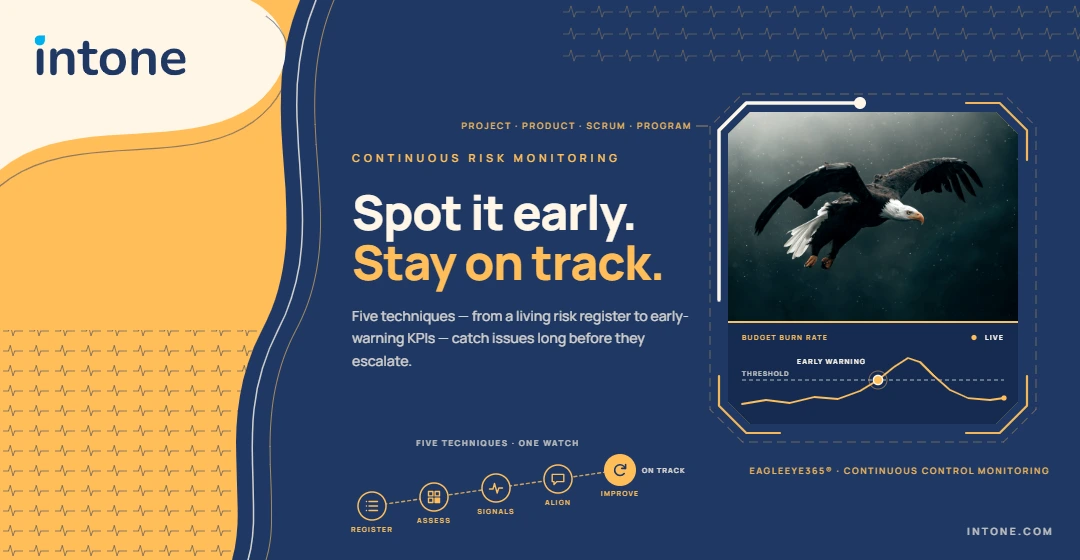
Establishing actionable key performance indicators (KPIs) and early warning thresholds—particularly those tied directly to continuous control monitoring—is critical for proactive project governance. KPIs offer real-time operational metrics that allow managers to evaluate schedule variance, budget burn rates, defect density, and team productivity.—is critical for proactive project governance. KPIs offer real-time operational metrics that allow managers to evaluate schedule variance, budget burn rates, defect density, and team productivity.
When specific performance metrics deviate from baseline target values, they act as immediate early warning signals. These triggers prompt the project manager or scrum master to investigate underlying operational friction, conduct root cause analyses, and execute corrective mitigation strategies before minor deviations escalate into project failures.
4. Maintain Transparent and Regular Stakeholder Communication
Clear, transparent communication across all executive and operational stakeholders is an essential requirement for holistic risk monitoring. Key stakeholders—ranging from engineering leads and department directors to external clients—possess unique operational context and technical insights regarding emerging threats.
By facilitating structured status updates and transparent feedback channels, project managers tap into frontline domain knowledge, gaining early visibility into emerging operational risks that might otherwise evade traditional reporting metrics. Maintaining transparent dialogue ensures alignment across business units, executive sponsors, and engineering teams.
5. Cultivate a Culture of Continuous Improvement and Post-Project Learning
Continuous risk monitoring must never be treated as a static, passive compliance checklist. Highly effective organizations embed a continuous improvement mindset into their core operational workflows, encouraging project teams to regularly audit, refine, and upgrade their risk management protocols.
Following the completion of key milestones or final project delivery, teams should hold structured post-project retrospectives to document successful interventions and pinpoint areas for improvement. Recording these institutional lessons learned ensures that future project manager jobs, engineering programs, and software deployments benefit from historical insights, steadily refining organizational risk resilience over time.
The Evolving Role of the Technical Project Manager in Agile Environments
As engineering architectures grow increasingly sophisticated, the modern technical project manager must bridge the gap between business strategy, technical execution, and agile execution frameworks.
Core Duties and Job Description Expectations
A comprehensive technical project manager job description typically highlights a blend of technical expertise, risk management skill, and project delivery leadership. Core responsibilities within this role include:
- Designing detailed project timelines, milestone tracking frameworks, and system dependency maps across cross-functional engineering teams.
- Partnering with product manager leadership to define scope boundaries, refine product specifications, and establish measurable acceptance criteria.
- Implementing robust risk management protocols, maintaining the project risk register, and executing contingency strategies when technical blockers arise.
- Tracking continuous control monitoring frameworks to ensure that system architecture updates comply with enterprise security and regulatory guidelines.
- Directing resources, facilitating cross-team communication, and reporting project status metrics to executive leadership.
Integrating Agile Principles and Agile Ceremonies
Modern technical project management relies heavily on core agile principles to maintain operational flexibility and iterative delivery speed. Rather than relying on rigid, linear project plans, technical managers leverage key agile ceremonies to systematically monitor risk throughout the development cycle:
- Sprint Planning: Setting clear sprint objectives, evaluating team velocity, assessing immediate backlog risks, and defining delivery scope for the upcoming iteration using sprint planning.
- Daily Standups: Identifying immediate operational blockers, continuous technical dependencies, and short-term execution risks on a daily basis.
- Sprint Reviews & Demos: Gathering real-time feedback from key stakeholders and product managers to validate feature alignment and mitigate scope drift.
- Sprint Retrospectives: Evaluating team performance, process bottlenecks, and engineering practices to drive continuous process optimization.
Comparing Technical Leadership Roles: Similar Jobs & Key Differences
Navigating the landscape of modern project management requires an understanding of how distinct technical roles collaborate across an enterprise framework. While these positions share similar jobs and common skill sets—such as risk management, team facilitation, and strategic execution—their core focus areas differ significantly.
Technical Project Manager vs. Senior Project Manager
A senior project manager focuses broadly on high-level enterprise governance, large-scale resource allocation, stakeholder management, overall program budgets, and complex organizational change initiatives. They manage macro-level risks that impact business units across the entire enterprise.
In contrast, a technical project manager focuses specifically on technical execution, software architecture dependencies, API integrations, technical debt mitigation, and engineering delivery. They possess deep domain expertise that allows them to assess code-level risks, evaluate technical trade-offs, and communicate effectively with software engineers.
Technical Project Manager vs. Product Manager
A product manager owns the “what” and the “why” of a software offering. They focus on market research, user persona analysis, strategic positioning, feature prioritization, and customer value metrics to build successful products.
A technical project manager owns the “how” and the “when.” They focus on operational execution, system capacity, timeline delivery, risk mitigation, and continuous process flow to ensure that the vision defined by the product manager is built efficiently, securely, and on schedule.
Technical Project Manager vs. Technical Program Manager
A technical program manager operates at a higher program level, overseeing multiple interconnected engineering initiatives and cross-departmental programs simultaneously. They manage enterprise-wide system architecture risks, platform integrations, and multi-team strategic initiatives across global operational centers.
A technical project manager typically focuses on managing specific projects, software releases, or dedicated team deliverables, ensuring tight control over individual project schedules, risk registers, and tactical execution goals.
Technical Project Manager vs. Scrum Master
A scrum master acts as a servant leader and process facilitator for a specific agile team. Their primary responsibility is to coach the team on agile methodologies, eliminate immediate operational friction, facilitate agile ceremonies, and maintain team velocity.
While a scrum master focuses heavily on team dynamics and process execution within iterative sprints, a technical project manager maintains broader accountability for project budgets, scope management, stakeholder reporting, external vendor coordination, and formal enterprise risk monitoring.
Career Insights: Seeking Technical Project Manager Jobs and Market Demand
With digital transformation accelerating across major tech hubs worldwide—from traditional enterprise centers to rapidly expanding tech markets, demand for skilled project managers, senior project managers, and technical project managers continues to rise.
Essential Skills for Technical Project Manager Candidates
Professionals seeking technical project manager jobs or exploring jobs across tech-driven industries should focus on building a balanced skill set that spans technical architecture, project governance, and strategic leadership:
- Technical Proficiency: A solid understanding of modern software development life cycles (SDLC), cloud infrastructure (AWS, Azure, GCP), API architectures, data governance, and cybersecurity principles.
- Methodology Mastery: Expertise in hybrid project management frameworks, including Waterfall, Scrum, Kanban, and Scaled Agile Framework (SAFe).
- Risk Management & Control: Proven ability to manage risk registers, execute qualitative/quantitative risk analysis, and monitor continuous controls across enterprise environments.
- Data & Tooling Competency: Hands-on experience with project management and issue-tracking platforms such as Jira, Confluence, Asana, MS Project, and specialized GRC platforms.
- Leadership & Stakeholder Alignment: Strong communication, negotiation, and conflict-resolution skills capable of bridging technical engineering groups and executive management.
How Organizations Optimize Technical Hiring
For hiring organizations crafting a job description, specifying clearly defined expectations around technical stack familiarity, agile fluency, and risk management capability is critical to attracting qualified candidates. Clearly differentiating between project manager jobs, product manager roles, and technical program manager responsibilities ensures that prospective candidates understand their precise scope of accountability within the organization.
Leveraging Enterprise Platforms for Continuous Control Monitoring: Intone EagleEye365®
As project ecosystems become more complex, relying solely on manual risk monitoring techniques like spreadsheets can leave organizations vulnerable to unforeseen operational disruptions, compliance lapses, and cyber security breaches. To maintain comprehensive real-time visibility, modern enterprises deploy dedicated Governance, Risk, and Compliance (GRC) technology solutions.
- How to automate project risk checks?
Intone EagleEye365® automates continuous control monitoring and real-time risk tracking.
Continuous risk monitoring is a critical aspect of project management that ensures the success of a project. Implementing it is a strategic move that can revolutionize the way businesses operate. In today’s fast-paced business environment, where every second counts, embracing an automated risk monitoring system for enterprise operations is a necessity for long-term organizational stability.
To address this growing structural need, Intone developed the EagleEye365® platform, equipping enterprises and technical project management leaders to harness the full power of continuous control monitoring and risk intelligence. Intone EagleEye365® provides:
- End-to-End Enterprise GRC Integration: Integrates key functional requirements—including security oversight, continuous risk management, incident handling, data visualization, continuous control monitoring, continuous auditing, fraud prevention, and regulatory compliance management—into one unified solution.
- Massive Data Connectivity: Connects effortlessly with over 1000+ industry-standard data sources, business applications, and enterprise databases for continuous monitoring across distributed IT infrastructures.
- Low-Code/No-Code Flexibility: Features a low-code/no-code interface with intuitive drag-and-drop features and built-in protocols for seamless cross-system data communication.
- Automated Enterprise Risk Management (ERM): Offers an automated ERM engine, rapid control response systems, and automated incident management workflows to resolve operational anomalies instantly.
- Microservices Audit Architecture: Utilizes a lightweight microservices audit platform that provides real-time compliance reporting without interrupting underlying production systems.
- Bank-Grade Data Protection: Employs SSL encryption and AES 256-bit encryption standards, ensuring that sensitive corporate and technical data remains protected against malicious tampering and unauthorized access.
- Advanced Cybersecurity Infrastructure: Features secure cloud architecture, robust firewall integration, and continuous intrusion detection/prevention systems (IDS/IPS) designed to harden enterprise defenses against cyber threats and data breaches.
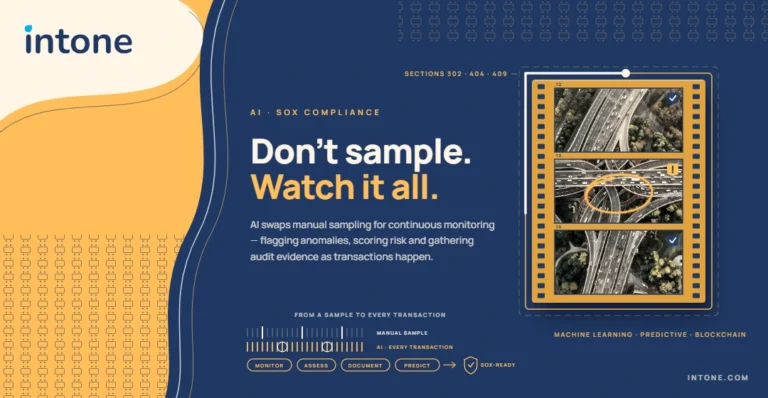
- Comprehensive Regulatory & SOX Compliance: Delivers a complete suite of regulatory, data privacy, and Sarbanes-Oxley (SOX) compliance solutions engineered to meet constantly evolving regulatory demands.
By combining structured project management techniques—such as robust risk registers, early warning KPIs, and regular stakeholder alignment—with powerful automated platforms like EagleEye365®, technical leaders can build resilient project ecosystems. Embracing automated data integration and control tracking enables technical project managers, scrum masters, and senior leaders to drive high-impact initiatives forward with complete clarity, operational speed, and continuous risk protection.
To discover how structured risk frameworks elevate execution speed and software governance, explore our comprehensive breakdown on how to master project success with 5 techniques for continuous risk monitoring.
FAQ’s
Continuous risk monitoring is the ongoing, systematic tracking, evaluation, and mitigation of internal and external operational threats across every phase of a project’s life cycle. Unlike static, one-time risk reviews conducted during project initiation, continuous monitoring gives Technical Project Managers (TPMs) and cross-functional teams real-time visibility into operational bottlenecks, budget variances, and architectural vulnerabilities. By proactively addressing these issues before they escalate, organizations ensure that critical engineering deliverables stay on track, remain within budget, and comply with enterprise governance standards.
Implementing continuous risk monitoring requires a structured framework that combines data management with active team governance. Organizations start by establishing a dynamic risk register to track threat probability, severity, and assigned owners, followed by recurring qualitative risk assessments to reprioritize emerging issues. Teams also track key performance indicators and early warning signals—such as schedule variance, defect density, and burn rates—to catch operational friction early. Success relies on maintaining transparent stakeholder communication to capture frontline insights, alongside conducting regular post-project retrospectives to embed institutional learning into future initiatives, as detailed in the guide on 5 techniques for continuous risk monitoring.
While technical leadership roles collaborate closely, their core responsibilities differ across execution boundaries. A Technical Project Manager owns the operational “how” and “when,” focusing on software architecture dependencies, API integrations, timeline delivery, and technical risk mitigation. In contrast, a Product Manager owns the strategic “what” and “why” behind customer needs and product feature roadmaps. A Scrum Master focuses on single-team agile process facilitation and removing immediate sprint blockers, while a Senior Project Manager oversees high-level enterprise governance and overall program budgets, and a Technical Program Manager manages macro-level multi-project portfolios across global engineering units.
Agile ceremonies embed continuous risk oversight directly into daily engineering workflows rather than treating it as a static compliance requirement. Sprint planning allows teams to evaluate immediate backlog risks and establish realistic iteration scopes, while daily standups surface immediate operational friction and cross-team dependency blockers as they occur. Sprint reviews and demos gather real-time stakeholder feedback to mitigate scope drift, and sprint retrospectives give teams a dedicated space to analyze process bottlenecks and refine engineering practices continuously.
Dedicated Governance, Risk, and Compliance (GRC) platforms replace manual, spreadsheet-based tracking with automated real-time risk intelligence across complex system architectures. Intone EagleEye365® automates continuous control monitoring by connecting with over 1,000 enterprise data sources, using lightweight microservices audit platforms, low-code interfaces, and automated incident management workflows to resolve anomalies instantly. With bank-grade AES 256-bit encryption and comprehensive regulatory compliance coverage for standards like SOX, it enables leadership to harden enterprise defenses.