

Automating Data Security, Governance, and Lifecycle Storage for the Modern Enterprise
What is Data Lifecycle Management?
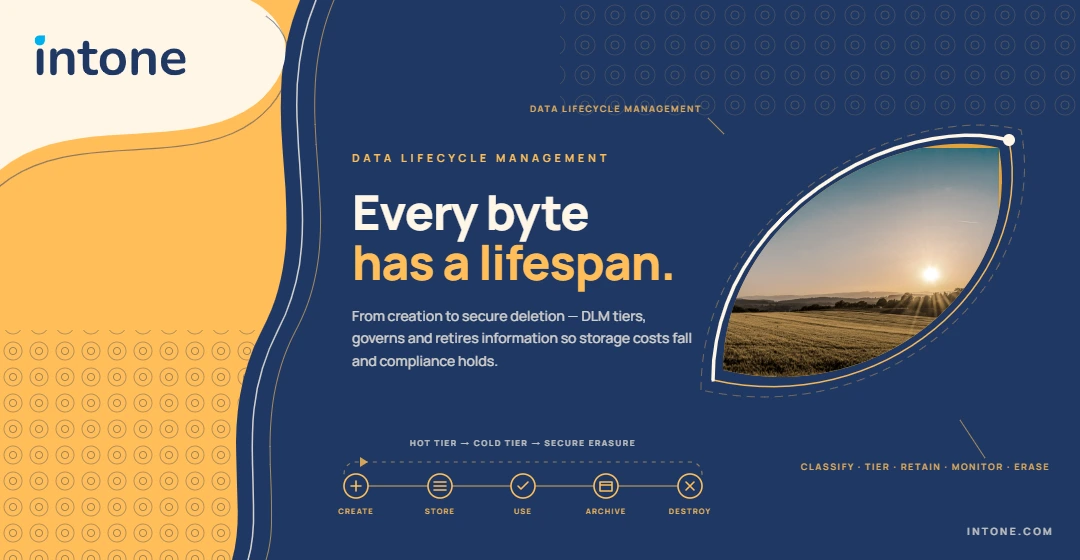
Data Lifecycle Management (DLM) is a structured approach that organizes and automates how information is created, stored, accessed, used, archived, and ultimately deleted throughout its lifecycle, helping organizations improve governance, security, compliance, and storage efficiency.
Data lifecycle management (DLM) is a comprehensive approach to managing information across its entire lifespan, from creation through deletion. DLM solutions automate lifecycle management procedures, organizing information into several layers based on predefined criteria. They also automate movement between these layers. Newer and frequently accessed information typically stays on quicker, higher-cost storage media, while less vital information moves to less expensive, slower options.
Information progresses through distinct phases as it fulfills specific tasks or requirements. A successful DLM process provides structure and organization, helping organizations meet critical process goals—including robust security, high availability, and adherence to privacy policies—consistently.
For a deeper dive into foundational concepts, read our full article on Data Lifecycle Management: A Comprehensive Overview.
Common Enterprise Data Lifecycle Challenges
As organizations manage growing volumes of information across on-premises, hybrid, and cloud environments, several challenges can make effective lifecycle management more difficult:
- Data Silos: Information spread across applications, databases, business units, and platforms can make it difficult to establish a consistent view of critical assets.
- Rising Storage Costs: Retaining inactive or redundant information on high-performance storage can increase infrastructure expenses over time.
- Compliance Requirements: Different industries may require organizations to retain, protect, monitor, and securely dispose of information according to specific regulatory and legal obligations.
- Fragmented Cloud Environments: Data distributed across multiple cloud platforms and legacy infrastructure can complicate visibility, governance, access management, and lifecycle policies.
These challenges highlight why organizations need a structured DLM strategy that connects storage optimization with governance, security, integration, and compliance requirements.
Core Objectives of Enterprise Data Lifecycle Management
Organizations deal with more information than ever before across on-premises servers, colocation facilities, edge settings, and multi-cloud platforms. A holistic enterprise data storage strategy relies on three main objectives:
- Data Confidentiality and Security: Information must be securely maintained to protect private, confidential, and sensitive information from potential data breaches.
- Data Integrity: Information must remain accurate and reliable regardless of storage location, user access levels, or copy volume.
- Data Accessibility: Authorized users need seamless access to clean information without workflow delays or operational bottlenecks.
Organizations must also consider their broader data security and cybersecurity monitoring** strategy when designing lifecycle policies. Protecting information throughout its lifecycle requires visibility into where it resides, who can access it, and how it moves between environments.**
“How can our organization maintain seamless access to active applications while enforcing continuous controls monitoring and regulatory compliance across hybrid enterprise storage?”
Key Requirements for Effective Data Management Services
Implementing enterprise DLM requires specialized capabilities, reliable tools, and strong frameworks to protect operational integrity.
| Capability Area | Core Requirements & Components |
| Data Migration Map | Clear schema mapping, dependency tracking, and automated ETL pipelines |
| Security Controls | End-to-end encryption, strict access role management, and audit logs |
| Storage Optimization | Intelligent data tiering, compression, and automated archiving rules |
| Governance Architecture | Policy enforcement, continuous controls monitoring, and metadata catalogs |
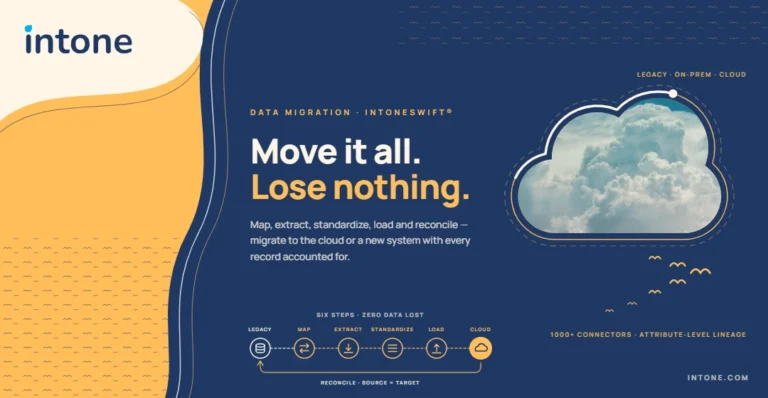
Establishing an effective data migration map alongside modern IT systems integration** capabilities ensures smooth movement between applications, databases, and storage environments while helping organizations reduce data loss and integration risks.**
A well-designed migration strategy should also account for dependencies between applications and datasets. This becomes particularly important when organizations are modernizing legacy environments or moving workloads to new infrastructure.
Strategic Guide to Data Lifecycle Phases
Understanding the journey of information helps IT leaders design resilient architectures and apply precise governance policies at every tier.
1. Data Creation and Ingestion
The lifecycle begins when information is generated via application inputs, IoT devices, or third-party integrations. Establishing early metadata tagging during ingestion ensures seamless downstream tracking and classification.
Organizations should define ownership, classification, access requirements, and retention policies as early as possible. These controls provide the foundation for effective governance throughout the remaining lifecycle.
2. Secure Data Storage and Tiering
Once ingested, information moves to primary data storage media. Automated tiering rules relocate aged files to cost-effective storage repositories based on operational demand and access frequency.
Storage optimization allows organizations to maintain high-performance infrastructure for critical workloads while moving less frequently accessed information to lower-cost storage tiers.
This approach becomes increasingly valuable as enterprise storage volumes continue to grow across hybrid and multi-cloud environments.
3. Usage, Sharing, and Continuous Controls Monitoring
Data achieves its highest business value during processing and analysis. Implementing continuous controls monitoring helps organizations maintain compliance while maintaining high operational speed, without workflow delays or operational bottlenecks.
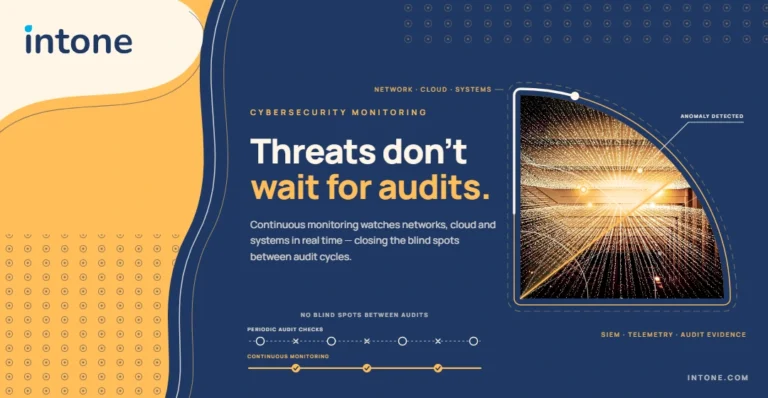
Continuous monitoring can provide visibility into access, movement, modifications, and policy exceptions. Organizations can strengthen this capability through continuous GRC monitoring services** that support ongoing controls visibility and audit readiness.**
Rather than relying exclusively on periodic assessments, organizations can monitor controls continuously and identify potential issues earlier.
4. Archival Strategies for Microsoft and Hybrid Environments
When information reaches maturity, it shifts to long-term archives. Integrating platforms like Microsoft Azure or private cloud archives reduces primary storage costs and infrastructure overhead while preserving retrieval capabilities.
Organizations moving workloads between legacy and modern environments can also benefit from legacy modernization services** that support application modernization, legacy cloud migration, and system decommissioning.**
A structured archival strategy should define retention periods, retrieval requirements, security controls, and compliance obligations before information is moved into long-term storage.
5. Compliant Data Destruction
The final stage permanently deletes obsolete information. Automated policies can enforce secure erasure protocols and support organizations in securely disposing of sensitive information according to defined retention requirements.
Data destruction must be governed by clearly defined retention schedules and regulatory requirements. Keeping information longer than necessary can increase storage costs and expand an organization’s security and compliance exposure.
The Benefits of Modern Data Lifecycle Management
Adopting an automated DLM framework can deliver measurable operational, security, and financial improvements across the organization.
- Process Improvement: DLM preserves data quality throughout its lifespan, optimizing workflows and maximizing the return on data assets.
- Cost Control: By assigning a monetary value to information at each phase, organizations can migrate inactive records to lower-cost storage tiers.
- Data Usability: Enforceable governance principles ensure metadata is uniformly labeled, providing clean, usable information for agile decision-making.
- Compliance and Governance: Standardized lifecycle policies help businesses meet legal retention requirements and streamline routine regulatory audits.
Effective lifecycle management can also improve broader data governance practices** by establishing consistent policies for classification, ownership, access, retention, and movement.**
When governance and lifecycle management work together, organizations gain greater visibility into their information assets and can make more informed decisions about what should be retained, archived, migrated, or deleted.
Practical Business Example: DLM in Action
Consider a financial services organization that stores customer records, transaction histories, reports, and compliance documentation across multiple applications and cloud environments. Over time, keeping inactive records on high-performance storage increases infrastructure costs and makes retention management more difficult.
With DLM, the organization can classify information according to business value, access frequency, retention requirements, and regulatory obligations. Frequently accessed records can remain on primary storage, while inactive records can be automatically moved to lower-cost archival tiers. At the end of their approved retention periods, eligible records can be securely deleted according to established policies.
This approach can help the organization reduce primary storage costs and infrastructure overhead, improve visibility into retention requirements, and maintain more consistent governance across its technology environment. The actual savings and operational impact will depend on data volumes, storage architecture, retention policies, and implementation quality.
Integrating GRC Advisory for Total Enterprise Compliance
Navigating complex regulatory frameworks requires aligning your DLM roadmap with formal GRC advisory services.
Aligning lifecycle rules with legal standards helps organizations maintain compliance, mitigate third-party risk, and reinforce trust with stakeholders.
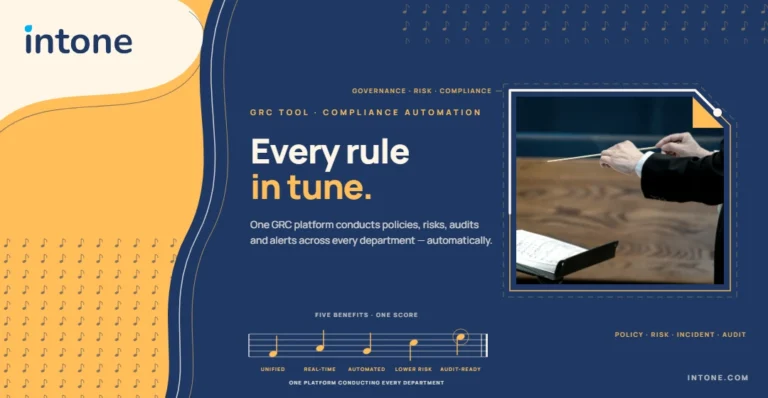
Organizations can strengthen this process through GRC advisory services** designed to address governance and control gaps while improving audit readiness and regulatory alignment.**
GRC should not be treated as a separate activity from data lifecycle management. Retention policies, access controls, security requirements, and data destruction processes should all be incorporated into the organization’s wider governance framework.
Why Partner with IntoneSwift® ?
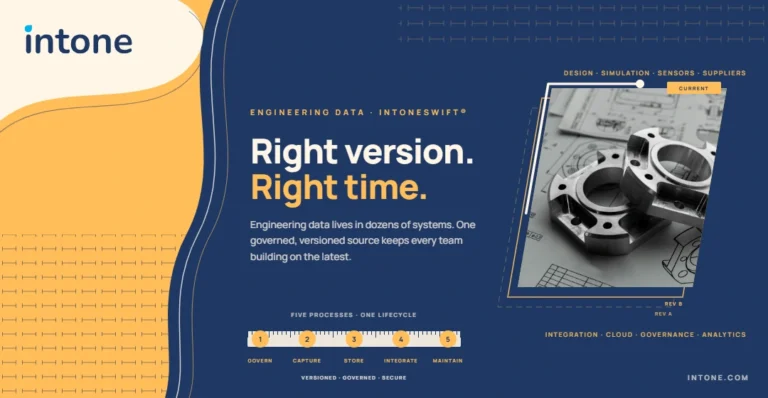
Effective data management builds the foundation for running critical business applications and providing reliable analytical insights. At Intone, we take a people-first approach to optimization, tailored to your exact infrastructure needs.
Knowledge Graph Architecture
Full visibility into every data migration map and integration point helps organizations understand how information moves across complex enterprise environments.
Extensive Ecosystem Support
Over 1000+ data, application, and device connectors help organizations connect disparate sources and support complex data movement requirements.
Low-Code/No-Code Platform
Intuitive graphical workflows simplify complex operations and allow teams to manage integration and lifecycle processes more efficiently.
High-Performance Engine
Distributed in-memory operations deliver high-performance execution for demanding enterprise workloads.
Granular Security
Attribute-level lineage tracking and continuous data encryption help protect sensitive information throughout different stages of the lifecycle.
Unified Governance
Centralized password management, connection tools, and an advanced monitoring module provide real-time operational visibility across real-time, streaming, and batch workflows.
Organizations looking to modernize their broader technology environment can also explore Intone’s enterprise data and systems integration capabilities** to connect applications, infrastructure, and information sources across complex technology environments.**
Building a Future-Ready Data Lifecycle Strategy
Modern organizations cannot treat data storage as simply a place where information is kept. Enterprise information must be continuously classified, monitored, secured, integrated, archived, and eventually removed according to business and regulatory requirements.
A successful data lifecycle management enterprise guide should therefore address the complete journey of information rather than focusing only on storage optimization.
Organizations should establish:
- Clear data ownership and accountability
- Consistent classification policies
- Automated retention and archiving rules
- Continuous controls monitoring
- Secure data migration processes
- Strong data governance frameworks
- Scalable enterprise storage architecture
- Regulatory and compliance alignment
- Secure data destruction procedures
By combining these capabilities, organizations can reduce unnecessary storage costs while improving security, governance, operational efficiency, and regulatory readiness.
Key Takeaways
- Data Lifecycle Management (DLM) provides a structured approach for managing information from creation through secure deletion.
- Data silos, rising storage costs, compliance requirements, and fragmented cloud environments make lifecycle management increasingly important.
- Automated tiering, archiving, and retention policies can reduce primary storage costs and infrastructure overhead.
- Continuous controls monitoring and data governance help organizations maintain compliance, improve visibility, and strengthen security.
A successful DLM strategy connects storage optimization, governance, security, integration, and compliance across the entire information lifecycle.
Conclusion
Data lifecycle management is becoming increasingly important as enterprises manage growing volumes of information across applications, cloud environments, databases, and hybrid infrastructure.
A successful DLM strategy helps organizations control how information is created, stored, accessed, shared, archived, migrated, and ultimately destroyed.
The combination of data security, governance, continuous controls monitoring, data migration, storage optimization, and compliance creates a stronger foundation for long-term enterprise data management.
Organizations that take a structured approach to data lifecycle management can improve operational efficiency while reducing unnecessary storage costs and strengthening regulatory readiness.
For enterprises dealing with complex technology environments, lifecycle management should also be connected to broader modernization, integration, and governance strategies rather than treated as an isolated storage initiative.
FAQ’s
DLM automates information management from ingestion to deletion, supporting high accessibility, strong security controls, compliance requirements, and optimized storage cost management across its lifecycle.
Continuous controls monitoring automatically provides visibility into access, modifications, and movement in real time, helping organizations identify potential policy exceptions and maintain audit-ready evidence.
A data migration map defines data dependencies, transformation pathways, and schema rules, supporting transfers between active storage and long-term cloud archives while reducing the risk of data loss.
GRC advisory helps organizations align data retention policies, encryption standards, and archiving rules with applicable industry regulations, supporting regulatory readiness and helping mitigate legal and compliance risks.