

Discover how control automation helps pharmaceutical manufacturers improve quality, efficiency, data integrity, safety, and regulatory compliance.
Control automation in the pharmaceutical industry uses technologies such as process control systems, SCADA, robotics, data analytics, and machine learning to monitor and manage manufacturing processes. By reducing manual errors and providing greater process visibility, automation can improve product quality, efficiency, data integrity, and regulatory compliance.
The pharmaceutical industry operates in an environment where product quality, patient safety, regulatory compliance, and operational efficiency are critical. Pharmaceutical manufacturers must maintain precise control over complex processes while meeting stringent quality and regulatory requirements.
Control automation provides a technology-driven approach to managing equipment, processes, and systems with minimal manual intervention. It can incorporate process control, robotics, data analytics, machine vision, and other technologies to improve manufacturing operations.
By automating repetitive and highly controlled processes, pharmaceutical companies can improve consistency, reduce human error, increase efficiency, and strengthen data integrity. Automation also creates greater visibility into manufacturing activities, supporting traceability and faster identification of potential issues.
Advances in Automation and the Need for Control Automation in Pharmaceuticals
The pharmaceutical industry continues to adopt technologies such as robotics, artificial intelligence, machine learning, IoT, and advanced process control. These technologies are helping manufacturers respond to increasingly complex production processes, regulatory requirements, quality expectations, and supply chain pressures.
However, implementing automation is not simply about replacing manual processes. Pharmaceutical manufacturers need systems that can reliably monitor critical parameters, capture accurate data, and maintain processes within predefined requirements.
Control automation helps connect these objectives by providing more precise control over manufacturing operations. It can support improved efficiency, resource utilization, product quality, and compliance while helping organizations respond to deviations more quickly.
As pharmaceutical manufacturing becomes increasingly data-driven, the combination of automation and real-time data analytics can also provide valuable information for process optimization and continuous improvement.
Core Components of Control Automation in Pharmecuticals
Control automation in pharmaceutical manufacturing consists of several interconnected technologies. Together, these systems provide manufacturers with greater control and visibility across production processes.
- Process Control Systems (PCS)
A Process Control System (PCS) monitors and controls critical process parameters such as temperature, pressure, and flow rates.
Maintaining these parameters within predefined ranges can help prevent process deviations that may affect product quality. PCS technology therefore plays an important role in maintaining consistency and supporting controlled pharmaceutical manufacturing processes.
- Supervisory Control and Data Acquisition (SCADA) Systems
SCADA systems provide a broader view of manufacturing operations by collecting data from multiple process control systems and other equipment.
This information enables operators to monitor processes, identify potential issues, and analyze production data. SCADA can also support data visualization, giving manufacturing teams greater visibility into the status and performance of production systems.
- Robotics and Automation
Robotics and automation can improve precision while reducing the potential for human error in repetitive or highly controlled pharmaceutical manufacturing activities.
Robotic systems can support material handling, packaging, and other repetitive operations. Automating these activities can allow employees to focus on higher-value tasks while maintaining greater consistency across production processes.
- Data Analytics and Machine Learning
Pharmaceutical manufacturers generate significant amounts of operational and production data. Data analytics and machine learning can help organizations use this information to identify trends, detect potential issues, and optimize manufacturing processes.
By analyzing historical and real-time data, organizations can gain insights into process performance and identify opportunities for improvement. These capabilities can contribute to better product quality, operational efficiency, and proactive issue detection.
- Quality by Design (QbD) Integration
Quality by Design (QbD) is a risk-based approach that focuses on building quality into pharmaceutical products and manufacturing processes from the beginning.
Control automation can support QbD objectives by helping manufacturers maintain processes within predefined parameters and continuously monitor relevant conditions. Combining automation with QbD principles can strengthen process control and reduce the risk of quality deviations.
Benefits of Control Automation in Pharmaceuticals
Control automation can provide pharmaceutical manufacturers with several operational and quality-related benefits.
- Improved efficiency: Automating repetitive activities can reduce manual effort, improve production throughput, and optimize resource utilization.
- Greater product consistency: Automated systems can maintain precise process parameters, reduce variability and support consistent product quality.
- Enhanced safety: Automation can reduce human involvement in hazardous or repetitive activities while enabling real-time monitoring of processes.
- Stronger regulatory compliance: Automated data capture and documentation can help organizations maintain records and demonstrate adherence to applicable requirements.
- Reduced operational costs: Improved efficiency, fewer errors, reduced waste, and better resource utilization can contribute to cost savings.
- Better data visibility: Connected systems can provide manufacturers with more timely information for analysis, monitoring, and process optimization.
Continuous HIPAA Compliance in Connected Pharmaceutical Environments
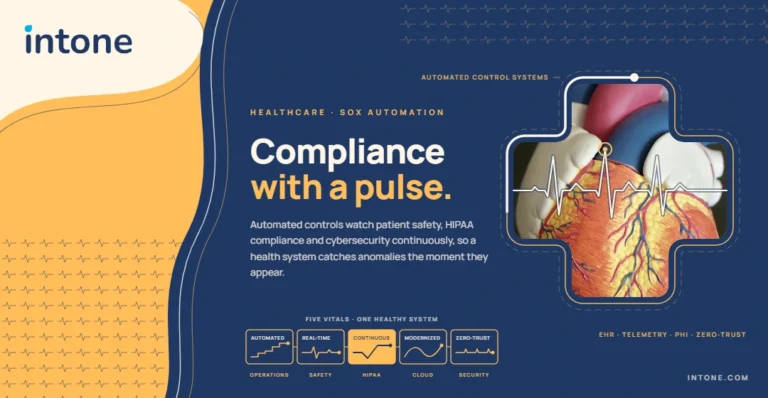
Pharmaceutical organizations that handle protected health information (PHI) may also need to consider requirements related to continuous HIPAA compliance. In these environments, automation and monitoring can support visibility into systems, access, and data activity.
However, HIPAA compliance requirements depend on an organization’s role, activities, and handling of protected health information. Control automation should therefore complement, rather than replace, an organization’s broader compliance program and security controls.
Return on Investment (ROI) Analysis
Implementing control automation requires investment in technology, integration, implementation, training, and ongoing maintenance. A thorough ROI analysis can help organizations evaluate whether the expected operational and quality benefits justify these costs.
ROI considerations can include:
- Cost savings from reduced manual effort and resource utilization
- Efficiency gains from faster and more consistent processes
- Quality improvements from greater process precision
- Risk reduction through earlier detection of process issues
- Compliance benefits from improved data capture and documentation
- Long-term scalability as manufacturing operations and data requirements grow
Organizations should evaluate both short-term implementation costs and long-term operational benefits when assessing a control automation investment.
Why Choose EagleEye365®?
As pharmaceutical manufacturers adopt increasingly connected and automated environments, maintaining visibility across controls, systems, and data becomes increasingly important.
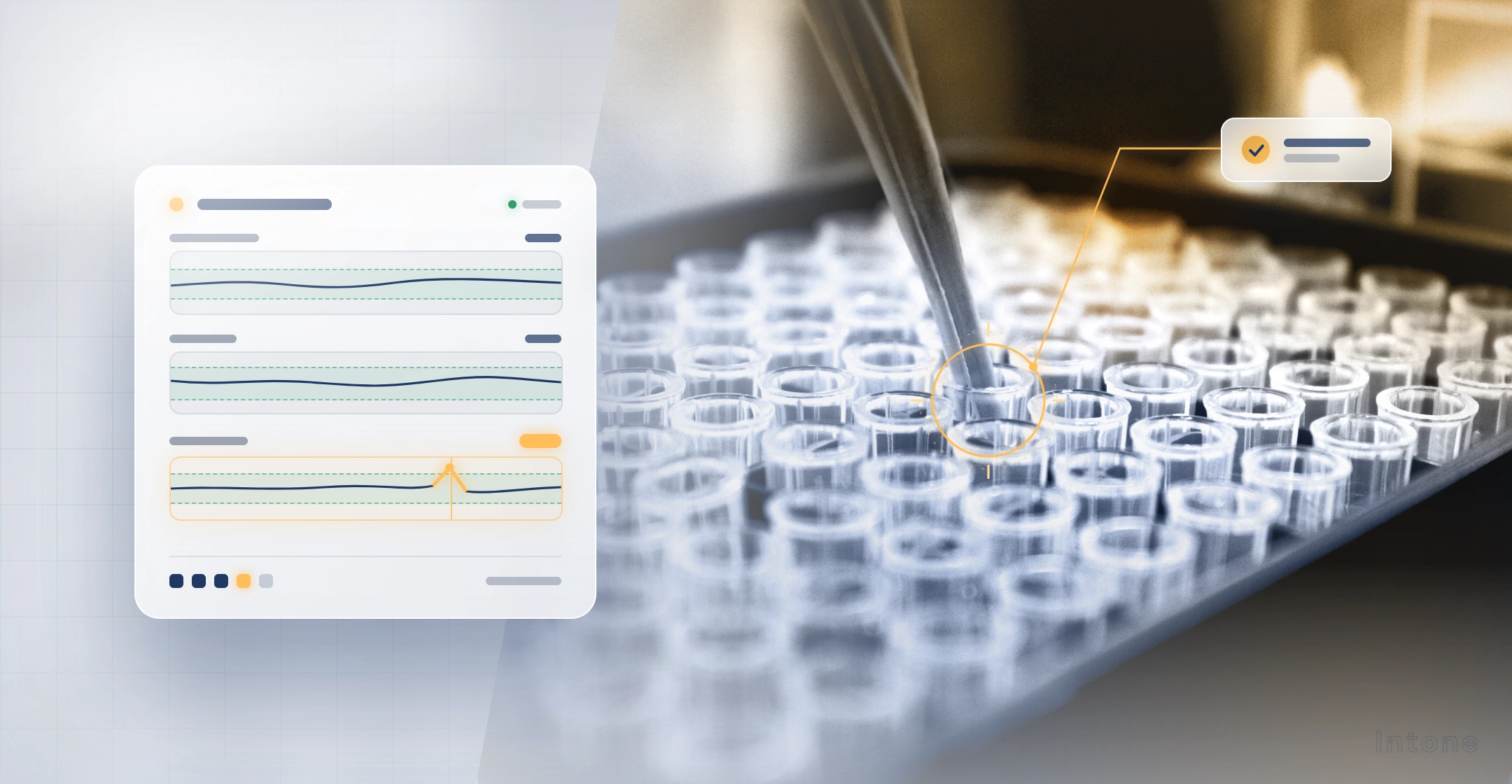
EagleEye365® supports continuous control monitoring by helping organizations identify anomalies, monitor control activity, and improve visibility across complex enterprise environments.
With continuous monitoring capabilities, organizations can supplement periodic reviews with more frequent oversight of relevant controls and potential exceptions. This can support proactive issue identification, audit readiness, and stronger governance.
The platform can also help organizations connect information from different enterprise systems and improve visibility into control-related activity.
To learn more about control automation and its role in pharmaceutical manufacturing, see Intone’s related resource, Control Automation in the Pharmaceutical Industry: Ensuring Quality and Compliance.
Contact Intone to learn more about EagleEye365® and continuous control monitoring.
Key Takeaways
- Control automation can improve pharmaceutical manufacturing efficiency, consistency, and visibility.
- Process Control Systems help maintain critical manufacturing parameters.
- SCADA systems provide broader monitoring and data visualization capabilities.
- Robotics can improve precision and reduce manual errors in repetitive processes.
- Data analytics and machine learning can identify trends and support process optimization.
- Quality by Design can be supported through automated monitoring of predefined process parameters.
- Automation can strengthen data capture, traceability, and regulatory compliance.
- ROI analysis should consider efficiency, quality, risk reduction, compliance, and long-term scalability.
- Continuous monitoring can complement periodic control reviews and support proactive issue identification.
FAQ’s
Control automation uses technology to monitor and manage pharmaceutical manufacturing processes with minimal manual intervention. It can include process control systems, SCADA, robotics, data analytics, machine learning, and other technologies.
Control automation can improve process precision, product consistency, efficiency, safety, data integrity, and regulatory compliance while reducing the potential for human error.
Key components include Process Control Systems, SCADA systems, robotics and automation, data analytics and machine learning, and Quality by Design integration.
Data analytics can help manufacturers identify trends, detect potential issues, monitor process performance, and identify opportunities for optimization using operational and production data.
Automated systems can provide more consistent process control, real-time data capture, documentation, monitoring, and traceability, helping organizations support applicable regulatory requirements.
Quality by Design focuses on incorporating quality into pharmaceutical development and manufacturing processes from the outset. Automation can support QbD by helping maintain processes within predefined parameters and monitoring relevant conditions.
EagleEye365® supports continuous control monitoring by helping organizations monitor controls, identify anomalies and exceptions, and improve visibility across complex enterprise environments.