


Big data integration involves extracting data from disparate sources, combining it, and analyzing it to extract actionable business insights. However, achieving a true enterprise-wide unified data view requires more than simple data extraction; it demands real-time processing, automated workflows, reliable data lineage, and seamless multi-platform synchronization to overcome scalability, quality, security, and governance hurdles.
Statista reports that the total amount of data created, captured, copied, and consumed worldwide is forecast to reach 182 zettabytes in 2025, highlighting the rapid growth of the global data landscape. Source: Statista, Data growth worldwide, released November 2025.
Companies worldwide increasingly depend on big data integration to support key business decisions, yet many struggle to unlock the full value of their information. Forrester research has highlighted how organizations have historically analyzed only a small share of the data available to them. The frequently cited 12% figure comes from Forrester research presented in 2014, so it should be treated as historical rather than current. Source: Forrester research as reported by Computing. Forrester presentation reference.
While extracting and processing structured, semi-structured, and unstructured datasets sounds straightforward, turning raw inputs into coherent, actionable intelligence remains a complex challenge. Bridging internal business datasets with broader industry trends can be make-or-break for modern enterprises.
How Big Data Integration Works
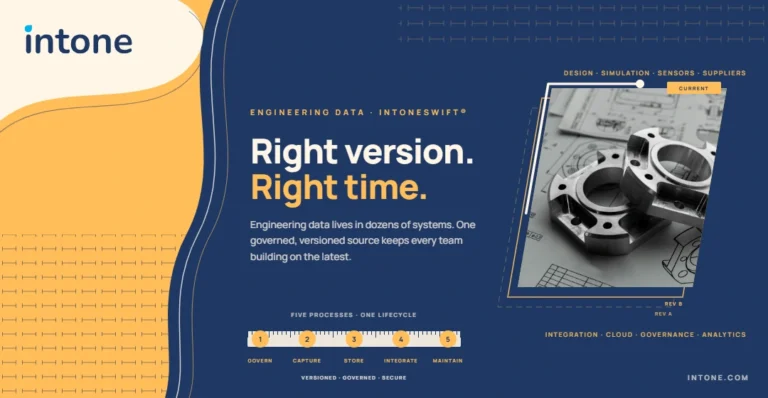
Effective big data integration is a continuous data lifecycle rather than a single extraction step. Data ingestion collects structured, semi-structured, and unstructured information from databases, applications, APIs, files, IoT devices, and cloud services. Data transformation then cleans, standardizes, validates, enriches, and restructures that information so different systems can work with consistent definitions and formats.
The process also relies on synchronization to keep data aligned across systems, including real-time or near-real-time pipelines where business decisions depend on fresh information. Data governance establishes ownership, quality rules, metadata, lineage, privacy requirements, retention policies, and access controls. Finally, analytics turns the integrated data into dashboards, predictive models, operational insights, and business intelligence. Microsoft describes Azure Data Factory as supporting extraction, transformation, movement, and automation for connecting data sources for analysis. Source: Microsoft Azure Data Factory.
The Benefits of Integrating Big Data
Organizations that successfully integrate their data ecosystems unlock significant operational and analytical advantages.
- Elevated Market Intelligence: Integrating big data helps organizations understand market dynamics more deeply. Combining internal business information with external social, market, and behavioral data can provide timely consumer intelligence and help teams respond to changing demand.
- Smarter Audience Targeting: Predictive analysis for recommendation engines has evolved rapidly. Integrated big data feeds demographic, transactional, and behavioral insights into these engines, supporting more relevant recommendations, higher sales, and personalized customer experiences.
- Better Customer Insights: Integrating traditional records such as purchases and support interactions with digital and external datasets can deliver a comprehensive 360-degree customer view. This unified perspective helps organizations understand customer journeys and identify opportunities for more relevant engagement.
- Improved Business Operations: Integrated analytics can optimize internal workflows, support cybersecurity, improve resource allocation, and enable predictive maintenance, helping organizations reduce downtime and operational costs.
- Stronger Regulatory Compliance and Data Governance: A governed integration environment creates consistent data definitions, traceable lineage, controlled access, and auditable data flows. These capabilities help organizations demonstrate compliance, identify data-quality issues earlier, and apply policies consistently across business units.
The Challenges Facing Big Data Integration
Despite significant investments in data and AI, several critical hurdles can prevent organizations from fully adopting integrated data architectures.
As data volume, velocity, and variety increase, integration becomes more complex because organizations must move larger datasets faster while reconciling more formats, sources, schemas, security requirements, and business definitions. The result is a greater need for scalable pipelines, automated quality controls, and consistent governance.
- Synchronization Discrepancies: Incoming data flows from diverse sources at varying speeds and schedules. Without reliable real-time or near-real-time synchronization, datasets can become desynchronized and outdated during extraction and transformation.
- Shortage of Skilled Talent: Designing end-to-end integration workflows and deriving actionable intelligence requires skilled data engineers, architects, analysts, and governance specialists, who remain in high demand.
- Security & Confidentiality Risks: Ingesting data from a wide range of internal and external sources can increase exposure to breaches and unauthorized access. Organizations should mitigate these risks through encryption in transit and at rest, role-based access controls, identity management, data masking, monitoring, and appropriate compliance frameworks.
- Framework Incompatibility: The variety of databases, APIs, file formats, streaming systems, and NoSQL frameworks can create compatibility challenges. A scalable integration architecture should use standardized interfaces, reusable pipelines, metadata management, and fit-for-purpose technologies rather than relying on isolated tools.
Big Data Governance: Keeping Integrated Data Trusted
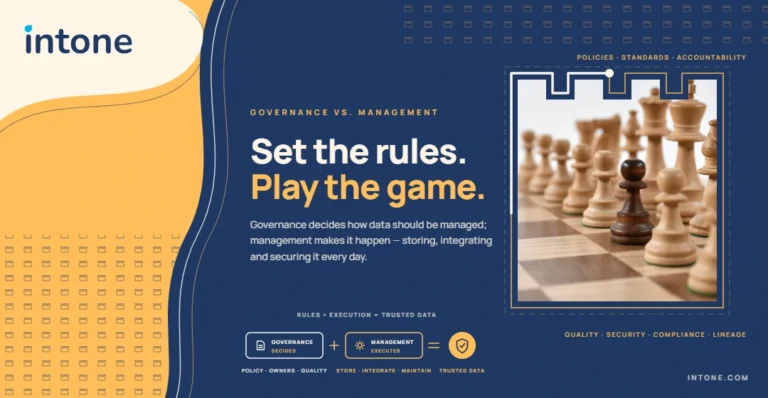
Big Data Governance is essential to successful integration because bringing data together does not automatically make it trustworthy. Governance defines who owns data, how quality is measured, which users can access it, how sensitive information is protected, and how data lineage is tracked.
Organizations can strengthen governance with data catalogs, metadata management, automated quality rules, lineage tracking, encryption, role-based access controls, audit logging, retention policies, and compliance frameworks. Governance should be embedded into integration pipelines so that data is validated and protected as it moves between source systems, data lakes, warehouses, and analytics platforms.
Cloud Data Integration for Scalable Data Pipelines
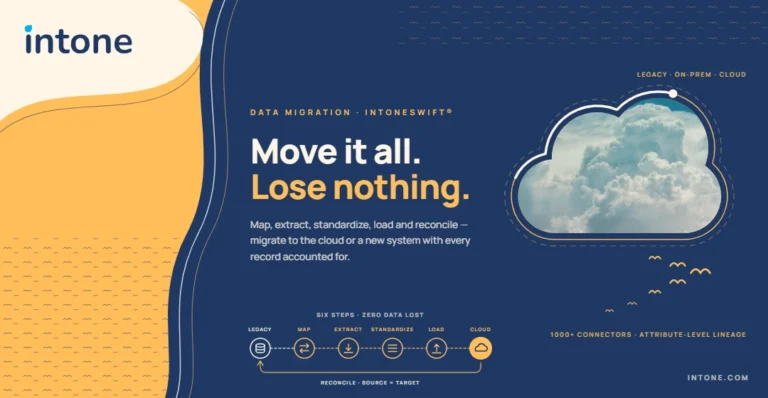
Cloud Data Integration allows organizations to connect on-premises systems, cloud applications, databases, data lakes, warehouses, APIs, and streaming sources through scalable integration pipelines. Cloud-based architectures can make it easier to increase processing capacity as workloads grow while supporting automated ingestion, transformation, orchestration, monitoring, and analytics.
Microsoft Fabric brings together Data Factory, Synapse workloads, Power BI, and OneLake in a unified analytics environment. Microsoft describes Data Factory as a way to integrate data from diverse sources, while Fabric provides a broader platform for data engineering, warehousing, real-time analytics, and business intelligence. Source: Microsoft Fabric.
Aligning AI Governance with Big Data Integration
AI governance is most effective when it is connected directly to big data integration and data quality management. AI models depend on the quality, lineage, security, and consistency of the data flowing into them. If integrated pipelines contain duplicate, incomplete, biased, stale, or poorly governed records, those issues can propagate into automated decisions and analytics outputs.
Embedding governance into integration workflows helps organizations validate data before it reaches AI systems, document lineage, apply access policies, monitor quality, and maintain accountability across the data lifecycle.
Accelerating Data Integration Through Cloud Scale
Successfully scaling enterprise data integration requires flexible cloud ecosystems that can unify disparate data streams without creating infrastructure bottlenecks. Azure provides services that support data movement, storage, transformation, analytics, and AI workloads. For example, Azure Data Lake Storage can provide scalable data-lake storage, Azure Synapse Analytics can support data warehousing and analytics, and Microsoft Fabric can unify data integration and analytics experiences. Azure AI can then be used for appropriate AI and machine-learning workloads on governed data.
Microsoft’s documentation describes Fabric Data Factory as supporting data ingestion and transformation from diverse sources, while Synapse workloads support engineering, warehousing, data science, and real-time analytics. Source: Microsoft Fabric.
Building a Data Integration Strategy and Roadmap for Enterprise Growth
Creating an effective data integration strategy starts with mapping business objectives to data requirements, source systems, integration patterns, governance controls, and analytics use cases. Organizations should identify critical data domains, prioritize high-value integrations, define ownership and quality standards, and select architectures that can scale with future workloads.
A clear roadmap can help businesses move from fragmented manual data tasks toward automated, governed, and near-real-time data flows. Productivity and AI tools can then operate on cleaner, more consistent information rather than disconnected source-system data.
Performing a Data Integration Readiness Assessment
Before launching large-scale transformation projects, organizations should conduct a rigorous readiness assessment of their existing data pipelines and technology stack. This assessment should examine source-system connectivity, data quality, metadata, lineage, security, integration latency, governance maturity, and existing data silos.
Establishing a cohesive data architecture based on these findings helps organizations prioritize integration initiatives, reduce technical debt, and build a stronger foundation for analytics and digital transformation.
Why Choose Intone for Your Big Data Integration?
Big data integration can help businesses understand customers better, improve operations, and approach prospective consumers proactively. Intone provides big data integration solutions designed to connect complex data environments and turn fragmented information into actionable insights.
We offer:
- Cross-Platform Strategy: A cohesive data integration strategy engineered to perform across multiple platforms and data environments.
- Real-Time Processing: High-velocity data pipelines designed to process critical operational data in real time.
- IoT Sensor Integration: Advanced tracking and IoT capabilities that enhance operational efficiency, mitigate risk, and generate actionable analytics.
- Intelligent Automation: Front-End and Back-End Robotic Process Automation (RPA) solutions that reduce repetitive manual workflows.
Intone’s solutions are designed to improve operational efficiency, increase scalability, reduce operational costs, and accelerate time-to-market. Ready to unify your data streams and turn raw data into a competitive advantage? Contact Intone today to schedule a consultation with our data architecture experts.