

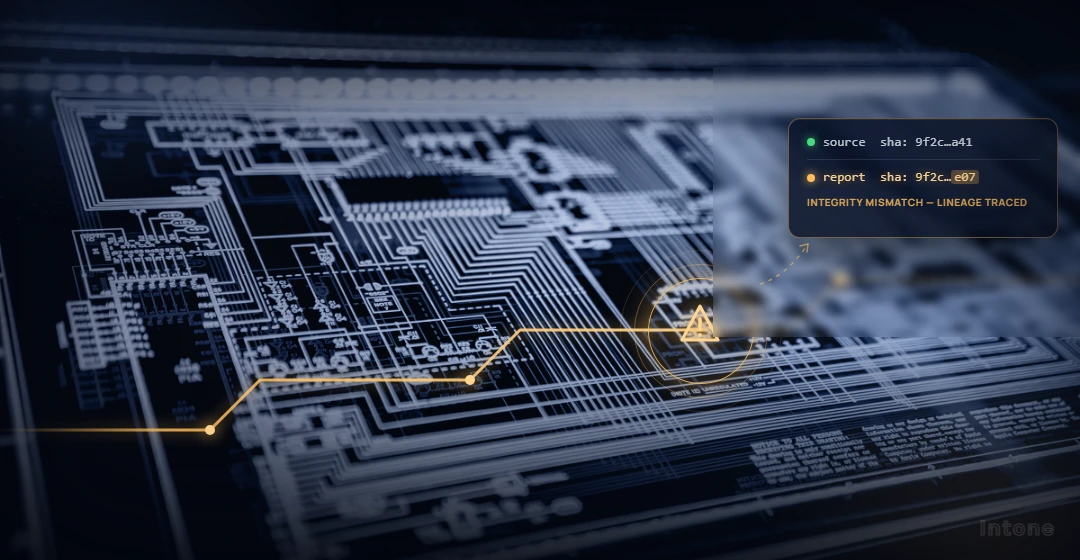
Why data integrity, control standardization, and evidence transparency matter for modern enterprise security?
Preventing data manipulation requires more than standard perimeter defenses; it demands complete data validation, strict access controls, end-to-end data lineage, and transparent auditing protocols. Achieving true business compliance and security requires organizations to establish tamper-evident processes that ensure information remains accurate, traceable, and fully protected across business operations.
Introduction
Data integrity has become a critical component of enterprise cybersecurity and regulatory compliance.
Data manipulation can have serious consequences for organizations, ranging from altered financial records to compromised operational information. When unauthorized individuals tamper with critical assets, the impact can spread across business operations, undermine regulatory compliance, damage stakeholder trust, and create challenges across corporate governance frameworks.
Organizations therefore need effective controls to ensure that business information remains accurate, traceable, and protected against unauthorized modification.
Organizations have spent years investing in digital transformation and security automation. The business case has always been compelling: reduce manual effort, improve consistency, accelerate operational audits, and safeguard corporate assets. Yet many IT and compliance leaders find themselves facing a frustrating reality: controls are in place, logs are generated electronically, and systems appear efficient—and still, security gaps emerge, unauthorized modifications occur, and auditors demand additional supporting evidence.
Understanding Data Manipulation Fraud and Security Hazards
Data manipulation fraud involves making small, hidden, and sometimes continual changes to business records in order to gain an advantage or mislead others. Such unauthorized alterations can expose enterprises to serious security risks, including financial fraud, intellectual property theft, and reputational damage.
This type of fraud should not be confused with a conventional data breach. A breach primarily involves unauthorized access to information, whereas manipulation changes the underlying records themselves. Even gradual or seemingly minor alterations can cause organizations to make inaccurate strategic, operational, or financial decisions without realizing that their records have been compromised.
These changes can occur during processes such as sorting, filtering, aggregating, joining, and transforming datasets. Without appropriate validation and monitoring, errors or unauthorized modifications introduced during these activities can affect the reliability of reports, analyses, and business decisions.
Organizations therefore need controls that protect critical records throughout their lifecycle. This includes restricting access to sensitive systems, monitoring changes, maintaining traceability, and ensuring that information is processed according to established security and compliance requirements.
For industries such as banking and other highly regulated sectors, reliable records are essential for accurate operations and decision-making. Strong cybersecurity and data management practices can help organizations identify suspicious activity, protect critical assets, and reduce potential financial, operational, and reputational consequences.
The Security Paradox
Many organizations begin their security hardening journey expecting compliance and audit effort to decline as manual processes are replaced with automated security controls. From an operational perspective, that expectation makes sense: automated systems execute consistently, eliminate repetitive tasks, and reduce dependency on human intervention.
However, security automation alone does not automatically translate into complete data protection. Compliance teams and external auditors are not simply evaluating whether a security routine ran; they are assessing whether the underlying records generated and transformed by that routine are complete, accurate, reliable, and capable of withstanding strict scrutiny.
When confidence in data integrity is missing, organizations may still need to perform extensive manual reconciliations and validation procedures. This can diminish the expected benefits of modern cybersecurity investments.
The result is a security paradox: organizations can automate their controls and processes while still facing challenges in proving that the information produced by those systems is trustworthy.
Implementing Control Standardization and Auditing Protocols
Ensuring information remains accurate and trustworthy is critical to maintaining integrity and supporting informed business decisions. Organizations can implement several concrete measures to protect digital assets against unauthorized access and silent corruption:
Implement Data Validation Checks
Data validation checks can help identify and prevent errors or inconsistencies. These checks can include verifying formats, ranges, and values, as well as identifying missing or duplicate records.
Data validation is particularly important in industries such as insurance, where accurate policy and claims information is essential for efficient processing.
Monitor Data Sources
Monitoring the sources of information can help organizations ensure that records are collected and processed accurately. This includes identifying potential errors or inconsistencies in collection and processing activities.
Implement Access Controls
Access controls can help prevent unauthorized access and reduce the risk of unauthorized modification. Organizations can establish appropriate user permissions and roles while restricting access to sensitive systems and information.
Use Data Encryption
Encryption can help protect information against unauthorized access or modification by securing information both in transit and at rest.
Audit Your Data
Regular audits can help identify suspicious activity or patterns that may indicate unauthorized changes. This can include reviewing access and change logs and performing regular integrity checks.
Establishing standardized controls ensures that systems process information using consistent security and validation practices. When control execution varies across departments, organizations may create gaps that increase security and compliance risks. Consistent controls help protect corporate assets while supporting regulatory requirements and improving confidence in the accuracy of business information.
Aligning Controls Across Business Units to Prevent Manipulation
A major vulnerability in enterprise security architecture is inconsistent control execution across different operational divisions. When one division enforces rigorous validation while another relies heavily on manual processes, attackers may exploit the weaker link to initiate silent manipulation attacks.
Establishing uniform controls across business units ensures that every entry point, API, and database query follows consistent validation and security rules. This harmonization is important for enterprise risk management because it helps prevent subtle modifications to inventory figures, sales metrics, customer accounts, and other business records from going unnoticed as information moves between departments.
Organizations can align these controls with established security frameworks such as the NIST Cybersecurity Framework (CSF) 2.0 or ISO/IEC 27001 to promote consistent security practices across business units. NIST CSF 2.0 provides organizations with guidance for managing and communicating cybersecurity risk.
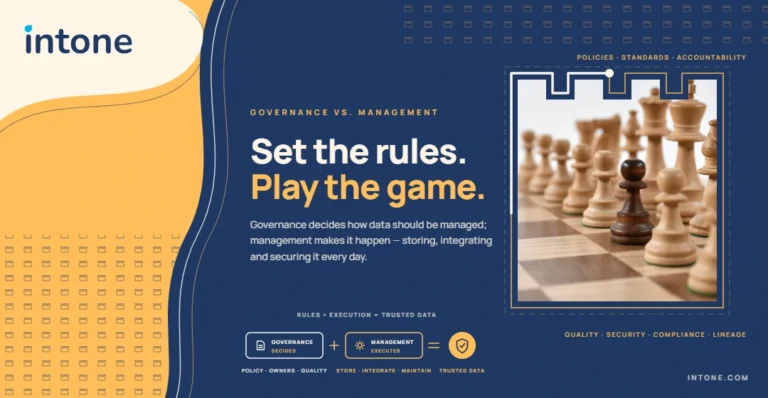
By standardizing policy guidelines across subsidiaries and operational teams, business leaders can reduce gaps that may be exploited for financial fraud or other unauthorized activities. Synchronized monitoring also allows compliance teams to identify anomalies across platforms, helping prevent inaccurate or corrupted information from affecting executive decision-making.
Streamlining Automated Evidence Collection and Eliminating Manual PBC Requests
Traditional audit procedures often depend heavily on manual PBC (Provided by Client) requests, where internal teams collect screenshots, export flat files, and manually verify ledger entries.
These labor-intensive manual PBC requests can create operational bottlenecks and introduce opportunities for intentional or accidental manipulation of sample information.
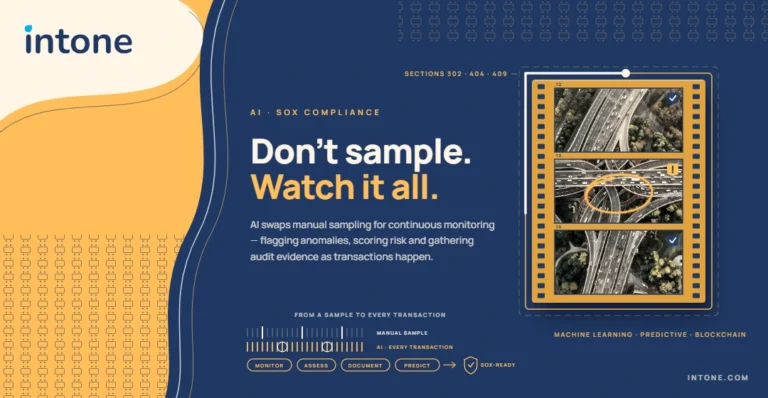
Modern compliance programs can replace manual workflows with automated evidence collection mechanisms that pull information directly from underlying systems. By collecting tamper-evident logs directly from database management systems and API pipelines, organizations can reduce human intervention during audit preparation and provide auditors with more reliable information.
Automated evidence collection can accelerate the audit cycle, reduce human error, and provide greater visibility into system operations without significantly interrupting daily employee activities.
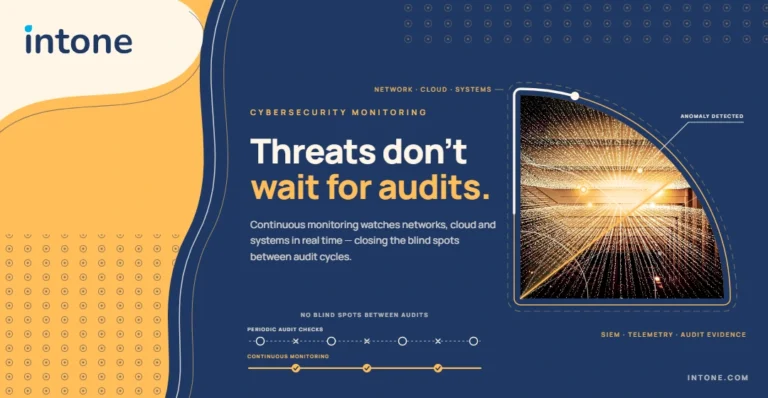
This automated approach transforms compliance from a periodic, reactive process into a more continuous and proactive defensive posture.
Leveraging IntoneSwift® to Protect Enterprise Data Assets
Data manipulation attacks can affect organizations across commonly targeted sectors, including healthcare, financial services, and government. These attacks can involve the unauthorized alteration of health, education, financial, professional, and operational records.
Reducing the potential impact of such attacks requires organizations to strengthen data integration, monitoring, access controls, and traceability.
Intone takes a people-first approach to data optimization and provides data integration and management solutions designed around organizational requirements.
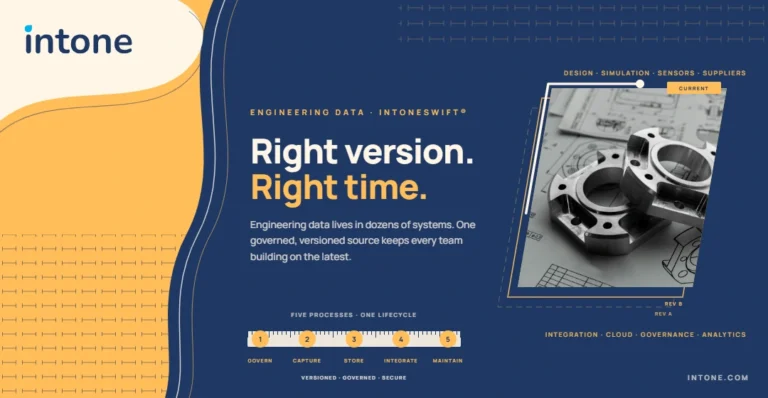
IntoneSwift® is a data integration solution designed to help organizations securely manage and integrate information across diverse systems. Its capabilities include:
Knowledge Graph Generation
Generates knowledge graphs across data integrations, helping organizations identify relationships between systems and detect potentially unauthorized modifications more effectively.
Extensive Connectivity
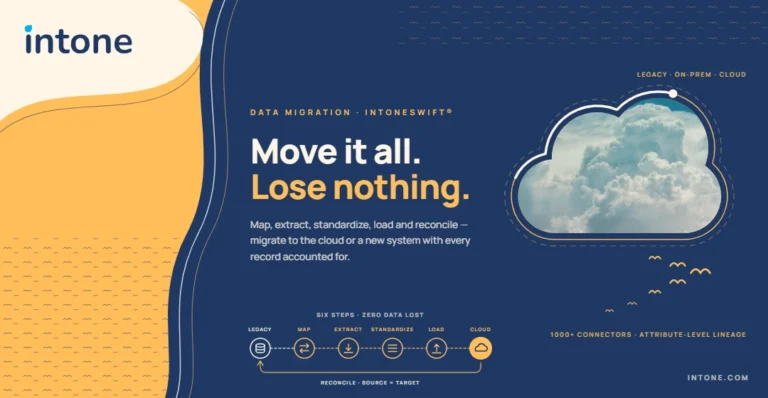
With 1000+ data, application, and device connectors, organizations can connect diverse systems while applying consistent control policies across different information sources.
Low-Code Interface
Provides a graphical low-code/no-code environment that simplifies configuration and reduces the technical effort required to manage integrations.
High-Speed Execution
Distributed in-memory data operations support high-speed processing while continuous integrity checks help organizations monitor information during integration workflows.
Attribute-Level Lineage
Tracks individual attributes throughout integration processes, giving organizations greater visibility into where information comes from, how it changes, and where it goes.
Comprehensive Encryption
Encrypts sensitive information across different stages of processing, helping reduce the risk of unauthorized access.
Centralized Credentials
Centralizes password and connection management, making access administration easier to manage across integrated systems.
Versatile Processing
Supports real-time, streaming, and batch processing, allowing organizations to select processing methods according to their operational requirements.
Heterogeneous Support
Supports different combinations of information sources, helping organizations integrate information across complex technology environments.
Real-Time Monitoring
Provides real-time visibility into integration activities, allowing teams to identify issues and respond more quickly.
Integrating IntoneSwift® into an enterprise technology stack can help organizations manage diverse data streams securely while maintaining greater visibility and supporting compliance requirements.
Whether an organization is managing financial records, operational information, customer data, or other critical business assets, maintaining accurate and traceable records is essential for sustained business growth.
Key Takeaways
- Validate information continuously: Use validation and integrity checks to identify inconsistencies and unauthorized changes.
- Standardize security controls: Apply consistent security and access controls across business units and systems.
- Maintain data lineage: Track how information moves and changes across systems to improve transparency and traceability.
- Automate evidence collection: Replace manual audit preparation with automated evidence collection to improve efficiency and reduce opportunities for human error or manipulation.
- Use continuous monitoring: Monitor integrated systems in real time to identify suspicious changes and respond to potential risks quickly.
Contact Us
Contact us to learn more about how we can help you protect your enterprise assets, strengthen data integrity, and maintain greater control over your digital infrastructure.
FAQ’s
Unlike data breaches that primarily involve unauthorized access to information, manipulation alters underlying records. This can cause organizations to make flawed strategic and financial decisions without realizing that the records they rely on have been compromised.
Data lineage provides a continuous record of how information moves, transforms, and is processed from source to destination. This improves traceability and can make unauthorized modifications easier to identify.
Standardizing security controls across business units promotes consistent validation, access, and security practices, reducing weak points that attackers could otherwise exploit.
Automated evidence collection pulls audit evidence directly from underlying systems, reducing dependence on manual PBC requests, minimizing human intervention, and improving audit transparency.
IntoneSwift® provides capabilities including attribute-level lineage mapping, data encryption, real-time monitoring, and 1000+ connectors to help organizations integrate diverse information sources while improving traceability and security.