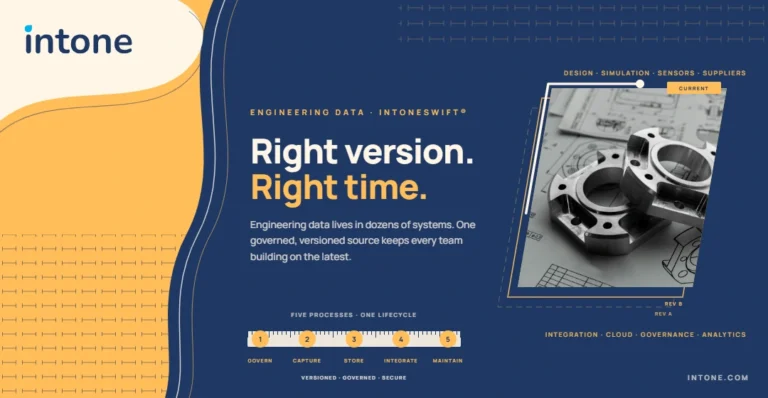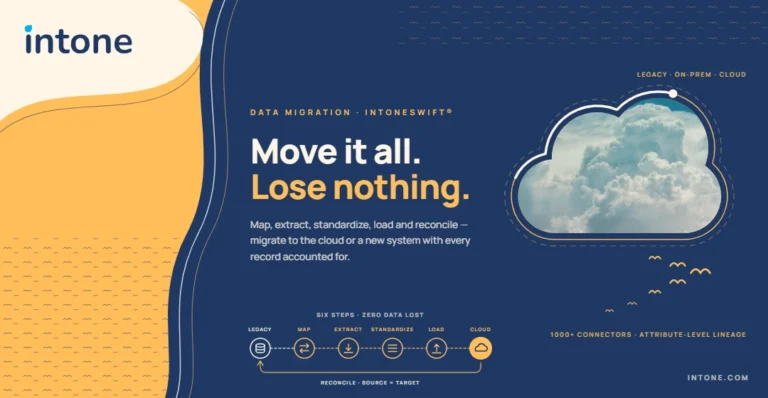


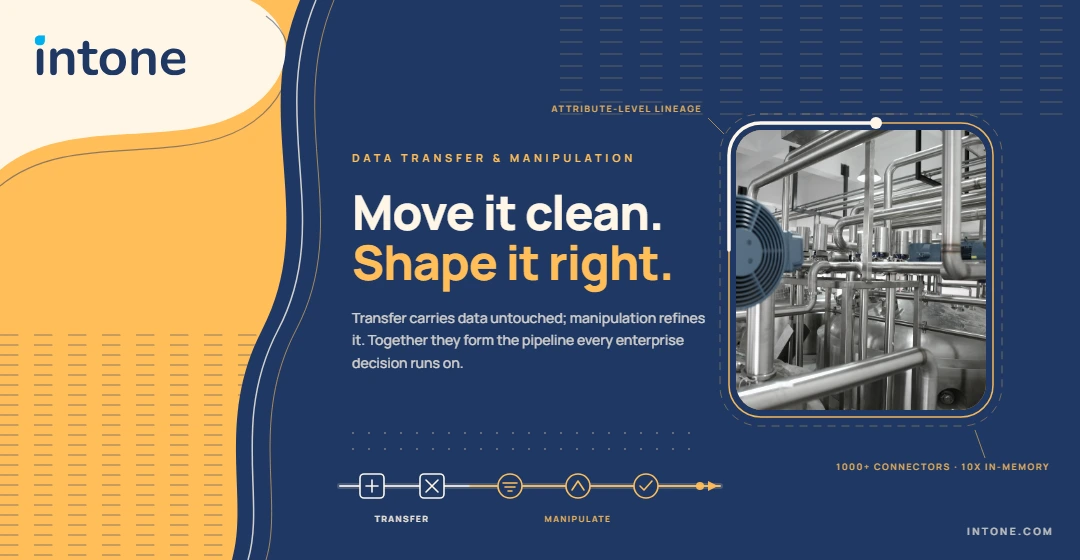
Data transfer moves information between storage systems, databases, and cloud environments without changing binary content, whereas data manipulation executes logic, aggregation, and restructuring operations to transform raw data. Together, these core data management processes enable modern enterprises to clean, structure, and route critical assets across pipeline architectures to unlock actionable business intelligence.
Data plays a vital role in the growth of any firm. Maintaining massive volumes of data and coping with complex integration challenges has become a primary hurdle for modern enterprises. To address this, organizations rely on robust data pipelines to execute essential operational workflows. Data transfer and data manipulation form the core foundation that enterprises employ to clean, structure, and route critical information assets across enterprise systems.
Whether you are a data analyst visualizing customer behavior, a data scientist training complex models, or a technical lead deploying advanced machine learning algorithms, efficient data manipulation and transfer form the backbone of modern analytics and enterprise data management.
What Is Data Transfer and Data Manipulation in Enterprise Architecture?
In enterprise data integration, data transfer moves data from one storage system, cloud location, or application to another without altering the underlying information content. Conversely, data manipulation executes business logic, data cleaning, filtering, and aggregation operations on data to prepare it for downstream applications.
While the collection, replication, and transmission of large datasets across business units or third-party platforms rely on data transfer protocols, data manipulation uses an ETL platform or data pipeline to alter, clean, and reformat raw inputs to unlock actionable business intelligence.
The Anatomy of Enterprise Data Manipulation and Integration Pipelines
To understand how modern data pipelines execute these tasks, consider how high-level ETL platforms and integration engines handle incoming enterprise records:
| Operation Type | Integration Workflow | Primary Function | Enterprise Business Application |
| Data Transfer | Batch Data Ingestion | Moves bulk data between databases, data lakes, and cloud repositories without alteration. | Ingesting raw server logs and ERP transactions into a central data lake. |
| Data Transfer | Real-Time Streaming | Routes continuously generated event feeds across distributed cloud services. | Streaming transactional events into real-time fraud detection systems. |
| Data Manipulation | Data Cleansing & Normalization | Standardizes date formats, fills missing values, and removes duplicate entries. | Unifying customer profiles across legacy CRM and modern cloud databases. |
| Data Manipulation | Aggregation & Transformation | Joins tables, calculates calculated fields, and aggregates transactional records. | Computing daily dynamic revenue metrics, tax liabilities, and sales KPIs. |
| Data Manipulation | Binary Masking & Logic | Applies conditional filtering, obfuscation, and access rules to data streams. | Ensuring data privacy compliance by anonymizing PII before analytics storage. |
Understanding how software architectures execute these steps allows organizations to optimize pipeline throughput, lower compute overhead, and ensure seamless interoperability across diverse infrastructure components.
What Is the Goal of Data Transfer and Data Manipulation?
Data transfer and data manipulation enable the safe transmission, processing, and governing of large files across computing clusters and enterprise platforms. Internally, automated data pipelines act as the foundation for modern business application integration. While data transfer securely communicates data across business partners, suppliers, and cloud ecosystems, data manipulation organizes structured and unstructured data so downstream systems can process it efficiently.
Case in point: By implementing a robust data management service in banking, institutions boost customer service while achieving greater profitability. With cutting-edge business intelligence, predictive analytics, and modern data science tools, banking institutions can swiftly identify and meet customer needs. Effectively carrying out these procedures increases overall data quality, while automated workflows deliver high performance, reduce transaction costs, and uphold strict compliance standards through complete audit trails.
Where Are Data Transfer and Data Manipulation Used Across Industries?
Data transfer ensures that organizations meet security and compliance requirements, while data manipulation structures raw records to make them easier to analyze and understand.
- E-Commerce & Digital Marketing: Website owners manipulate web clickstream logs to track traffic origins, build conversion funnels, and optimize user experience.
- Accounting & Finance: Financial teams arrange and transfer data to calculate product costs, project future tax responsibilities, and analyze market trends. Stock market forecasters leverage these techniques to feed dynamic models that predict asset performance.
- Manufacturing & Supply Chain: Integrated data management enables accurate tracking and reporting of shop-floor activities, directly improving product quality, safety standards, and inventory management.
Across every sector, technology driven by artificial intelligence and automation transforms messy source information into realistic, actionable representations that power strategic decision-making.
Key Steps in the Data Manipulation Workflow
To derive true value from raw enterprise feeds, a data science or engineering team typically follows a structured pipeline:
- Extraction and Ingestion: Collecting raw files from APIs, IoT sensors, transactional databases, and third-party vendors via secure data transfer protocols.
- Cleansing and Normalization: Eliminating duplicate records, handling missing values, standardizing date/currency formats, and stripping out corrupt entries.
- Transformation and Aggregation: Sorting, filtering, joining tables, and applying mathematical formulas to construct key performance indicators (KPIs).
- Validation and Quality Control: Verifying that transformed outputs comply with corporate governance rules, business logic, and schema definitions.
- Loading and Visualization: Delivering polished datasets to enterprise data warehouses or downstream business intelligence platforms for report generation.
Skipping any phase in this sequence introduces systemic inaccuracies, leading to flawed forecasts and unreliable operational metrics.
Advanced Techniques: Combining Machine Learning and Data Science
As enterprise datasets grow in both size and complexity, manual or rule-based data manipulation quickly becomes unsustainable. Modern enterprises increasingly rely on artificial intelligence and machine learning algorithms to automate data prep tasks:
- Automated Feature Engineering: Algorithmic routines analyze relational tables to generate new, predictive attributes without requiring constant human intervention.
- Anomaly Detection: Machine learning models identify outliers, broken schemas, or corrupt records during transfer, isolating bad data before it impacts downstream systems.
- Natural Language Processing (NLP): Extracting key attributes from unstructured data—such as customer review text, legal contracts, or support tickets—and converting them into tabular formats.
- Smart Data Matching: Advanced fuzzy-matching algorithms merge duplicate customer profiles across disparate databases, ensuring a single source of truth.
By merging sophisticated expertise in data science with automated data pipelines, organizations process millions of records per second while keeping human error to an absolute minimum.
Strategic Evaluation: Manual Processing vs. Automated Enterprise Platforms
Organizations facing growing data volumes must evaluate whether to build custom script-based pipelines or adopt automated, enterprise-grade data platforms:
| Evaluation Criteria | Script-Based / Manual Pipeline | Automated Enterprise Platform (e.g., IntoneSwift) |
| Development Effort | High; requires dedicated data scientist and developer time to write and maintain scripts. | Low; utilizes pre-built connectors and low-code/no-code graphical interfaces. |
| Scalability | Limited by local hardware resources and custom code optimization. | High; leverages distributed in-memory compute for 10X speed on massive datasets. |
| Data Lineage & Audit | Manual logging required; difficult to maintain full attribute-level tracking. | Built-in; automatically captures attribute-level lineage across all mapping steps. |
| Security & Compliance | Encryption and access controls must be custom-coded and continually audited. | End-to-end encryption, centralized connection management, and automated governance. |
| Real-Time Capabilities | Complex to implement for high-velocity streaming sources. | Native support for real-time, streaming, and batch processing modes. |
Why Choose IntoneSwift for Enterprise Data Management?
Modern business strategy relies heavily on the proper use of data, and a well-engineered data migration strategy is essential to success. IntoneSwift provides an enterprise-grade integration solution designed by industry experts to address complex data transfer and transformation challenges.
For deeper insights into enterprise architecture and integration tools, read our detailed guide on Data Transfer and Manipulation: Solving Business Problems With Technology.
IntoneSwift offers an impressive array of core features:
- Automated Knowledge Graphs: Generates rich knowledge graphs for all enterprise data integrations.
- 1000+ Pre-built Connectors: Offers native connectivity across diverse data, applications, and hardware devices.
- Low-Code/No-Code Interface: Features an intuitive graphical interface that simplifies pipeline construction for any data analyst or technical lead.
- Distributed In-Memory Engine: Powers operations with distributed in-memory computing, delivering up to 10X faster execution speeds.
- Attribute-Level Lineage Tracking: Captures complete end-to-end lineage mapping down to individual attributes for bulletproof compliance.
- Enterprise Security: Delivers full data encryption at every stage alongside centralized password and connection management.
- Hybrid Processing Modes: Seamlessly supports batch, streaming, and real-time processing across unlimited heterogeneous sources.
- Real-Time Monitoring: Includes a visually intuitive monitoring dashboard providing live updates on health, throughput, and error rates.
By leveraging automation and enterprise-grade tools like IntoneSwift, modern organizations overcome integration bottlenecks, maintain strict governance, and transform raw operational data into a true competitive advantage.
Key Takeaways
- Data Pipeline Synergy: Combining secure data transfer protocols with precise data manipulation instructions enables end-to-end automated pipelines.
- Machine Learning Automation: AI routines and fuzzy matching minimize human error and automate feature engineering at enterprise scale.
- IntoneSwift Platform Advantage: Leveraging 1000+ connectors and distributed in-memory compute delivers up to 10X performance improvements with complete lineage compliance.
FAQ’s
Data transfer instructions move data between systems, cloud applications, and storage repositories without altering the underlying content. Data manipulation instructions perform logic, filtering, formatting, and aggregation operations to clean and transform data for downstream analytics.
Attribute-level lineage tracking maps the complete transformation journey of individual data fields from source to destination. This ensures strict governance, simplifies audit processes, and guarantees compliance with industry regulations.
IntoneSwift utilizes a distributed in-memory engine combined with pre-built optimized connectors, allowing high-volume batch and streaming data to be transformed without disk-bound latency bottlenecks.
Are complex data pipeline bottlenecks, manual transformations, and lineage compliance issues slowing down your enterprise analytics?
IntoneSwift automates enterprise data transfer and manipulation with 1000+ pre-built connectors, attribute-level lineage tracking, and distributed in-memory processing for 10X faster execution.
Streamline your data migration strategy and automated pipeline management with IntoneSwift today.