

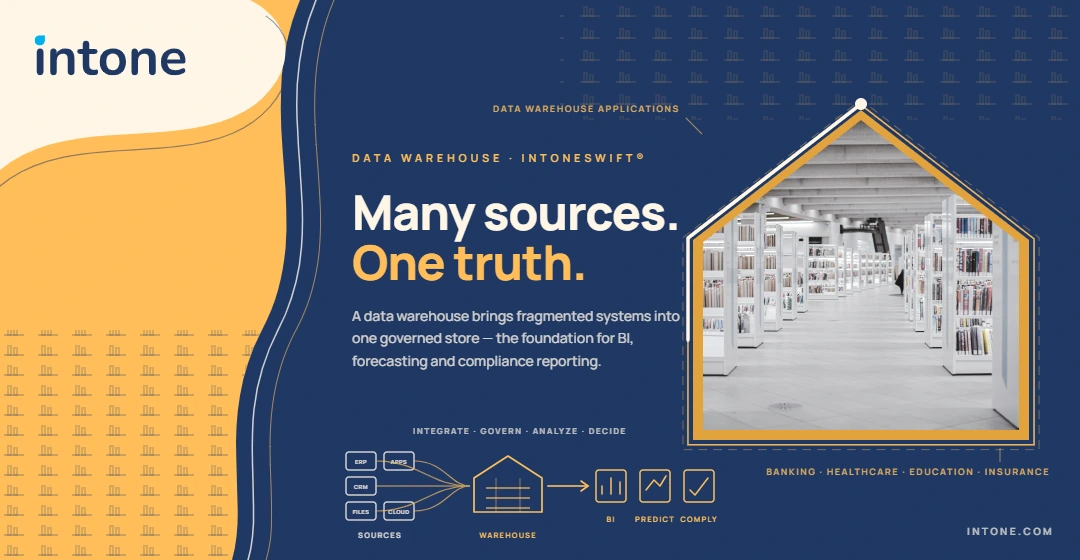
Explore how data warehouse applications help organizations integrate information, improve data quality, support business intelligence, and make better decisions.
Data warehouse applications help organizations collect, integrate, organize, and analyze information from multiple sources in a centralized environment. Businesses use data warehouses to support business intelligence, reporting, predictive analytics, data governance, and informed decision-making across industries.
Businesses generate data from an increasing number of applications, enterprise systems, databases, customer interactions, and operational processes. While this information can provide valuable insights, managing data across disconnected systems can make it difficult for organizations to obtain a consistent view of their business.
A data warehouse provides a centralized environment for bringing information together from multiple sources. Organizations can use this information for business intelligence, analytical reporting, forecasting, predictive analytics, and business decision-making.
Modern data warehouse applications extend beyond simply storing information. They can help organizations improve data quality, connect disparate systems, support analytics, and provide enterprise leaders with the information they need to make informed decisions.
As businesses continue adopting cloud technology and increasingly complex enterprise systems, effective data management and data integration have become important components of a modern data strategy.
What are Data Warehouse Applications?
Data warehouse applications refer to the ways organizations use data warehouse technology to collect, organize, integrate, process, and analyze information for specific business purposes.
A data warehouse can consolidate information from different sources into a centralized repository. This can make it easier for teams to access consistent information rather than searching through multiple disconnected systems.
Organizations can use data warehouses for:
- Business intelligence and reporting
- Data analytics
- Predictive analytics
- Financial analysis
- Customer behavior analysis
- Operational reporting
- Risk analysis
- Forecasting
- Regulatory and compliance reporting
- Strategic decision-making
The specific application depends on an organization’s industry, business goals, technology environment, and data requirements.
Top Data Warehouse Applications at a Glance
- Business Intelligence and Reporting: Centralize data from multiple sources to support dashboards, reports, and performance analysis.
- Data Analytics: Provide integrated datasets that teams can use to identify trends, patterns, and relationships across business operations.
- Predictive Analytics: Supply historical and current data for forecasting, predictive models, and data-driven planning.
- Financial Analysis: Consolidate financial information to support budgeting, revenue analysis, expense tracking, and financial reporting.
- Customer Behavior Analysis: Combine customer data from multiple sources to analyze purchasing patterns, preferences, and interactions.
- Operational Reporting: Provide a centralized view of operational data to help organizations monitor processes and performance.
- Risk Analysis: Integrate relevant data to support the identification, assessment, and monitoring of business risks.
- Regulatory and Compliance Reporting: Organize information needed for regulatory reports, audits, and compliance-related processes.
- Strategic Decision-Making: Give decision-makers access to consolidated historical and current data to support long-term planning and business decisions.
Data Warehouse Applications Across Industries
Data warehouse applications can provide value across industries because organizations in different sectors face a common challenge: turning large amounts of fragmented information into useful insights.
Banking
Banks manage large volumes of customer, transaction, financial, regulatory, and market information. A data warehouse can bring these sources together and make information easier to analyze.
Banking organizations can use data warehouse applications to evaluate customer behavior, monitor market trends, analyze product performance, and support financial decision-making.
For example, analyzing transaction histories can help financial institutions understand spending patterns and customer preferences. This information can support more personalized offers, product recommendations, and customer engagement strategies.
Data warehouses can also support risk analysis and regulatory reporting by providing teams with a consolidated view of relevant information.
Data management services can complement these capabilities by helping financial organizations establish reliable processes for collecting, integrating, securing, and managing sensitive information.
Healthcare Data Storage
Healthcare organizations generate clinical, financial, administrative, and patient-related information across numerous systems.
A data warehouse can consolidate information from electronic health records, laboratory systems, financial applications, and other healthcare platforms.
This can help healthcare organizations analyze information more effectively while supporting operational planning and reporting.
Healthcare data warehouses can be used to:
- Analyze patient and clinical trends
- Monitor operational performance
- Support resource planning
- Evaluate financial information
- Improve reporting
- Support predictive analytics
- Identify opportunities to improve patient care
Maintaining data quality is particularly important in healthcare because inaccurate or incomplete information can affect analytical results and operational decisions.
Data integration can help organizations connect information from different healthcare applications while creating a more unified view of relevant data.
Analysis in Education
Educational institutions manage information related to students, faculty, finances, research, enrollment, and administrative operations.
Data warehouses can consolidate these different sources to help institutions analyze their data and make more informed decisions.
Universities can use warehouse technology to support:
- Student demographic analysis
- Enrollment forecasting
- Faculty and workforce planning
- Financial reporting
- Research funding analysis
- Student performance analysis
- Administrative decision-making
By bringing information from multiple systems into a centralized environment, educational institutions can reduce fragmented reporting and provide stakeholders with more consistent information.
Insurance Underwriting
The insurance industry relies heavily on data to evaluate risk, manage policies, understand customers, and process claims.
Data warehouse applications can help insurers consolidate policyholder information, claims data, transaction histories, and other relevant information.
Underwriters can analyze historical patterns to better understand customer and risk profiles. Organizations can also use data to identify trends and develop more targeted products and offers.
Predictive analytics can further help insurers evaluate patterns in historical information and use those insights to support future planning.
A centralized data environment can also improve operational efficiency by reducing the need for employees to manually gather information from multiple systems.
Data Integration and Enterprise Systems
One of the major benefits of a data warehouse is its ability to bring information together from different sources.
Large organizations may rely on numerous enterprise systems, databases, applications, cloud platforms, and external data sources. These systems may store information in different formats and structures.
Connecting Disconnected Data
Data integration allows information to move between different systems and environments.
A well-designed integration strategy can help organizations create a consistent flow of information into their data warehouse while reducing unnecessary manual data transfers.
Integration is particularly important for enterprise organizations because fragmented data can make reporting and analysis more difficult.
Modern data environments may include cloud applications, on-premises systems, legacy databases, APIs, and other data sources. Organizations therefore need flexible integration capabilities that can accommodate different technologies.
Data Quality and Data Governance
Centralizing data does not automatically make it reliable. Organizations must also establish processes for ensuring that information is accurate, complete, consistent, and appropriately managed.
Improving Data Quality
Data quality can affect every stage of the analytical process.
Duplicate records, missing information, inconsistent formats, and outdated data can produce misleading reports or inaccurate business insights.
Organizations can improve data quality through validation, standardization, cleansing, monitoring, and clearly defined ownership.
Data Governance
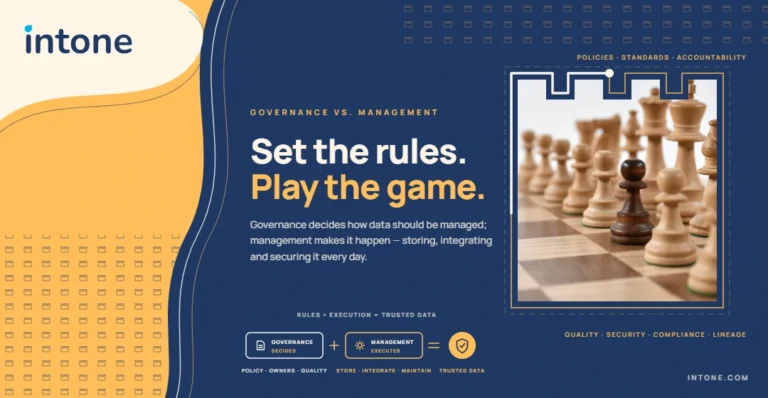
Data governance establishes the policies, responsibilities, standards, and processes used to manage organizational information.
A strong governance framework can help organizations determine:
- Who owns specific data
- Who can access information
- How data should be maintained
- Which standards should be followed
- How data-quality issues should be addressed
- How sensitive information should be protected
Data governance becomes increasingly important as organizations expand their use of cloud platforms, analytics, automation, and interconnected enterprise systems.
Business Intelligence and Decision-Making
One of the most important applications of a data warehouse is supporting business intelligence.
Business intelligence tools can use centralized warehouse information to generate dashboards, reports, metrics, and analytical insights.
Instead of relying on isolated spreadsheets or manually compiled reports, decision-makers can use consolidated information to evaluate business performance.
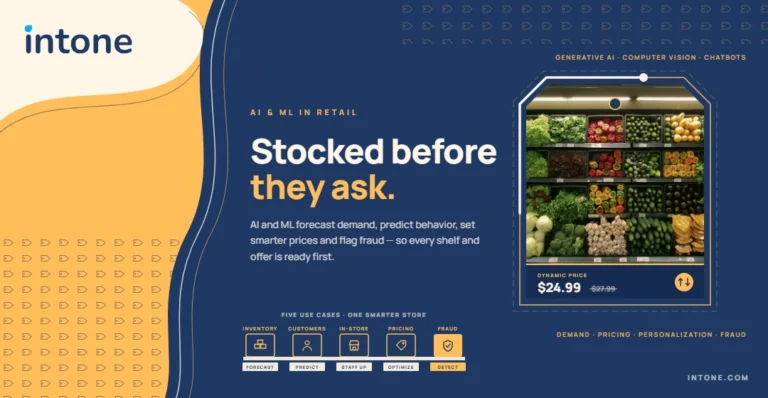
For example, a retail company can combine sales, inventory, and customer data in a data warehouse to identify which products are selling quickly in different locations. Managers can use this information to adjust inventory levels and allocate products based on current demand.
Supporting Better Business Decisions
Data warehouse applications can support a wide range of business decisions.
For example, enterprise leaders may use warehouse information to evaluate sales performance, customer behavior, financial trends, operational efficiency, or resource requirements.
When information is centralized and consistently managed, teams can spend less time locating and reconciling data and more time interpreting it.
Automation and Data Operations
Modern data environments increasingly depend on automation to move and process information efficiently.
Automated workflows can support data ingestion, transformation, validation, monitoring, and reporting.
Improving Data Operations
Efficient data operations help organizations manage information as it moves through different stages of the data lifecycle.
Automation can reduce repetitive manual activities while improving consistency and scalability.
For example, organizations can automate recurring data-processing workflows so information is updated on a scheduled or real-time basis.
This can be particularly valuable for organizations handling large volumes of information or managing multiple data sources.
Cloud Technology and Modern Data Warehousing
Cloud technology has changed how organizations build and operate data environments.
Cloud-based data warehouse technologies can provide scalability and flexibility without requiring organizations to maintain all infrastructure themselves.
Organizations can also combine cloud platforms with existing enterprise systems and applications to create hybrid data environments.
However, adopting cloud technology does not eliminate the need for appropriate data governance, security, integration, and quality management.
Organizations should evaluate how information moves between cloud and on-premises environments and establish appropriate controls for sensitive data.
Compliance, Privacy, and Security
Data warehouse environments may contain sensitive customer, financial, employee, or personal information.
Organizations therefore need to consider privacy, security, and compliance when designing and managing data warehouse environments.
Access controls, encryption, monitoring, authentication, and appropriate data-handling policies can help protect sensitive information.
Compliance requirements may also influence how organizations collect, store, retain, process, and share information.
A strong data strategy should therefore consider compliance requirements alongside analytics and operational objectives.
Data Warehouse Applications for Enterprise Leaders
For enterprise leaders, data warehouse technology should be viewed as part of a broader data-management strategy rather than simply a storage solution.
Leaders should consider how data is collected, integrated, governed, analyzed, secured, and ultimately used to support business goals.
Organizations may also benefit from specialized GRC advisory and data-management expertise when data environments intersect with compliance, risk, governance, and security requirements.
The goal should be to establish a data environment that supports both current operational requirements and future business needs.
Why Choose IntoneSwift®?
The data warehouse is integral to teams across an organization, including IT, data engineering, business analytics, and data science. Each team may have different requirements for accessing, integrating, processing, and analyzing information.
IntoneSwift® is designed to help organizations manage complex data environments and streamline data integration and data operations.
Its capabilities include:
- Knowledge graph for data integrations
- 1,000+ data, application, and device connectors
- A graphical no-code/low-code platform
- Distributed in-memory operations designed to improve data operations
- Attribute-level lineage across each data integration map
- Data encryption at every stage
- Centralized password and connection management
- Real-time, streaming, and batch data processing
- Support for heterogeneous data-source combinations
- Real-time monitoring and updates
These capabilities can help organizations connect fragmented information, improve visibility across their data environment, and support more efficient data operations.
For more information, see Intone’s related resource, Data Warehouse Applications: Technology Made Simple.
Contact Intone to learn more about IntoneSwift® and how it can support your organization’s data integration and data management needs.
Key Takeaways
- Data warehouse applications help organizations consolidate and analyze information from multiple sources.
- Data warehouses support business intelligence, reporting, forecasting, and predictive analytics.
- Banking, healthcare, education, and insurance organizations can use warehouse technology for different business needs.
- Data integration helps connect disconnected applications and enterprise systems.
- Strong data quality and data governance are essential for reliable analytics.
- Automation can improve data processing and operational efficiency.
- Cloud technology provides additional flexibility and scalability for modern data environments.
- Privacy, security, and compliance should be considered when managing sensitive information.
- Enterprise leaders can use centralized information to support better business decisions.
- IntoneSwift® provides data integration, processing, lineage, encryption, and monitoring capabilities for complex data environments.
FAQ’s
Data warehouse applications are the different ways organizations use data warehouse technology to collect, integrate, organize, process, and analyze information for business reporting, analytics, forecasting, and decision-making.
Data warehouses bring information from multiple sources into a centralized environment. This can make it easier for organizations to analyze information, improve reporting, and make informed business decisions.
Data warehouses are used across industries including banking, healthcare, education, insurance, retail, manufacturing, and technology. Each industry can apply warehouse technology to its own reporting, analytics, and operational requirements.
Data integration connects information from different applications and systems and moves it into a common environment. Effective integration can reduce data silos and help organizations create a more consistent view of their information.
Data governance establishes policies, standards, ownership, and responsibilities for managing information. It can help ensure that data entering and leaving a warehouse remains appropriately managed and reliable.
Yes. Data warehouses can consolidate historical and current information that can be used by analytical tools and models for forecasting and predictive analytics.
Automation can support data ingestion, transformation, validation, monitoring, and recurring processing workflows. This can reduce manual effort and improve the consistency of data operations.
IntoneSwift® provides data integration, data processing, lineage, encryption, monitoring, and connectivity capabilities that can help organizations manage complex data environments and connect information from diverse sources.