

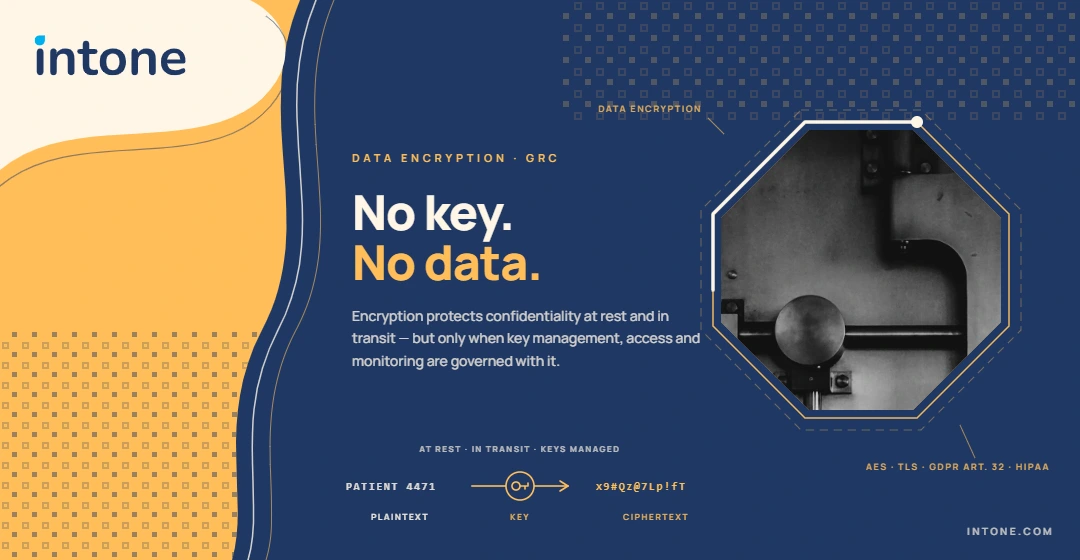
Data encryption is the process of transforming plaintext into ciphertext using a cryptographic algorithm and key so that unauthorized parties cannot read the protected information. Organizations use encryption to help protect data in transit and data at rest. Effective encryption also depends on secure key management, access controls, authentication, monitoring, and appropriate governance. Encryption primarily provides confidentiality; data integrity, authentication, and non-repudiation require additional cryptographic or security mechanisms such as message authentication codes and digital signatures.
Imagine sending a message and wanting to ensure that an unauthorized person who intercepts it cannot read its contents. Encryption helps achieve this by transforming readable data, known as plaintext, into ciphertext using a cryptographic algorithm and key. The authorized recipient or system can decrypt the ciphertext when it has the appropriate key. Encryption is widely used to protect sensitive information in storage and during transmission and is an important component of a broader cybersecurity strategy.
Modern digital services use encryption in everyday situations, including online transactions, secure web connections, cloud services, and enterprise data storage. For organizations, effective encryption is not a standalone security solution. It works alongside access controls, authentication, key management, monitoring, data-integrity mechanisms, and governance policies to reduce the risk of unauthorized disclosure or misuse.
What Is Data Encryption?
Data encryption is the process of converting readable information into an encoded format that can only be accessed by authorized parties with the appropriate decryption key.
Defining Data Encryption and Its Core Purpose in Modern Enterprises
Data encryption transforms readable information into ciphertext using a cryptographic algorithm and key. Decryption reverses the transformation when an authorized party or system has the required key. NIST defines encryption as transforming plaintext into ciphertext using a cryptographic algorithm and key.
Encryption is primarily designed to protect confidentiality. If encrypted information is obtained by an unauthorized party without access to the necessary key, the ciphertext should not reveal the original information when the cryptographic system is properly designed and implemented.
Encryption should not be treated as a complete security control. Encryption alone does not prove who sent a message, guarantee that data was not modified, or establish non-repudiation. Digital signatures and message-authentication mechanisms can provide additional assurances for origin authentication and integrity; digital signatures can also support non-repudiation when properly implemented.
For enterprise environments, encryption policies should therefore be integrated with broader governance requirements covering key generation, storage, rotation, access, recovery, logging, and decommissioning.
Mechanics of Encryption Across Data Storage and Transit States
Organizations commonly protect information in two important states: data at rest and data in transit.
Data at Rest
Data at rest refers to information stored in databases, file systems, storage volumes, backups, and cloud repositories. Encryption at rest can help reduce the risk of unauthorized disclosure if storage media, backups, or repositories are accessed without authorization.
Data in Transit
Data in transit refers to information moving between systems, applications, devices, or networks. Transport encryption helps protect information from unauthorized observation while it travels between communicating endpoints. Modern secure web communications generally use TLS rather than the outdated SSL protocols.
Encryption protects confidentiality, while separate integrity and authentication mechanisms can help detect unauthorized modification and verify communicating parties. These controls should be designed together rather than treating encryption as a substitute for a complete security architecture.
Types of Data Encryption Algorithms
Enterprise cryptographic architectures commonly use symmetric and asymmetric cryptography for different purposes.
Symmetric Encryption
Symmetric encryption uses the same secret key, or related secret-key material within a defined scheme, to encrypt and decrypt information. It is generally efficient for protecting large volumes of data, but organizations must securely manage and distribute the secret keys.
Asymmetric Cryptography
Asymmetric cryptography uses related public-key and private-key pairs. Public-key techniques can support encryption and secure key-establishment mechanisms, while digital signatures use a private key to sign information and a public key to verify the signature. Asymmetric cryptography does not eliminate all key-management or key-exchange risks; it changes how keys are established and used within the security architecture.
Organizations should select cryptographic algorithms and configurations based on current security guidance, system requirements, interoperability needs, and the sensitivity and lifecycle of the information being protected. Avoid unsupported claims about how many years a particular encryption method would take to break; security depends on the algorithm, key size, implementation, configuration, and threat model.
Aligning Encryption with Enterprise Risk Reduction
For enterprise leaders, encryption is an important technical safeguard for protecting confidential information and reducing the potential impact of unauthorized access to stored or transmitted data.
Sensitive information may include customer records, financial information, healthcare information, credentials, intellectual property, source code, and business documents. Organizations should identify where sensitive information resides and how it moves between internal systems, cloud services, applications, and third parties.
Cloud adoption increases the importance of consistent cryptographic policies across environments. Rather than applying isolated encryption settings to individual systems, organizations should establish enterprise requirements for approved algorithms, protocols, key management, access, monitoring, and lifecycle management.
Integrating GRC Advisory Frameworks and Continuous Controls Monitoring
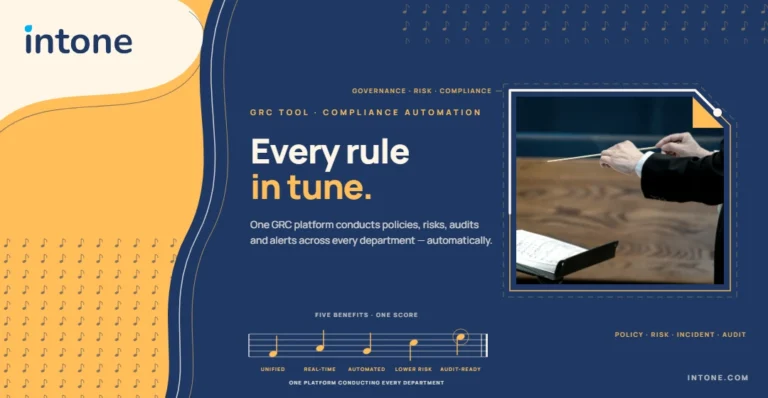
Encryption should operate within a broader Governance, Risk, and Compliance (GRC) program. Organizations can map cryptographic requirements to applicable legal, regulatory, contractual, and internal security obligations.
For example, Article 32 of the GDPR identifies encryption and pseudonymization as examples of appropriate technical and organizational measures, depending on risk and circumstances. Encryption is therefore an important GDPR security measure, but GDPR does not mean every organization must encrypt every piece of data in every situation.
Under the HIPAA Security Rule, encryption is an addressable implementation specification rather than a universally mandatory control. Covered entities and business associates must assess whether encryption is reasonable and appropriate based on their risk analysis and, where applicable, document the decision and use an equivalent alternative measure when appropriate.
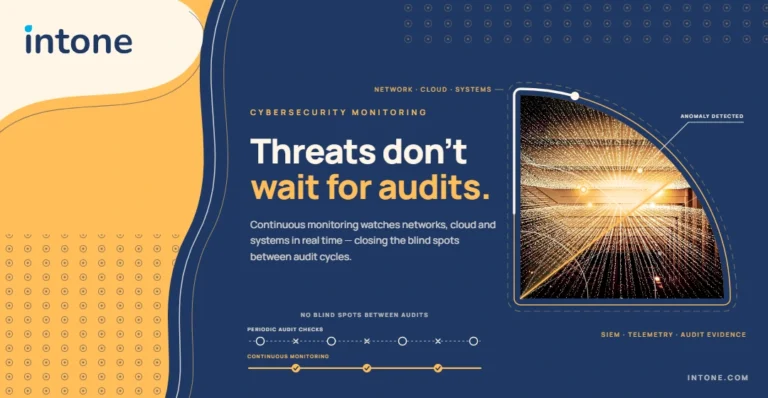
Continuous controls monitoring can complement encryption governance by helping organizations monitor relevant conditions such as key lifecycle events, access permissions, configuration status, and exceptions. Monitoring does not replace periodic risk assessments or human investigation.
Core GRC Implementation Steps
- Catalog and classify sensitive data: Identify important data repositories, data flows, owners, sensitivity levels, and applicable requirements.
- Define cryptographic standards: Establish approved algorithms, protocols, key sizes, configurations, and use cases based on current security guidance.
- Establish key-management procedures: Define secure key generation, storage, access, rotation, backup, recovery, revocation, and retirement processes.
- Automate appropriate controls: Use technical controls to apply approved encryption configurations and identify policy exceptions where practical.
- Monitor and audit: Record relevant security events, review access and configuration changes, and collect evidence that supports control assessments.
Securing Data Storage Systems and Cloud Repositories
Protecting stored information requires more than enabling a single encryption setting. Organizations should identify databases, file systems, cloud storage, backups, snapshots, removable media, and other repositories that contain sensitive information and determine appropriate protection for each.
Encryption should be combined with strong identity and access management, secure key management, logging, configuration management, and appropriate backup controls. Encryption keys should receive protections that prevent unauthorized users from simply obtaining both the encrypted data and the keys required to decrypt it.
Cloud providers may offer encryption capabilities at different layers, including storage, database, application, and transport layers. Organizations remain responsible for configuring and managing controls appropriately within their chosen cloud service model.
Essential Business Importance of Data Encryption
- Protecting Confidential Information: Encryption can reduce the risk of unauthorized disclosure when sensitive information is stored or transmitted.
- Securing Financial and Health Information: Encryption can help protect payment-related information, personal information, and health information when appropriately implemented.
- Supporting Regulatory and Contractual Requirements: Encryption can be an important safeguard for meeting applicable security and privacy obligations, but requirements vary by regulation and circumstance.
- Reducing the Impact of Certain Data Exposures: Properly encrypted data may be less useful to an unauthorized party who does not possess the required cryptographic keys.
- Protecting Intellectual Property: Encryption can help safeguard confidential business documents, source code, research, and other proprietary information.
Encryption is most effective as part of defense in depth. It should complement identity and access management, secure configuration, vulnerability management, monitoring, data-loss prevention where appropriate, and incident-response processes.
Supporting Practical Insights and Advanced Data Governance
Turning encryption policy into an operational control requires visibility into where data is collected, transformed, transferred, and stored. Data teams should identify sensitive information as it moves through integration and processing pipelines and determine where encryption should be applied.
Encryption also needs to be considered alongside data-management requirements. Poorly designed encryption and key-management processes can create availability or operational challenges, so organizations should test implementations and ensure authorized users and systems can access information when required.
Standardizing cryptographic requirements across business units can reduce configuration differences and simplify governance. Centralized policies can define approved protocols, key-management responsibilities, access requirements, monitoring, and exception procedures.
Data lineage can complement encryption by showing where sensitive information originates, how it is transformed, and where it is delivered. Lineage does not encrypt data itself, but it can improve visibility into the systems and workflows that need appropriate protection.
Leveraging IntoneSwift for Enterprise Data Security and Integration
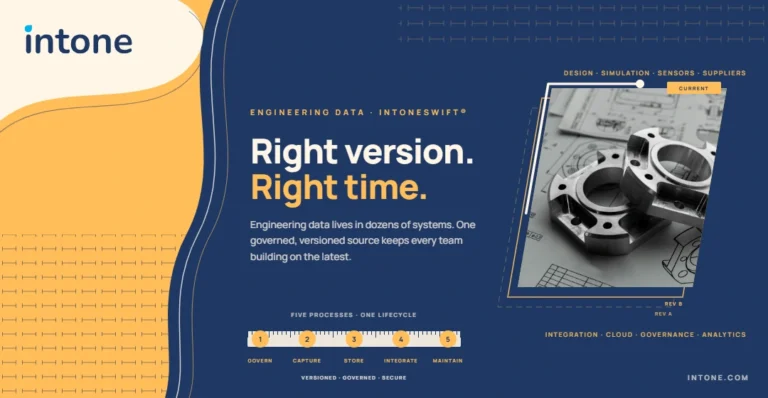
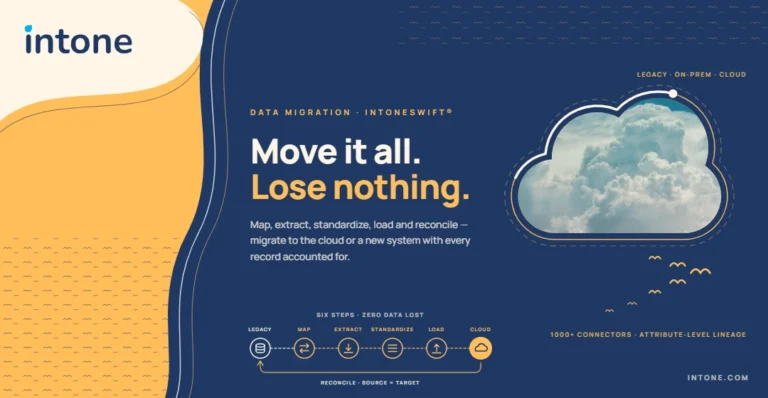
Secure enterprise integration requires organizations to connect diverse systems while maintaining visibility into data movement and applying appropriate security controls. IntoneSwift is designed to support enterprise data integration across heterogeneous environments.
Its capabilities include:
Knowledge Graph Generation
Generates knowledge graphs across integrations to help organizations visualize relationships among connected systems and data sources.
1000+ Enterprise Connectors
Supports 1000+ data, application, and device connectors, according to Intone’s published product information.
Low-Code/No-Code Platform
Provides a graphical environment designed to simplify configuration and management of data-integration workflows.
High-Speed Execution
Supports distributed in-memory data operations for high-speed processing. Any specific ’10X’ performance figure should be presented as an Intone-published claim unless independently benchmarked.
Attribute-Level Data Lineage
Provides visibility into individual data attributes through integration workflows, helping organizations understand origins, transformations, and destinations.
Data Encryption
Provides encryption capabilities within relevant integration and processing workflows. Specific coverage and configuration should be verified against implementation requirements.
Centralized Security and Credentials Management
Provides centralized capabilities for managing connection and credential information across integrated environments.
Versatile Data Processing
Supports real-time, streaming, and batch processing for different operational requirements.
Heterogeneous Data Support
Supports integration across different types of data sources and technology environments.
Real-Time Monitoring
Provides visibility into integration activity to help teams identify issues and respond more quickly.
Integrating IntoneSwift into an enterprise technology environment can help organizations connect diverse data sources, improve lineage visibility, and manage data-integration workflows. These capabilities can support a broader enterprise security architecture, but IntoneSwift should not be presented as independently guaranteeing regulatory compliance, preventing every breach, or providing encryption for every system in an organization’s environment.
Data Encryption Checklist
Use this checklist to strengthen your organization’s data encryption practices:
- Identify sensitive data: Locate and classify data that requires encryption.
- Encrypt data at rest and in transit: Apply appropriate encryption to stored and transmitted information.
- Use approved cryptographic standards: Select secure algorithms, protocols, and configurations based on current security guidance.
- Manage encryption keys securely: Protect keys through generation, storage, access, rotation, recovery, and retirement.
- Control access: Restrict access to encrypted data and key material to authorized users.
- Monitor and review: Regularly monitor encryption configurations, access activity, and policy exceptions.
- Test and update controls: Periodically assess encryption controls and update them as security requirements change.
Key Takeaways
- Encrypt data appropriately: Protect sensitive information at rest and in transit using approved cryptographic mechanisms and configurations.
- Separate security functions: Remember that encryption primarily protects confidentiality; authentication, integrity, and non-repudiation require additional controls where needed.
- Standardize cryptographic governance: Define approved algorithms, protocols, key-management practices, access requirements, and exception procedures.
- Manage keys securely: Protect key material throughout its lifecycle, including generation, storage, access, rotation, recovery, revocation, and retirement.
- Automate appropriate monitoring: Use continuous monitoring and evidence collection to identify configuration or access exceptions and support audits.
- Maintain data lineage: Track sensitive information across integration workflows so organizations can understand where protection requirements apply.
- Use defense in depth: Combine encryption with identity, access management, secure configuration, monitoring, vulnerability management, and incident response.
FAQ’s
Data encryption transforms plaintext into ciphertext using a cryptographic algorithm and key and is designed to protect confidentiality. Data masking replaces or obscures sensitive values, often for testing, development, analytics, or limited-access use cases. Masking and encryption address different requirements and should not be treated as interchangeable controls.
Encryption for data in transit protects information as it moves between systems or networks, commonly through protocols such as TLS. Encryption for data at rest protects information stored in databases, files, storage volumes, backups, and other repositories.
Symmetric encryption uses the same key to encrypt and decrypt data, while asymmetric encryption uses a pair of keys—a public key for encryption and a private key for decryption. Symmetric encryption is generally faster for protecting large amounts of data, while asymmetric encryption is commonly used for secure key exchange, authentication, and digital signatures
If unauthorized parties obtain the keys needed to decrypt protected information, encryption may no longer provide the intended confidentiality. Key management therefore includes secure generation, storage, access control, rotation, recovery, revocation, and retirement of cryptographic keys.
Encryption can be an important security measure under privacy and security requirements. GDPR Article 32 specifically identifies encryption as an example of an appropriate technical and organizational measure based on risk. Under HIPAA, encryption is an addressable implementation specification, meaning covered entities and business associates must assess whether it is reasonable and appropriate for their circumstances.
No. Encryption primarily provides confidentiality. Integrity and authentication can require additional mechanisms such as message authentication codes, authenticated encryption, digital signatures, certificates, and access controls, depending on the use case.
intoneSwift® provides capabilities such as encryption within relevant integration workflows, centralized credential management, attribute-level lineage, connectivity, and monitoring. The exact controls available and their configuration should be evaluated against the organization’s security and compliance requirements.