

Businesses generate and handle huge amounts of data daily. According to a study by IDC, global data volume will exceed 175 zettabytes by 2025. This rapid growth highlights the vital role of data analytics in shaping corporate strategies. Utilizing data analytics services enables organizations to transform raw information into actionable insights, guiding crucial decisions across marketing, operations, and finance.
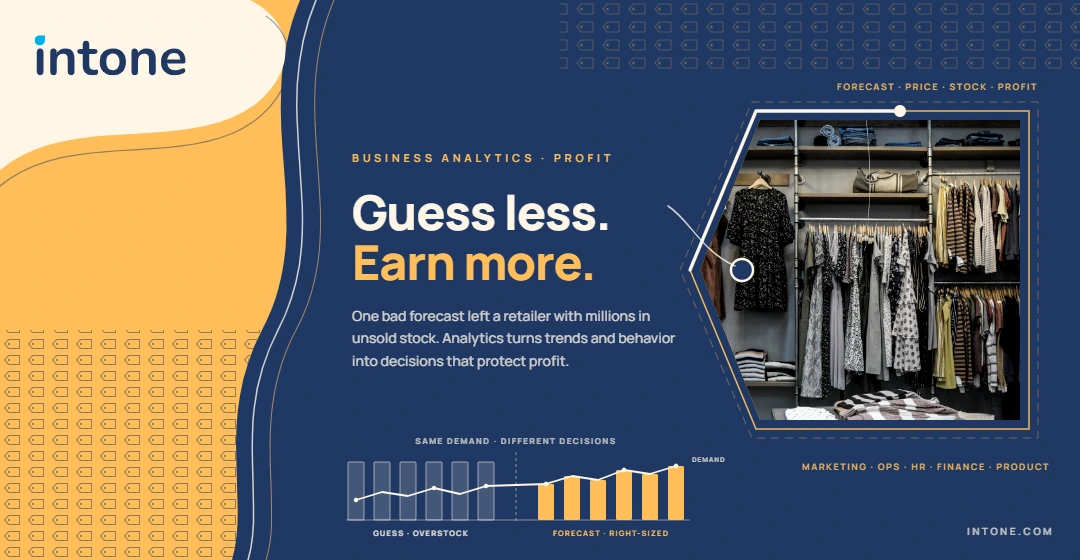
However, moving forward without an effective data analytics framework leads to costly mistakes. In 2017, a major retailer overstocked seasonal items due to inaccurate demand forecasts, resulting in millions of dollars in losses. This failure emphasizes why modern business leaders must adopt structured data analytics services to navigate market uncertainty and avoid strategic pitfalls.
Core Benefits of Data Analytics in Strategic Decision-Making
Implementing professional data analytics services provides advantages that modernize business operations from the ground up:
- Improved Accuracy in Forecasting and Planning: Leveraging data analytics allows teams to analyze historical trends and customer behavior, helping predict future outcomes accurately.
- Improved Operational Efficiency: Utilizing data analytics services streamlines everyday processes, identifies operational bottlenecks, cuts excess costs, and boosts productivity.
- Deeper Customer Insights: Applying data analytics gives organizations a clear view of customer preferences, allowing them to meet market expectations and increase brand loyalty.
- Increased Agility and Risk Management: Utilizing data analytics services keeps teams responsive to shifting market conditions while identifying potential operational risks early.
Applications of Data Analytics Across Core Business Functions
1. Marketing and Sale
By using data analytics services, companies can segment audiences accurately and launch targeted campaigns. Leveraging data analytics helps predict customer lifetime value, optimize pricing strategies, and maintain a sharp competitive edge.
2. Operations and Supply Chain Management
Using data analytics services provides tools to anticipate demand accurately, minimizing inventory costs and eliminating stockouts. Operating with data analytics optimizes logistics delivery routes, lowers fuel consumption, and enhances overall supply chain efficiency.
3. Human Resources (HR)
Applying data analytics guides HR teams in identifying top talent, predicting workforce demands, and reducing hiring costs. Using data analytics services tracks performance metrics, pinpoints operational trends, and reduces employee turnover.
4. Finance
Integrating data analytics services helps financial institutions detect and prevent fraud by spotting unusual transaction patterns. Data analytics supports reliable financial forecasting, robust budgeting, and precise portfolio risk management.
5. Product Development
Applying data analytics services enables product teams to monitor emerging market trends and test features using A/B testing models. Leveraging data analytics post-launch tracks customer feedback and fuels continuous product refinement.
Developing a Robust Data Analytics Framework for Modern Enterprises
To maximize ROI, CIOS and CTOS must build a scalable architecture rather than relying on isolated analytics tools. A modern data analytics framework establishes clear data pipelines, enforces strict security protocols, and ensures rapid access to operational metrics across departments.
Without a centralized architecture, enterprises face fragmented reporting, duplicate efforts, and inconsistent metrics. Establishing a uniform enterprise framework standardizes data ingestion, transforms unorganized records into clean datasets, and prepares your workforce to make reliable, data-backed decisions.
Overcoming Poor Data Quality and Operational Inefficiencies
The success of any corporate analytics initiative depends entirely on the accuracy of the underlying dataset. Resolving poor data quality must remain a top operational priority for enterprise leaders. Inaccurate records, missing entries, and duplicate metrics quickly erode stakeholder trust and corrupt automated forecasting models.
Establishing strict data quality controls ensures every department works with accurate, real-time metrics. Implementing continuous automated validation, standardized data collection formats, and routine database audits prevents flawed information from skewing business forecasts.
Establishing Enterprise AI Governance and Control
As business intelligence shifts toward enterprise automation, adopting formal AI governance is crucial. Modern enterprises require structured policies to maintain algorithm transparency, uphold ethical standards, and protect sensitive customer data.
Establishing strong governance and control frameworks prevents compliance violations, mitigates algorithmic bias, and ensures secure data handling. Strong governance allows data leaders to maintain regulatory compliance while scaling advanced analytics operations safely across global business units.
Crafting an Enterprise AI Strategy and Roadmap for Execution
Turn complex enterprise data into growth.
Unlocking the full value of operational data requires a clear AI trategy tied directly to specific revenue and efficiency goals. Data leaders must avoid deploying isolated point solutions and instead focus on driving enterprise-wide digital transformation.
Building a practical strategy and roadmap begins with mapping out high-impact use cases across core business departments. Setting clear implementation milestones, defining success metrics, and maintaining alignment between executive teams ensures sustainable long-term ROI.
Conducting an Enterprise Readiness Assessment Before Deployment
Before investing heavily in modern data architectures, business leaders should execute a thorough readiness assessment. Evaluating existing infrastructure, technical skills, and data access policies highlights critical operational gaps before full-scale rollouts begin.
A structured assessment analyzes whether existing databases can handle advanced workload demands. Pinpointing structural limitations early allows executive leadership to upgrade underlying systems, upskill internal talent, and construct a smooth adoption pathway.
Accelerating Analytics with Microsoft Azure and Azure AI Integration
Modern cloud architecture provides the scalable infrastructure required to process massive enterprise data streams efficiently. Utilizing Microsoft Azure gives organizations cloud-based computational power, robust security frameworks, and seamless database integration options.
Integrating Azure AI into existing pipelines enables real-time predictive analytics, advanced natural language processing, and automated pattern recognition. These cloud-native solutions allow enterprise teams to scale data processing tasks dynamically while reducing on-premises hardware costs.
Boosting Workplace Productivity with Microsoft Copilot and Powered Automation
Deploying Microsoft & Copilot across organizational tools changes how employees interact with enterprise data. Staff can run complex database queries using plain language, build reports automatically, and surface critical trends in seconds.
Combining predictive modeling with powered automation streamlines daily administrative workflows. Automating repetitive data extraction, cleansing, and reporting tasks frees valuable technical staff to focus on strategic initiatives that drive revenue.
Empowering Executive Leadership: Strategic Roles for CIOs, CTOs, and Data Leaders
Executive leadership shapes how effectively an organization adopts digital tools. CIOs and CTOs must bridge the gap between technical teams and executive management, making sure modern analytics investments directly support overarching business targets.
At the same time, data leaders must foster an organizational culture that values objective evidence over subjective guesswork. Establishing clear data ownership, training teams across departments, and celebrating data-driven wins builds an agile enterprise workforce.
Supporting Enterprise AI Initiatives for Scalable Business Growth
High-performing enterprise organizations continuously fund strategic AI initiatives designed to improve operational efficiencies and discover revenue streams. Successful projects focus on solving explicit operational bottlenecks rather than chasing emerging technological trends.
By linking automated workflows to quantifiable KPIs, executive teams ensure continuous return on technology investments. Maintaining this operational focus keeps enterprise businesses flexible, innovative, and resilient against market disruptions.
Conclusion
Utilizing data analytics services empowers organizations to remain competitive, optimize marketing efforts, streamline logistics, and mitigate financial risk. To learn how analytics drives functional growth, read our guide on how data analytics improves decision-making across business functions. Enterprise teams that neglect modern data strategies risk operational inefficiencies, missed opportunities, and costly strategic errors.
At Intone, we deliver cutting-edge enterprise analytics solutions that transform raw operational datasets into actionable insights. Whether you need to strengthen data governance, build robust AI roadmaps, or upgrade cloud architecture, our experts unlock your business’s full potential.
FAQ’s
An effective framework standardizes data collection, cleans raw datasets, and creates consistent metrics across teams. This unified structure ensures executives base strategic decisions on accurate insights rather than fragmented reports.
High data quality ensures forecasts remain accurate, while robust governance establishes compliance, security, and ethical standards. Together, they prevent costly compliance issues and build executive confidence in operational data.
Microsoft Azure delivers cloud-based processing power and scalable data storage, while Microsoft Copilot uses powered automation to simplify complex database querying and reporting for everyday operational teams.
Data analytics services analyze historical sales, seasonal trends, and real-time market signals to build accurate predictive models. This minimizes stockouts, reduces inventory carrying costs, optimizes delivery routes, and eliminates costly operational bottlenecks.
An readiness assessment evaluates an enterprise’s existing IT infrastructure, data governance protocols, and team skill sets prior to full-scale deployment. Identifying technical limitations early prevents costly integration failures, security gaps, and misaligned technology investments.