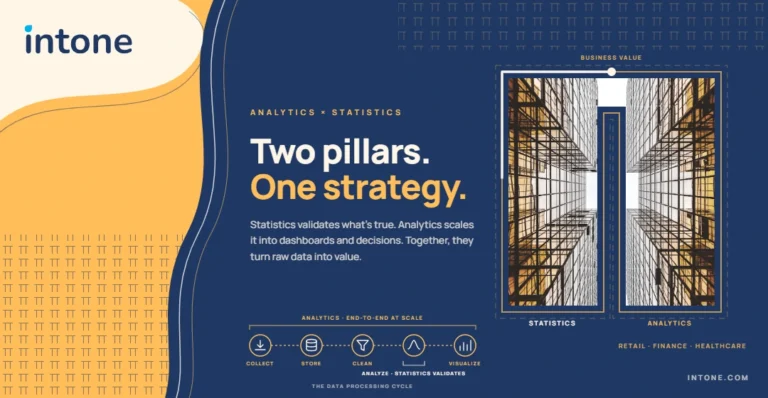


Data is essentially facts or numbers stored electronically. However, to extract valuable insights that drive business decisions, data must go through processes like collection, storage, transformation, and processing. Different use cases involve diverse datasets, and comprehending the interconnected relationships between these datasets allows organizations to leverage their data more effectively. This is where semantic data modeling emerges as a powerful solution, empowering organizations to unlock the true value of their data assets.
To successfully navigate these architecture pipelines, organizations rely heavily on specialized leadership to bridge technical frameworks with enterprise goals. A semantic data architect plays this pivotal role, structuring high-level frameworks into actionable enterprise data strategies that foster continuous data governance and scalability.
What is Semantic Data Modeling?
Semantic data modeling is a paradigm that focuses on capturing the meaning and context of data, rather than just its structure. By leveraging ontologies and formal knowledge representation techniques, semantic models can precisely define concepts, relationships, and rules within a given domain. This approach not only facilitates data integration and interoperability but also enables advanced reasoning and inference capabilities.
In this context, understanding “what is data management” becomes pivotal, as it underscores the significance of semantic data modeling in efficiently organizing, interpreting, and extracting actionable insights from diverse datasets. Enterprise architecture relies on these semantic frameworks to unify disparate source systems into a singular source of truth.
How Do Semantic Data Models Work?
Semantic data models (SDMs) combine semantic elements with graphical visualization, enhancing the value proposition of various data modeling approaches. The process of analyzing input data necessitates an abstraction process, wherein specific qualities and aspects of reality are selected while irrelevant ones are disregarded, aligning with the requirements of the specific solution, project, model, or schema.
An SDM leverages three distinct types of abstraction:
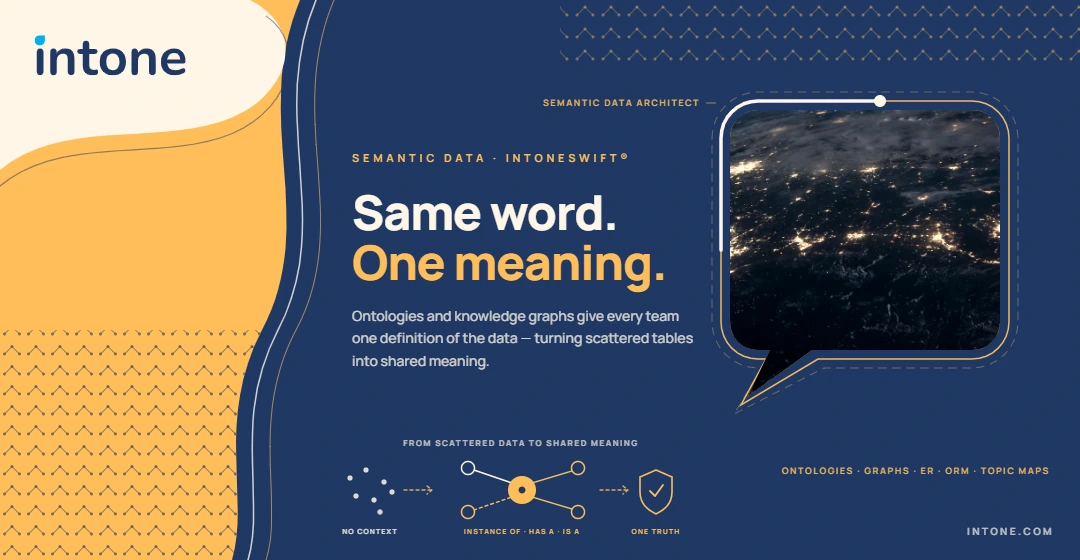
- Classification: This abstraction technique categorizes different objects in objective reality using “instance of” relations. It involves grouping objects based on shared characteristics, such as creating a group of employees.
- Aggregation: Aggregation defines a new object by combining a set of component objects, using “has a” relations. For example, an employer entity can be an aggregation of attributes like name, age, or contact information.
- Generalization: Generalization establishes a subset relationship between occurrences of two or more objects using “is a” relations. For instance, an employer can be a generalization of the concept of managers.
By employing these three abstraction methods, SDMs provide a robust framework for representing and comprehending the intricate relationships and semantics within complex data landscapes.
Key Responsibilities of a Semantic Data Architect
A semantic data architect acts as the crucial link between business strategy and underlying data engineering pipelines. Rather than focusing solely on raw database schematics, their job centers on standardizing enterprise definitions, modeling complex relationships, and maintaining unified terminology across systems.
Designing Scalable Enterprise Data Models
The primary duty of a data architect specialized in semantics is constructing foundational models that reflect actual business domain logic. They design logical ontologies, taxonomies, and graph structures that map out how distinct units of data relate to one another. This architectural blueprint allows downstream engineering teams to build databases that mirror real-world operational context.
Managing Metadata Management Frameworks
Without accurate context, business definitions quickly drift. A semantic data architect establishes clear metadata management practices to ensure every term, attribute, and dataset carries consistent definition across every department. This structured approach simplifies tracking data lineage, auditing operational metrics, and managing schema alterations over time.
Benefits of Semantic Data Modeling for the Enterprise
The semantic model helps in overseeing the company’s comprehensive data governance services, thereby enhancing decision-making abilities. Integrating semantic techniques offers several core operational benefits:
- Enhanced Data Integration: Semantic models provide a common, shared understanding of data across different systems, applications, and domains. This semantic interoperability enables seamless data integration, reducing the need for complex mappings and transformations.
- Improved Data Quality: By explicitly defining data semantics, semantic models help ensure data quality, consistency, accuracy, and completeness. They provide a framework for validating data against domain-specific rules and constraints, minimizing errors and redundancies.
- Richer Data Insights: Semantic models capture the contextual meaning of data, allowing for more sophisticated data analysis and interpretation. This enables organizations to derive deeper insights and uncover hidden relationships within their data assets.
- Increased Flexibility and Adaptability: Semantic models are designed to be extensible and adaptable, making it easier to incorporate changes and evolve data structures as business requirements evolve. This flexibility ensures that data models remain relevant and aligned with organizational needs.
- Facilitated Knowledge Sharing and Reuse: By formalizing domain knowledge in a machine-readable format, semantic models foster knowledge sharing and reuse across teams, departments, and even organizations. This collaborative approach accelerates development cycles and promotes consistency.
Semantic Data Modeling Approaches
Semantic data modeling involves representing data and its relationships in a way that captures the underlying meaning or semantics of the information. There are several approaches to semantic data modeling, each with its strengths and use cases:
Ontology Models and Knowledge Graphs
One approach is the Ontology Model, which focuses on identifying and describing business data entities while establishing the existing relationships among these data elements. Ontologies provide a formal framework for defining the concepts, properties, and interrelationships within a specific domain.
Another approach is the Knowledge Graph data model, which offers a visual representation of real-world entities and their interdependencies. Knowledge Graphs depict entities as nodes and relationships as edges, creating a graphical model that facilitates understanding and exploration of the enterprise landscape.
Entity-Relationship (ER) and Object-Role Modeling (ORM)
Entity-Relationship (ER) modeling is a widely used approach in database design where entities and relationships are represented graphically. ER models can capture semantic relationships like inheritance, composition, and associations between entities.
Object-Role Modeling (ORM) is a semantic modeling approach focusing on the roles played by objects in various relationships. It uses natural language representations to capture complex relationships, business logic, and rules, making it particularly useful for conceptual modeling before mapping to logical data structures.
Topic Maps and Domain-Specific Vocabularies
Topic Maps focus on topics (representing concepts), associations (relationships between topics), and occurrences (relevant information resources). They are heavily utilized for knowledge representation, information integration, and retrieval applications.
The Role of a Semantic Data Architect in Enterprise Data Governance
Maintaining strict data management protocols requires clear structural leadership across business segments. A solutions architect focusing on semantics ensures that metadata standards, security constraints, and semantic definitions are uniformly applied across all operating units.
Establishing Controls Across Business Units
In large organizations, departments frequently operate in silos, creating disparate definitions for identical metrics. A semantic data architect establishes standardized domain vocabularies and enforces data definitions and controls across business units. This oversight prevents operational drift and ensures reporting consistency across finance, operations, and product teams.
Ensuring Compliance Protocols
Regulatory directives demand rigorous tracking of sensitive data assets and precise data lineage. Semantic architectures explicitly define data sensitivity levels, access policies, and regulatory boundaries within the data schema itself. This explicit metadata framework simplifies audits and ensures consistent regulatory compliance across enterprise storage systems.
Enterprise Automation Frameworks
Problem: Traditional Robotic Process Automation excels at repetitive tasks but struggles when facing complex, unstructured information carrying implicit semantic context. This limitation hampers scaling efforts as analytical volume increases.
Solution: Semantic models provide clear structure and context to integrated feeds. By parsing unstructured inputs and establishing explicit semantic relationships, these architectures feed meaningful context into downstream workflows, allowing automation pipelines to scale effectively.
Integrating Semantic Architecture with Modern Data Engineering
Building a successful semantic platform requires continuous collaboration between data design specialists and execution teams. While a data architect creates the conceptual ontologies and logical frameworks, data engineers construct the physical pipelines, storage units, and ingestion workflows needed to process those structures at scale.
Bridge business context with data engineering. Modern organizations deploy centralized data platform architectures capable of handling real-time streaming alongside traditional batch processing. Semantic layers sit directly atop these platforms, providing business context without degrading underlying query performance. By decoupling semantic logic from physical storage layers, technical teams can modernize underlying database infrastructure without breaking business analytical tools.
Understanding the Semantic Data Architect Job Description
Organizations seeking to build mature data management capabilities often hire dedicated architects to bridge business strategy and engineering execution.
Core Qualifications and Skill Requirements
A typical job description for a semantic data architect highlights key technical skills, including proficiency in graph databases, RDF/OWL languages, SPARQL querying, and hands-on experience with modern data platforms. Candidates are expected to possess deep expertise in conceptual data modeling, business domain analysis, and enterprise data governance frameworks.
Key Collaboration Touchpoints
The role requires regular collaboration across technical and business functions. Why hire a semantic data architect? The architect acts as a primary liaison between domain managers, data engineers, security officers, and business intelligence analysts to align technological frameworks with evolving organizational goals.
Scaling Modern Enterprise Workflows with Intone
As organizational data environments grow increasingly complex, adopting semantic modeling is essential for organizing, integrating, and extracting genuine value from digital assets. By capturing rich domain semantics, organizations elevate business intelligence, power advanced automation workflows, and make faster, data-driven decisions that foster long-term agility and operational efficiency.
A Semantic Data Architect unifies fragmented enterprise data into business-ready context for accurate decision-making. IntoneSwift® empowers them to deploy low-code knowledge graphs that scale these semantic models across your organization with minimal engineering overhead. The Intone platform provides the end-to-end infrastructure necessary to manage complex semantic architectures effectively:
- Integrated Knowledge Graphs: Automatically generates detailed knowledge graphs for all enterprise data integration projects.
- Extensive Connector Ecosystem: Features over 1000+ pre-built connectors for applications, databases, and IoT devices.
- Low-Code/No-Code Interface: Offers an intuitive visual workspace that simplifies workflow creation for technical and non-technical teams alike.
- High-Performance In-Memory Processing: Utilizes distributed processing engines to deliver up to 10X faster execution speeds.
- Attribute-Level Lineage Tracking: Captures detailed data lineage at every mapping stage to maintain complete visibility.
- Enterprise-Grade Security: Enforces end-to-end encryption across all data states alongside centralized credential management.
- Flexible Processing Modes: Supports real-time, streaming, and batch operations across unlimited heterogeneous sources.
- Real-Time System Monitoring: Features interactive dashboards offering instant operational updates across all active pipelines.
FAQ’s
A Semantic Data Architect bridges the gap between high-level business strategy and technical data engineering pipelines. Unlike traditional database architects who focus primarily on physical database schematics, a semantic data architect standardizes business terminology, constructs logical ontologies and taxonomies, and models real-world domain relationships. This ensures data across all business units carries consistent context, enabling unified reporting, continuous data governance, and scalable decision-making.
Semantic Data Modeling is an approach that captures the contextual meaning and relationships of data rather than just its technical storage layout. It relies on three primary abstraction methods:
- Classification: Groups objects based on shared characteristics using “instance of” relations (e.g., categorizing individual workers as an employee group).
- Aggregation: Combines component attributes to define a higher-level entity using “has a” relations (e.g., combining name, age, and contact details to define an entity).
- Generalization: Establishes subset relationships using “is a” relations (e.g., establishing that a manager is a specific type of employee).
In large organizations, departments often operate in silos with conflicting metric definitions. A semantic data architect establishes standardized domain vocabularies across all operating units to eliminate reporting drift between finance, operations, and product teams. For regulatory compliance (such as GDPR or HIPAA), semantic frameworks explicitly embed data sensitivity classifications, access control rules, and attribute-level data lineage directly into the metadata schema, simplifying audits and ensuring consistent protection across enterprise systems.
Organizations utilize several established methodologies depending on their domain requirements:
- Ontology Models & Knowledge Graphs: Formal frameworks using nodes (entities) and edges (relationships) to visually represent interdependencies across the enterprise.
- Entity-Relationship (ER) & Object-Role Modeling (ORM): Conceptual modeling techniques that capture roles, constraints, and natural language rules before mapping to database structures.
- Topic Maps & Domain Vocabularies: Frameworks centered on topics, associations, and occurrences, primarily used for knowledge representation and information retrieval.
A semantic layer sits directly atop modern data platforms (handling real-time streaming and batch processing), decoupling business logic from physical storage layers. This allows data engineers to update database infrastructure without breaking business intelligence tools. Solutions like IntoneSwift® accelerate this integration by automatically generating knowledge graphs, providing pre-built connectors across application ecosystems, tracking attribute-level data lineage, and utilizing low-code workspaces to scale models with minimal engineering overhead.