

In the current landscape of modern enterprises, ensuring smooth operations and safeguarding valuable assets are important aspects of sustainable success. This is why internal control systems become important. Internal control mechanisms act as an operational framework designed to ensure organizational integrity, accurate financial reporting, and strict regulatory compliance. By understanding the significance of these systems, organizations can improve their operational efficiency, preserve historical data, improve decision-making processes, and establish robust protection against emerging corporate threats.
Why optimize your internal controls?
EagleEye365® automates risk management and compliance with 1000+ data integrations.
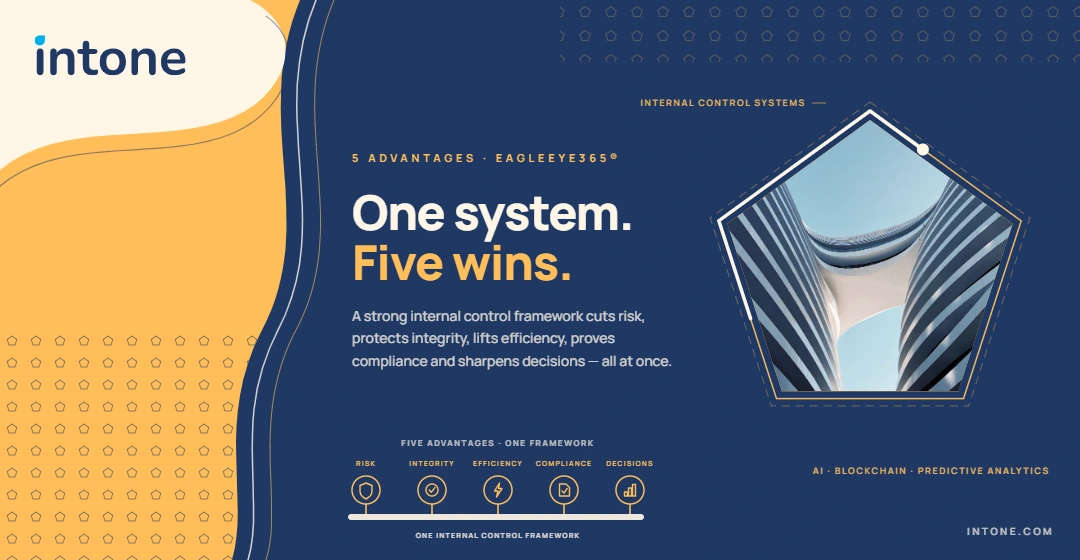
5 Advantages of Internal Control Systems
A well-structured internal control framework delivers structural stability across every level of an organization. Below are the five foundational advantages businesses experience when implementing robust internal controls.
1. Risk Mitigation and Fraud Prevention
Managing corporate risk requires a multi-layered security infrastructure. Internal control frameworks systematically prevent unauthorized actions and protect critical corporate resources through structured protocols.
- Identifying and Assessing Risks: Internal controls evaluate vulnerabilities across operational, financial, and compliance domains. Utilizing advanced risk assessment tools, enterprises systematically catalog threats before they materialize into financial losses.
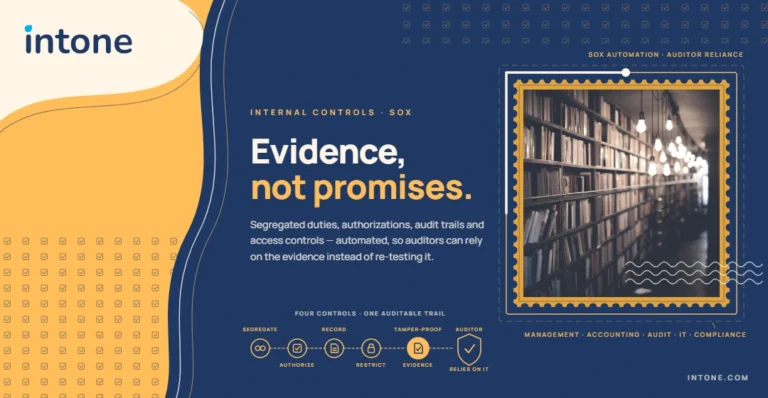
- Implementing Preventative Measures: Identifying vulnerabilities enables the immediate deployment of defensive protocols. Establishing strict access controls, enforcing segregation of duties, and defining explicit authorization hierarchies significantly reduce unauthorized access and fraudulent activities.
- Detecting and Addressing Fraudulent Activities: Continuous control monitoring enables real-time oversight of daily transactions. When combined with centralized data management services, organizations quickly flag anomalous behavior, enforce immediate corrective actions, and protect corporate assets.
2. Enhanced Financial Integrity and Accuracy
Financial credibility is the cornerstone of market trust. Internal controls enforce standardization across accounting procedures to guarantee that financial disclosures reflect operational reality.
- Ensuring Accurate Financial Reporting: Standardized accounting controls guarantee that transactional records strictly align with global financial principles. Accurate financial reporting builds market transparency and elevates organizational credibility among external stakeholders.
- Maintaining Reliable Accounting Records: Automating routine recordkeeping minimizes manual data entry errors. Automated ledger maintenance ensures continuous integrity across financial accounts, establishing a reliable baseline for strategic management.
- Minimizing Errors and Misstatements: Systematic financial reconciliations, scheduled internal audits, and robust documentation workflows minimize reporting discrepancies. Eliminating financial misstatements preserves institutional trust and prevents costly audit adjustments.
3. Improved Operational Efficiency
Operational friction slows growth and exhausts corporate capital. Internal control systems analyze internal workflows to eliminate redundancies and accelerate productive output.
- Streamlining Business Processes: Continuous operational monitoring allows management to pinpoint workflow bottlenecks. Eliminating redundant tasks streamlines daily operations, allowing teams to achieve higher output with lower operational overhead.
- Reducing Redundancies and Inefficiencies: Integrating data management services into internal controls removes duplicate data entry points across departments. Automated record transfers improve data accuracy while providing rapid access to vital operational metrics.
- Optimizing Resource Allocation: Structured internal oversight ensures capital, human talent, and technological assets target high-priority corporate initiatives. Efficient resource allocation reduces operational waste and drives sustained productivity.
Boost integrity with automated controls.
4. Compliance and Regulatory Adherence
Navigating modern legal requirements demands continuous oversight. Internal controls ensure that organizational policies naturally realign whenever statutory mandates evolve.
- Meeting Legal and Industry Standards: Adhering to statutory standards is mandatory for continuous operation. Internal control frameworks align daily execution with legal frameworks, reducing exposure to compliance penalties and litigation risks.
- Aligning with Reporting Requirements: Timely, transparent disclosure relies on systematic record retention. Internal controls ensure mandatory audit trails remain structured, accessible, and compliant with regulatory specifications.
- Demonstrating Accountability to Stakeholders: Clear governance procedures demonstrate an ongoing commitment to ethical corporate stewardship. High operational transparency reinforces long-term investor confidence and strengthens market reputation.
Learning about What Are Data Governing Tools And Why You Should Use Them may prove helpful too.
5. Empowering Decision-Making and Strategic Planning
Executive leadership relies on accurate data feeds to navigate market volatility. Internal controls synthesize high-volume operational metrics into actionable corporate intelligence.
- Providing Timely and Reliable Information: Standardized internal control workflows guarantee rapid delivery of accurate operational metrics, allowing leadership to execute timely course corrections.
- Facilitating Data-Driven Decisions: Combining real-time transaction oversight with advanced analytics provides decision-makers with precise operational metrics. Validated data drives reliable strategic choices across competitive markets.
- Supporting Long-Term Business Planning: Minimizing financial risks and streamlining internal operations establishes a stable base for multi-year expansion strategies. Reliable forecasts allow leadership to execute complex growth models with minimal disruption.
Secure Data Storage and Governance in Internal Control Systems
Modern internal controls rely heavily on secure digital infrastructure. As business operations transition into cloud environments, managing enterprise storage systems securely becomes critical to operational success.
Protecting Corporate Data Storage Infrastructure
Enterprise data retention demands strict access boundaries. Information archived across centralized cloud storage solutions must remain safeguarded through robust access controls and encryption protocols to block unauthorized retrieval.
Integrating secure file retention protocols into daily operational workflows ensures critical documentation stays safe from external cyber threats and internal oversight failures.
Strengthening Enterprise Risk Management Through Secure Storage
Aligning enterprise storage infrastructure with risk management protocols ensures uninterrupted operational continuity. Archiving system logs and transaction records within tamper-evident repositories streamlines independent internal audits and simplifies multi-jurisdictional compliance verification.
Future Trends in Automated Internal Controls
As enterprise ecosystems scale, internal control architectures must incorporate emerging technologies to defend against sophisticated threats. Advanced automation tools elevate static control checklists into proactive defensive systems.
AI-Powered Fraud Detection and Real-Time Analytics
Artificial intelligence accelerates risk detection by continuously processing operational data streams. Machine learning algorithms analyze millions of data points simultaneously to identify structural anomalies indicating fraud. Continuous contextual learning allows AI engines to recognize evolving attack patterns, delivering real-time defensive responsiveness.
Blockchain Protocols for Data Integrity and Storage Security
Blockchain technology introduces decentralized ledgers into enterprise storage management. Storing critical transaction records on immutable chains creates an unaltered paper trail across operations. Smart contracts enforce compliance rules automatically, eliminating manual review delays while validating records against fraud.
Predictive Analytics for Executive Business Decision Support
Predictive analytics transform historical operation logs into forward-looking risk indicators. Evaluating trends and performance metrics allows management to address emerging vulnerabilities proactively. Predictive modeling helps direct capital toward critical risk areas, ensuring compliance before regulatory mandates shift.
Enterprise Implementation: Intone EagleEye365®
Maintaining internal controls across complex enterprise environments requires continuous oversight tools. Intone EagleEye365® delivers a unified governance ecosystem designed to consolidate security, compliance, and auditing controls into a centralized interface.
Integrated Incident Management and Risk Oversight
EagleEye365® combines automated incident management workflows with continuous enterprise risk management (ERM) tracking. Connecting with over 1000+ industry-standard data sources, the platform provides complete operational visibility through low-code analytical dashboards.
Automated SOX Compliance and Anonymization Controls
The platform simplifies Sarbanes-Oxley (SOX) compliance testing using automated audit trails and RPA-driven data anonymization. EagleEye365® equips organizations to enforce strict internal controls, safeguard confidential storage assets, drive sound business decision outcomes, and sustain long-term enterprise growth.
FAQ’s
An internal control system is an operational framework designed to ensure organizational integrity, accurate financial reporting, and strict regulatory compliance. It is essential because it helps modern enterprises mitigate risks, protect valuable corporate assets, eliminate operational friction, and support data-driven decision-making.
- Risk Mitigation and Fraud Prevention: Identifies vulnerabilities and deploys preventive protocols (like segregation of duties and access controls) to stop unauthorized actions.
- Enhanced Financial Integrity and Accuracy: Standardizes accounting practices, minimizes reporting errors, and ensures reliable financial disclosures.
- Improved Operational Efficiency: Pinpoints workflow bottlenecks, removes duplicate data entry, and optimizes resource allocation across departments.
- Compliance and Regulatory Adherence: Aligns daily execution with evolving legal standards, maintaining structured audit trails to prevent penalties.
- Empowering Decision-Making: Delivers accurate, real-time operational data to help executive leadership execute reliable long-term strategic plans.
Modern internal controls integrate secure digital protocols—such as strict access boundaries, encryption, and tamper-evident repositories—to protect data stored in cloud environments. This prevents unauthorized access, safeguards critical documentation against cyber threats, and simplifies compliance and internal audits.
Three major technology trends are reshaping internal controls:
- AI-Powered Fraud Detection: Uses machine learning to analyze real-time data streams and automatically flag anomalous behavior or fraud patterns.
- Blockchain Protocols: Utilizes decentralized, immutable ledgers and smart contracts to create tamper-proof transaction records and automate compliance rules.
- Predictive Analytics: Converts historical operational logs into forward-looking risk indicators, allowing leadership to resolve vulnerabilities proactively.
EagleEye365® is a unified governance platform that automates risk management, compliance, and auditing across 1,000+ data integrations. It offers continuous risk oversight via low-code analytical dashboards, automated SOX compliance testing, and RPA-driven data anonymization to maintain strict control over enterprise workflows.