

The entire digital world operates on data that is continuously gathered, structured, and transformed. This raw data is converted into actionable intelligence through a structured sequence known as the data processing cycle. From healthcare diagnostics to algorithmic trading in financial markets, the continuous handling and transformation of data dictate modern operational success.
As organizational datasets grow in complexity and scale, understanding stages of data transformation becomes critical for modern enterprises. While traditional systems relied on manual entry, contemporary environments require dynamic architectures capable of real-time ingestion, continuous auditing, and robust internal controls.
What Is an Analytical Framework?
An analytical framework is a structured logical model that guides how data is evaluated, interpreted, and applied to solve specific business problems. While the data processing cycle focuses on the technical movement and transformation of data, an analytical framework defines why the data is being analyzed, which metrics matter, and how insights should inform strategic execution.
Key Components of an Analytical Framework
- Problem Definition: Clear identification of the core business objective, hypothesis, or operational challenge.
- Key Metrics & KPIs: Quantitative and qualitative indicators selected to measure performance, progress, or risk.
- Analytical Techniques: Statistical models, predictive algorithms, or comparative methods applied to extract meaning.
- Decision Rules & Logic: The criteria used to translate analytical outputs into concrete business decisions or automated triggers.
Supporting Data-Driven Decision-Making
Without an analytical framework, processing high volumes of data often results in information overload rather than clarity. An effective framework aligns technical data pipelines with business goals, ensuring raw inputs are converted into targeted insights. By providing a repeatable, objective methodology for evaluation, analytical frameworks eliminate reliance on intuition, reduce bias, and enable consistent, data-driven decision-making across all operational levels.
What Is a Data Processing Cycle?
A data processing cycle is a systematic sequence of operations that transforms raw data into structured, meaningful information essential for modern business functions. It serves as the foundational architecture supporting informed business decision processes, automated workflows, and complex enterprise analytics.
Methods for execution vary depending on organizational scale—ranging from basic batch operations to advanced machine learning pipelines. Today, this process powers mission-critical operations such as financial reporting, market research, predictive healthcare analytics, and customer relationship management (CRM).
To execute these continuous processing workflows smoothly, the data processing cycle relies on robust underlying architecture and specialized technical components that handle scale, storage, and throughput.
Essential Components of Modern Processing Systems
To convert unstructured noise into reliable business assets, every modern data architecture relies on core structural components:
- Ingestion Pipelines: Mechanisms that collect continuous streams from databases, web cookies, and IoT edge devices.
- Transformation Engines: Rules-based algorithms and machine learning models that scrub, aggregate, and normalize inputs.
- Storage Architectures: Hybrid repositories, data lakes, and secure cloud environments engineered for rapid access and long-term retention.
- Access Control & Internal Control Frameworks: Protocols ensuring data integrity, regulatory compliance, and defense against unauthorized access.
Key Takeaway: Transform raw data into strategic insights.
The Core Phases of Data Processing
At its most fundamental level, every data operation flows sequentially through three primary phases: Input, Processing, and Output. Understanding these distinct phases helps organizations establish clear internal controls and audit tracks across their data assets.
1. Input Phase
After initial collection, raw inputs must be delivered into the processing environment. In this phase, unstructured figures, customer interactions, or financial transactions enter the system boundary.
2. Processing Phase
Once delivered, the data undergoes active transformation via tailored processing techniques. Because downstream systems rely entirely on the integrity of this stage, it represents the most critical phase for applying business rules, analytical models, and security validation.
3. Output Phase
In the final phase, transformed data transitions into usable business intelligence. It is no longer considered raw data; rather, it manifests as digestible reports, interactive dashboards, or direct programmatic feeds for automated decision-making.
What Are the Key Stages of a Data Processing Cycle?
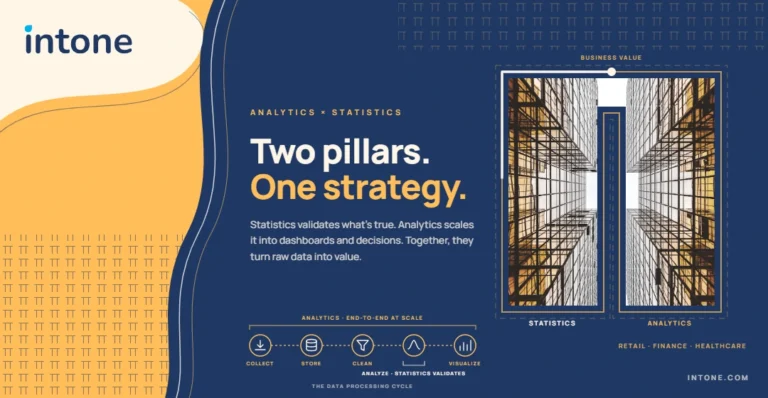
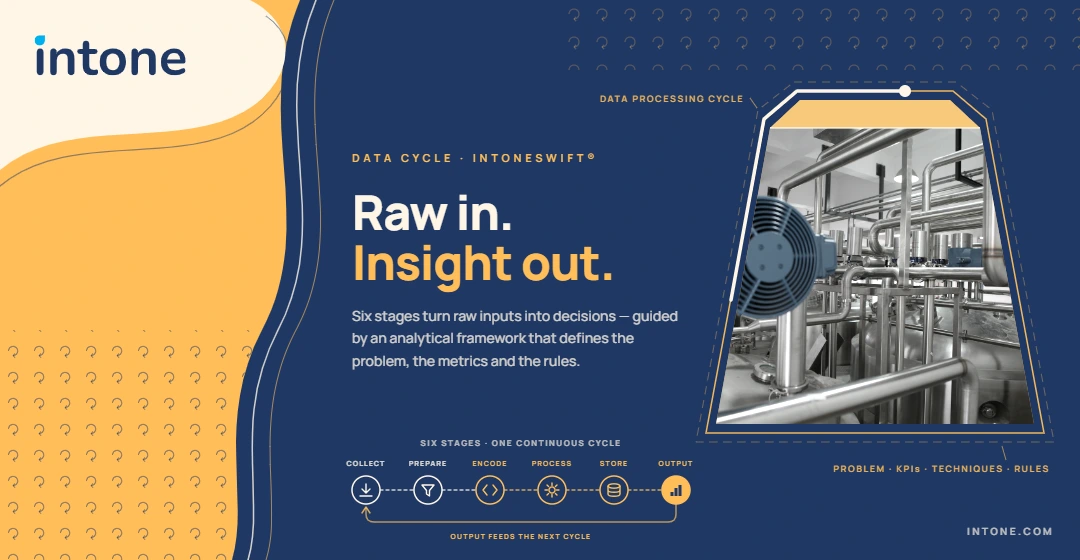
Moving beyond high-level phases, executing an end-to-end data strategy requires six specialized stages. The cycle begins with Collection, moves into Preparation, and proceeds to Input. From there, it transitions through Processing into Storage, before ultimately delivering the final Output. Adhering to these sequential steps ensures high data fidelity, structural consistency, and regulatory alignment.
- Step 1: Collection — The cycle begins with acquiring raw data from reliable, verified sources. The accuracy of the final output depends directly on input quality. Sources may include transaction ledgers, monetary statements, website cookie profiles, or continuous system telemetry.
- Step 2: Preparation & Data Management Plan Checklist — Raw inputs often contain errors, duplicate entries, or missing values. In this stage, data is filtered, cleansed, and formatted. Organizations should validate their workflow against a strict data management plan checklist:
- Filter out duplicate or corrupted records.
- Normalize data structures to ensure compatibility across modules.
- Conduct preliminary checks to uphold internal audit standards.
- Flag anomalous inputs to prevent processing downstream errors.
- Step 3: Input Encoding — Once prepared, data must be translated into a machine-readable format. This involves converting physical or semi-structured records into standardized digital schemas via direct keying, optical character recognition (OCR), or automated API ingestion.
- Step 4: Data Analytics and Execution — The core processing phase uses customized algorithms, rule sets, or machine learning frameworks to transform structured inputs into insights. Whether running through cloud data lakes or on-premises servers, this stage handles complex computations, statistical modeling, and data aggregation.
- Step 5: Secure Storage — Processed records and associated metadata are stored in accessible databases or secure cloud storage. Proper storage design enables effortless retrieval for immediate consumption while serving as the baseline input for subsequent processing cycles.
- Step 6: Output Presentation — Finally, system outputs are rendered into human-readable formats—such as executive dashboards, vector files, financial ledgers, or automated alert feeds—empowering teams across business functions to act immediately.
| Stage | Name | Primary Purpose |
| Stage 1 | Collection | Gather raw data from verified internal and external sources. |
| Stage 2 | Preparation | Cleanse, filter, and validate data against organizational standards. |
| Stage 3 | Input Encoding | Convert prepared data into standardized, machine-readable formats. |
| Stage 4 | Processing & Execution | Apply business logic, statistical models, and analytical algorithms. |
| Stage 5 | Secure Storage | Retain processed records safely for rapid access and auditing. |
| Stage 6 | Output Presentation | Render actionable intelligence via dashboards, feeds, or reports. |
The Importance of Risk Management and Internal Control
As organizations depend more on automated data pipelines, managing operational risks becomes vital. Flawed processing pipelines or compromised security protocols can trigger cascading failures across the enterprise. Robust data governance and risk management frameworks maintain high data quality, integrity, and compliance at every single stage of the data processing cycle.
Key Consequences of Poor Data Governance
Failing to implement continuous internal control mechanisms throughout your data processing cycle can lead to severe operational issues:
- Systemic Decision Errors: Basing strategic decisions on distorted output data.
- Information Security Breaches: Exposure of proprietary customer or financial data during processing.
- Regulatory Non-Compliance: Violating strict statutory standards like SOX, GDPR, or HIPAA due to untracked data lineage.
- Loss of Financial Stability: Financial loss resulting from incorrect transactions, misstated earnings, or regulatory fines.
Preventing Information Security Breaches and Financial Loss
Establishing strict internal controls—such as role-based access management, end-to-end encryption, and automated audit logs—helps protect raw and processed assets. Mitigating security risks protects financial stability and preserves stakeholder trust in your digital operations.
Data Analytics in Banking, Healthcare, and Enterprise Operations
Implementing an effective data analytics framework varies by industry, but the core objective remains constant: turning high-volume data into reliable business intelligence. Each sector tailors its framework around specific primary data sources to achieve targeted processing goals:
| Industry | Primary Data Sources | Primary Goals |
| Banking & Finance | Transaction ledgers, credit scores, profile metrics | Algorithmic fraud detection, risk management, SOX compliance |
| Healthcare | EHR records, diagnostic imagery, biometric sensors | Patient outcome analytics, clinical diagnostics, predictive treatment |
| Logistics | GPS feeds, inventory logs, telemetry streams | Route optimization, demand forecasting, real-time tracking |
Real-World Applications & Future Trends
Real-World Industry Case Studies
- Financial Services & Banking: Banks process millions of real-time credit transactions per second to detect fraudulent patterns instantly, maintaining sector security and compliance.
- Healthcare & Life Sciences: Medical facilities ingest biometric sensor data and electronic health records (EHR) to provide real-time patient monitoring and predictive diagnostics.
- Retail & E-Commerce: Global brands use user activity data, search statistics, and inventory metrics to dynamically adjust pricing and optimize supply chain fulfillment.
Future Trends Driving Effective Data Analytics
- AI and Machine Learning Integration: Advanced algorithms automate context extraction, refine predictive models, and eliminate manual data preparation tasks.
- Edge Computing Deployment: By moving computational tasks closer to the point of origin (e.g., IoT devices, industrial sensors), edge computing reduces latency and bandwidth use—enabling real-time analytics for time-critical applications.
- Augmented Analytics Platforms: Combining natural language processing (NLP) with artificial intelligence allows team members across business functions to query datasets and generate complex visualizations without requiring specialized data science training.
Why IntoneSwift® for Enterprise Data Architecture?
As data volume and system complexity scale exponentially, enterprise organizations require specialized data platforms to unify ingestion, enforce governance, and maintain high-speed processing pipelines.
Building a resilient, secure data processing environment requires robust enterprise infrastructure. IntoneSwift® provides the foundation modern businesses need to manage complex processing flows efficiently.
Intone offers a comprehensive suite of data analytics services, management services, custom integrations, and administrative services designed to help enterprises maximize their data assets:
- Knowledge Graph & Native Connectors: Connect disparate data streams using over 1000+ pre-built enterprise connectors.
- Low-Code/No-Code Platform: Empower non-technical teams to set up data flows using intuitive interfaces.
- High-Speed In-Memory Operations: Accelerate batch and stream processing up to tenfold via optimized in-memory architectures.
- Attribute-Level Lineage & Security: Ensure end-to-end auditability with complete data tracking, centralized credential management, and robust encryption standards.
FAQ’s
The data processing cycle is the technical architecture and sequential workflow (Collection, Preparation, Input, Processing, Storage, and Output) used to transform raw data into structured information. An analytical framework is the strategic business model (focusing on Problem Definition, KPIs, Analytical Techniques, and Decision Logic) that defines why the data is being processed, which metrics matter, and how the insights will drive executive decisions.
The data processing cycle follows six sequential stages: raw data is gathered (Collection), cleansed and validated (Preparation), converted into machine-readable formats (Input Encoding), transformed using algorithms and statistical models (Processing), safely retained for future retrieval (Secure Storage), and finally delivered as actionable business intelligence like dashboards or reports (Output Presentation).
Without robust internal controls—such as role-based access management, end-to-end encryption, and automated audit logs—organizations risk severe operational failure. Poor data governance can cause systemic decision errors from distorted data, exposure of sensitive customer or proprietary information, loss of financial stability, and legal non-compliance penalties under regulatory frameworks like GDPR, HIPAA, or SOX.
- Edge Computing moves computational tasks closer to the point of data origin (e.g., IoT sensors), drastically reducing latency and bandwidth overhead for real-time applications.
- Augmented Analytics leverages Natural Language Processing (NLP) and AI to allow non-technical business users to run complex queries and visualize insights without needing specialized data science skills.
IntoneSwift® streamlines ingestion, security, and real-time analytics for enterprises. By deploying high-speed in-memory operations, the platform accelerates stream and batch processing up to tenfold. It unifies enterprise data pipelines using over 1,000+ pre-built native connectors and Knowledge Graphs, while a low-code/no-code interface empowers teams to design workflows with minimal overhead. Furthermore, IntoneSwift® secures the entire lifecycle with attribute-level lineage, centralized credential management, and strict encryption standards to ensure seamless regulatory compliance and end-to-end auditability.