

Accounting stands as a fundamental pillar in every business operation. Businesses rely on accounting teams to monitor revenue and expenses, assess financial performance, develop budgets and financial forecasts, and ensure adherence to regulations. Unfortunately, the term ‘accounting’ is frequently coupled with corporate scandals and accounting fraud. The wrongdoers manage to perpetrate fraud due to the absence of robust internal controls accounting mechanisms within the victim organization. Hence, controls stand as the ultimate guardians of integrity, accuracy, and reliability within accounting systems.
These mechanisms form the structural backbone of any enterprise, ensuring that financial data is accurately recorded, operational efficiency is maintained, and regulatory requirements are met. Implementing effective internal control systems demands a clear understanding of enterprise roles to uphold accountability and accuracy and reliability in financial reporting.
Core Pillars of Control Standardization (5 Reasons to Consider Real-Time Monitoring for your Business)
The fundamental essence of consistency and data integrity is driven by essential controls across business units.
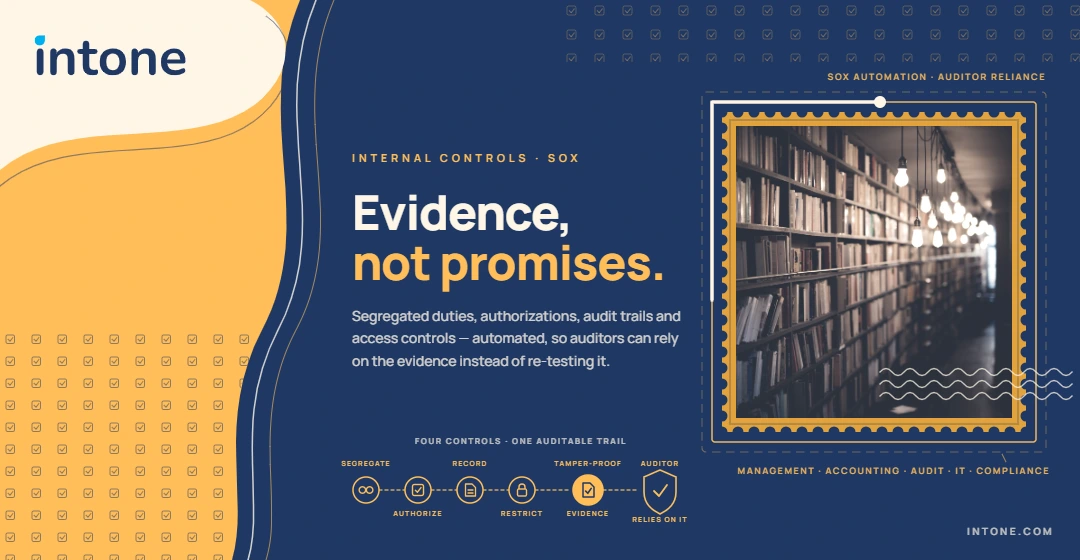
- Segregation of Duties: Ensuring that no single individual maintains complete authority over any financial transaction from initiation to completion prevents fraudulent activities and reduces operational errors.
- Authorization Protocols: Establishing strict protocols guarantees that transactions are approved by designated authority according to predefined risk limits, minimizing unauthorized expenditures.
- Record-Keeping and Audit Trail Setup: Accurate documentation supports business processes, preserves financial integrity, and creates a clear audit trail for subsequent reviews.
- Physical and Logical Access Controls: Physical measures protect tangible assets, whereas logical access controls restrict system entry, preserving sensitive financial data against unauthorized access.
Integrating structured data management banking practices into internal controls emphasizes secure storage, efficient processing, and strict adherence to banking and enterprise standards.
Strategic SOX Automation and Auditor Reliance
Modern organizational leadership must adapt to evolving reporting requirements and complex regulatory demands. Leveraging technology to modernize compliance management is no longer optional.
| SOX Automation Framework Component | Key Capability & Benefit |
| 1. Continuous Control Monitoring | Real-time risk detection |
| 2. Control Standardization | Uniform policies across units |
| 3. Enhanced Auditor Reliance | Automated, tamper-proof trails |
| 4. Operational Efficiency | Reduced manual audit workloads |
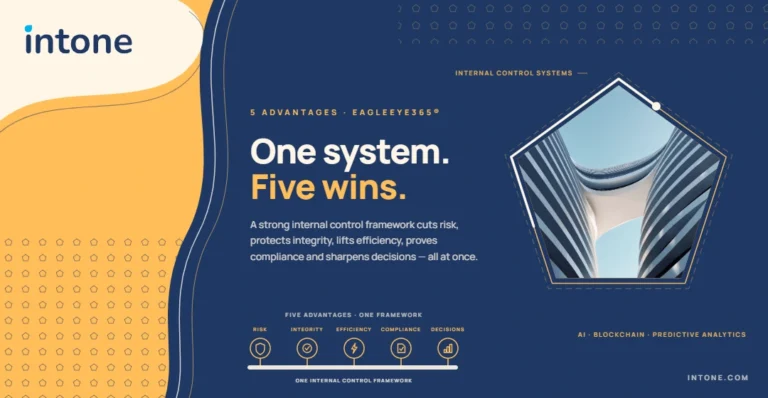
Why automate internal accounting controls? EagleEye365® unifies GRC, continuous monitoring, and SOX automation effortlessly. Implementing sox automation allows enterprises to streamline compliance across business units while building strong auditor reliance. When internal control systems produce structured, automated evidence, external auditors can rely on the underlying software metrics, drastically cutting down manual audit hours. Furthermore, adopting continuous control monitoring continuously tests operational workflows, alerting teams to anomalies before they manifest as reporting errors or fraud.
Automate controls and boost audit reliability.
Roles and Responsibilities in Compliance and Reporting
Implementing internal controls across an enterprise requires explicit alignment across key stakeholders. Review detailed breakdown structures on roles and responsibilities in implementing internal controls in accounting to understand execution frameworks.
- Management: Sets the operational tone, defining risk management parameters, data integrity targets, and broader organizational policy.
- Accounting Department: Executes day-to-day transaction processing while strictly adhering to established control standardization guidelines.
- Internal Audit: Evaluates the continuous performance of accounting safeguards , identifying control failures and submitting actionable recommendations to governance boards.
- IT Department: Maintains system access rights, logical protocols, cybersecurity infrastructure, and automated compliance tracking platforms.
- Compliance Officers: Oversee compliance management, monitor regulatory updates, and ensure internal control practices meet external mandates.
You might also like to read about Why Adopt Robotic Process Automation in Finance.
Enhancing Financial Integrity with Intone EagleEye365®
Maintaining rigorous internal controls across complex business processes requires enterprise-grade automation. Intone EagleEye365® provides continuous monitoring and automated risk management across all financial channels.
Intone EagleEye365® delivers:
- An end-to-end GRC platform integrating security, continuous control monitoring, continuous auditing, automated workflow orchestration, and fraud detection into one central architecture.
- Seamless connectivity across 1000+ industry-standard data sources to unify enterprise financial data.
- Low-Code/No-Code features with drag-and-drop orchestration to accelerate control standardization.
- Automated ERM response systems that deliver real-time reporting and uninterrupted system coverage.
- SSL and AES 256-bit encryption ensuring data privacy, SOX compliance support, and total data protection.
Contact IntoneCCM today to modernize your compliance framework, strengthen auditor reliance, and automate internal controls accounting across your organization.
FAQ’s
SOX automation leverages technology to continuously monitor, manage, and test internal controls in real time. Instead of relying on manual periodic reviews, automated tools automatically enforce policies—such as Segregation of Duties (SoD) and access management—while detecting anomalies before they result in financial reporting errors or fraud.
Automated platforms create structured, tamper-proof audit trails and continuously compile compliance evidence. Because external auditors can easily verify and rely on these automated system logs and software metrics, manual sample testing is significantly reduced, leading to faster, lower-cost audits.
A robust internal control framework relies on five core pillars:
- Segregation of Duties (SoD): Preventing single-point control over complete transactions.
- Authorization Protocols: Establishing predefined approval limits for expenditures.
- Record-Keeping & Audit Trails: Maintaining documentation to track financial activities.
- Access Controls: Restricting both physical and logical system access to authorized personnel.
- Structured Banking Data Management: Ensuring secure data storage and banking compliance.
Internal control management is a collaborative effort across several key roles:
- Management: Defines risk policies and overall governance tones.
- Accounting Team: Executes daily operations following standardized control policies.
- Internal Audit: Continuously tests controls and provides recommendations.
- IT Department: Manages logical access rights and system infrastructure.
- Compliance Officers: Ensure controls meet evolving statutory and regulatory mandates.
Intone EagleEye365® is an end-to-end GRC platform offering continuous control monitoring, low-code/no-code workflow orchestration, and seamless integration with over 1000+ data sources. By automating enterprise risk management (ERM) and protecting data with enterprise-grade SSL and AES 256-bit encryption, EagleEye-365® reduces manual audit workloads and ensures real-time compliance tracking.