

Enhancing operational efficiency, employee engagement, and adaptability across Lean and Agile enterprises.
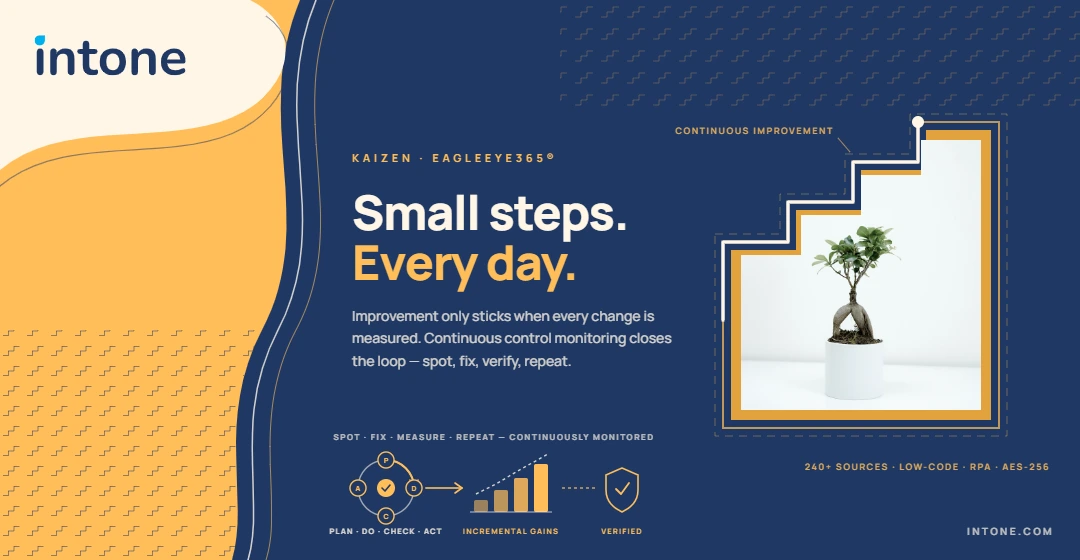
The Continuous Improvement Process (CIP) is a systematic approach to enhancing organizational processes, products, or services through continuous control monitoring. It streamlines workflows, boosts employee engagement, drives innovation, and lowers operational costs while maintaining high quality and customer satisfaction.
Whether your enterprise is a fledgling startup or a global giant, recognizing the significance of the continuous improvement process stands as a crucial tenet within Lean and Agile methodologies. Its application on a smaller scale can significantly enhance your team’s operational efficiency while prioritizing it on a larger scale becomes instrumental in maintaining a competitive edge. The most successful businesses continuously strive to improve beyond their current state. Their focus is unwaveringly on the horizon, anticipating the next breakthrough and aiming for heightened performance levels. They grasp the vital role of continuous improvement across every facet of their operations.
What is the Continuous Improvement Process?
The Continuous Improvement Process (CIP) is a systematic and ongoing approach to enhancing organizational processes, products, or services. Also known as continuous improvement or continuous quality improvement, this methodology aims to make incremental and sustainable improvements over time, underpinned by the integral aspect of continuous control monitoring of processes. The inclusion of continuous monitoring not only enables real-time visibility but also ensures proactive issue resolution and data-driven decision-making.
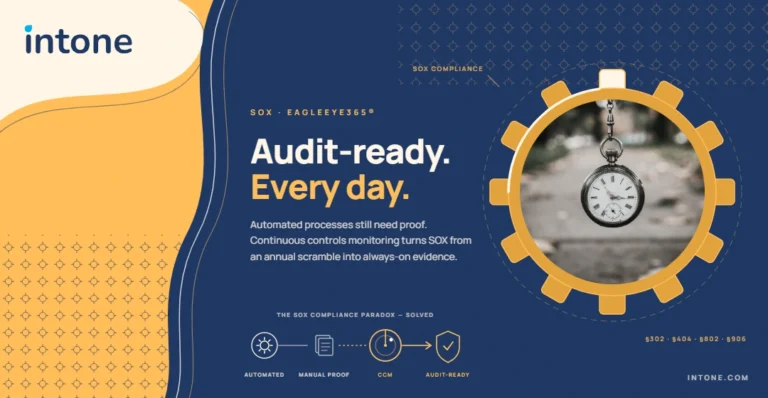
While traditional continuous improvement relies on periodic reviews, embedding continuous control monitoring bridges the gap between identification and execution. Real-time oversight continuously feeds performance metrics back into core operational workflows, allowing teams to spot anomalies instantly and validate that process optimizations are performing as intended. This automated feedback loop transforms reactive quality checks into an agile, data-driven engine that continuously safeguards efficiency and compliance.
Alongside the primary objectives of cost reduction and expediting task completion, continuous monitoring establishes a dynamic feedback loop for innovation. This method thrives on collaboration, with changes implemented in consultation with the staff intimately engaged in the processes, fostering a culture of adaptability and continuous enhancement.
Benefits of Continuous Improvement Process
You might be wondering, “What’s the rationale behind continuous improvement?” The outcomes can vary based on your company’s size and the extent of its implementation. Here are several prevalent advantages observed as a consequence:
- Enhanced Efficiency and Productivity: A well-established continuous improvement process streamlines workflows and eliminates inefficiencies. Organizations can significantly boost productivity by encouraging employees to evaluate and refine their processes constantly. This, in turn, allows for more efficient use of resources and a reduction in operational costs.
- Increased Employee Engagement: Employees are the driving force behind any successful organization. Implementing a continuous improvement process empowers employees to contribute to the betterment of the company actively. When employees feel their ideas are valued and their input can lead to positive changes, it fosters a sense of engagement and ownership in their work.
- Adaptability to Change: The business environment is dynamic, with market trends, customer preferences, and technology evolving rapidly. A continuous improvement process ensures that your organization remains adaptable to change. It encourages a proactive approach to identifying and addressing challenges, enabling your company to stay ahead of the curve.
- Quality Improvement: Maintaining and improving product or service quality is paramount for any organization aiming for long-term success. A continuous improvement process focuses on identifying and rectifying defects or deficiencies in products and services. This commitment to quality not only enhances customer satisfaction but also establishes a positive reputation in the market.
- Cost Savings: Identifying and eliminating wasteful practices and unnecessary expenses is fundamental to continuous improvement. By regularly reviewing processes and seeking efficiencies, organizations can realize significant cost savings. These savings can then be reinvested into other strategic initiatives or used to improve employee benefits and development programs.
- Innovation and Creativity: A culture of continuous improvement fosters an environment where innovation and creativity thrive. Encouraging employees to think outside the box and experiment with new ideas can lead to breakthrough innovations. This not only benefits the organization but also positions it as a forward-thinking industry leader.
- Customer Satisfaction: Satisfied customers are the lifeblood of any successful business. By consistently refining and enhancing products and services based on customer feedback, a continuous improvement process ensures that the organization remains customer-centric. This dedication to meeting and exceeding customer expectations contributes to long-term customer loyalty and positive word-of-mouth.
Why Choose Intone EagleEye-365?
Incorporating a continuous improvement process into the fabric of your organization is not just a strategic choice; it’s a necessity in today’s competitive business landscape. Hence, we at Intone understand this need and have developed a continuous auditing and monitoring plan that can help secure your systems against the latest threats plaguing the industry. We offer:
- GRC Platform Integration: An end-to-end enterprise platform that integrates key GRC functional requirements of security, risk management, incident management, data visualization/virtualization, continuous control monitoring, continuous auditing, robotic process automation, and fraud, and compliance management into one single solution.
- Data Connectivity: Connections with 240+ Industry Standard Data Sources and applications.
- Low-Code Flexibility: Low-Code/No-Code Platform with drag/drop features and In-Built Multiple System Communications Features.
- Automated Incident Response: An automated ERM and control response system along with an automated incident management and resolution system.
- Microservices Architecture: A microservices audit platform with real-time reporting and Uninterrupted underlying systems.
- Data Encryption: SSL encryption and AES 256-bit encryption to ensure that your sensitive data is safeguarded against malicious attempts at modification and manipulation.
- Cybersecurity Infrastructure: State-of-the-art infrastructure in terms of cybersecurity, with secure architecture, firewall, and intrusion detection/prevention system designs to boost your security against cyber breaches and threats.
- Regulatory Compliance: An extensive range of regulatory, data privacy, and Sarbanes Oxley compliance and industry solutions to meet the current regulatory requirements and to ensure that you will not face any trouble when it comes to product/process-related compliance requirements.
- Data Protection RPA: RPA that will anonymize your data to ensure greater protection of sensitive data and information.
Transform Your Operations with Intone
Ready to strengthen continuous auditing and controls in your enterprise? Feel free to get in touch with us for more information or a demo.
FAQ’s
CIP aims to make incremental and sustainable improvements to organizational processes, products, or services over time while reducing costs and improving efficiency.
Continuous monitoring provides real-time visibility into operational workflows, enabling proactive issue resolution, data-driven decisions, and a dynamic feedback loop.
Employees are central to CIP; empowering them to refine processes increases engagement, ownership, and innovation within the company.
EagleEye-365 is an end-to-end enterprise platform combining GRC, continuous control monitoring, automated incident management, and 240+ data integrations to secure and streamline operations.
Are manual audit friction and delayed operational visibility holding back your enterprise’s growth?
Intone EagleEye365 delivers real-time continuous control monitoring and automated GRC workflows across 240+ data sources, eliminating manual audit overhead while driving sustainable process improvements.