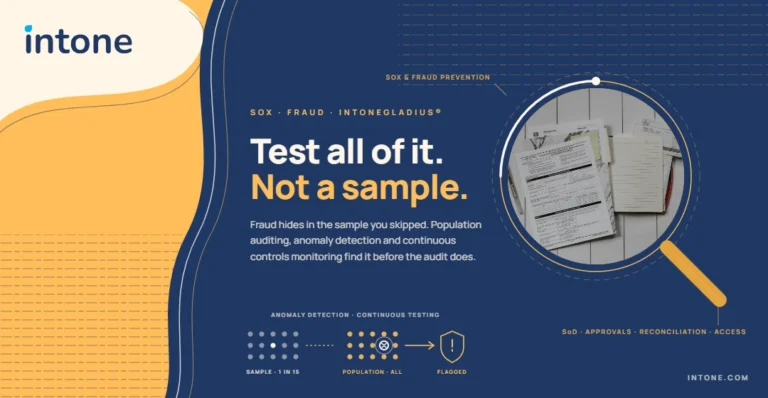


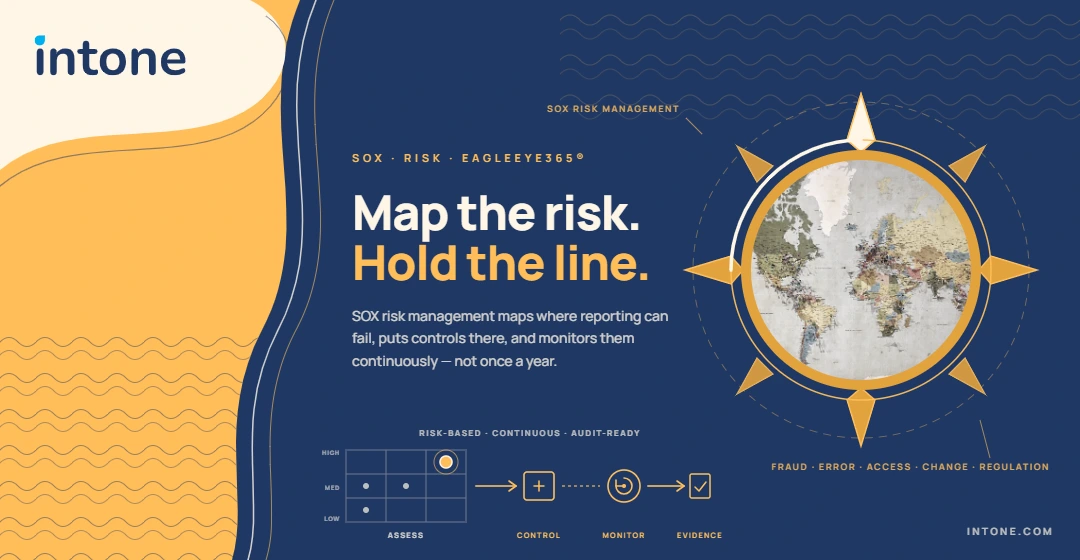
SOX compliance plays an important role in risk management by helping organizations identify, assess, and mitigate risks related to financial reporting. Through internal controls, risk assessments, continuous monitoring, technology, employee training, and audits, organizations can strengthen financial reporting accuracy, support regulatory compliance, and maintain the integrity of financial information.
The Sarbanes-Oxley Act (SOX) was enacted in 2002 following corporate scandals that raised concerns about financial reporting and investor confidence. A central focus of SOX is strengthening internal controls and accountability around financial reporting.
For organizations subject to SOX compliance, risk management is closely connected to maintaining accurate and reliable financial information. Risks can come from errors, fraud, weak controls, unauthorized access, technology changes, and evolving regulatory requirements.
Effective SOX risk management helps organizations identify these risks, establish appropriate controls, and monitor whether those controls continue to work as intended. Rather than treating compliance as a once-a-year exercise, organizations can make it part of their broader risk management and governance processes.
Understanding SOX Risk Management and Internal Controls
SOX risk management involves identifying, assessing, and reducing risks that could affect financial reporting. It focuses on the processes, accounts, systems, and transactions that support accurate financial disclosures.
Internal controls provide the foundation for managing these risks. For example, access controls can limit who is permitted to view or modify sensitive financial information. This reduces the risk of unauthorized changes and helps protect the integrity of financial reporting.
Strong SOX risk management connects risk assessment, control implementation, compliance validation, and ongoing monitoring. It also gives management greater visibility into whether controls are operating effectively and whether additional action is needed.
Importance of Risk Assessments for SOX Compliance
Risk assessment is one of the key requirements of effective SOX compliance. It helps organizations identify vulnerabilities before they become larger control or reporting problems.
A risk assessment may consider:
- Fraud and financial reporting risks
- Errors in financial processes
- Weak or outdated internal controls
- Unauthorized access
- Changes to systems or business processes
- New regulatory requirements
- Risks created by organizational or operational changes
Regular assessments are important because an organization’s risk environment can change over time. New technology, acquisitions, business processes, and regulatory requirements can create risks that were not present during the previous assessment.
Key Components of SOX Risk Management
- Risk Identification and Assessment
Organizations must systematically identify risks that could affect financial reporting. This includes reviewing critical processes, accounts, systems, and transactions.
Risk identification also helps organizations determine where additional controls, testing, or monitoring may be necessary. - Control Implementation and Access Controls
Once risks are identified, organizations can implement controls designed to reduce those risks. Access controls, segregation of duties, approvals, reconciliations, and other control activities can help prevent or detect inappropriate activity.
Clear control ownership is also important. Employees should understand which controls they are responsible for and how those controls support SOX requirements.
- Continuous Controls Monitoring and Control Monitoring
Risk management does not stop after controls are implemented. Continuous controls monitoring provides ongoing visibility into control activity and potential exceptions.
Continuous monitoring can help organizations identify changes or issues sooner, rather than waiting until the next scheduled review or audit. Technology and automation can make this monitoring more consistent across processes.
SOX Compliance Services, Audit and Assurance
Organizations may use SOX compliance services, regulatory compliance services, or advisory support to help manage complex SOX requirements.
These services can provide specialized guidance for risk assessments, internal controls, documentation, testing, compliance monitoring, and audit preparation. Advisory services may also help organizations address control gaps and develop processes that align with their regulatory requirements.
For organizations with limited internal resources, external support can provide additional assurance while allowing internal teams to focus on core business responsibilities.
Audit Readiness, Evidence Management and Reporting
Effective SOX compliance requires organizations to demonstrate how controls operate and how they are tested. This makes audit readiness an important part of risk management.
Organizations should maintain organized documentation and evidence management processes so that relevant information can be located when needed. A clear audit trail can show what was performed, when it was performed, who performed it, and what evidence supports the activity.
Consistent reporting also helps management understand control performance and outstanding issues. Better documentation and reporting can reduce the effort required to respond to auditors and support more efficient SOX testing.
Benefits of SOX Compliance Services
- Expert Guidance and GRC Advisory
SOX compliance can involve complex requirements and numerous business processes. GRC advisory support can provide organizations with practical guidance for risk assessments, controls, compliance, and governance. - Resource Efficiency and Automation
Compliance activities can require significant time when evidence collection, testing, and reporting are handled manually. Automation can help reduce repetitive work and allow teams to focus on higher-risk activities. - Enhanced Risk Mitigation and Monitoring
SOX compliance services can help organizations identify high-risk areas and develop targeted mitigation strategies. Ongoing monitoring can then provide greater visibility into whether controls remain effective.
Challenges in SOX Risk Management
- Complexity of SOX Requirements
Organizations must understand and apply numerous SOX requirements across financial processes and control environments. Keeping documentation and controls aligned with changing regulatory requirements can be challenging. - Resource Constraints and Audit Demands
Many organizations have limited personnel or expertise dedicated to SOX compliance. Manual evidence requests, testing, documentation, and reporting can place additional pressure on internal teams and affect audit readiness. - Evolving Risks and Change Management
Business systems and processes continually change. New technology, organizational changes, and evolving risks may require controls to be updated.
Effective change management helps organizations identify how changes could affect financial reporting and determine whether controls, testing, or monitoring should also change.
Best Practices: A Strategic Guide to SOX Compliance
- Conduct Risk Training
Employees should understand their responsibilities and the importance of internal controls. Regular training helps teams stay aware of control requirements and changes that may affect their work. - Utilize Technology and Automation
Technology can support control monitoring, risk assessments, evidence collection, testing, and reporting. Automation can also make repetitive compliance activities more consistent and easier to manage. - Establish a Culture of Compliance
A strong compliance culture emphasizes ethical behavior, transparency, accountability, and accurate financial reporting. When employees understand why controls matter, compliance becomes part of everyday business practices rather than a separate activity. - Engage External Auditors
External auditors can provide objective assessments of internal controls and compliance practices. Working with auditors throughout the compliance process can also help organizations understand expectations and improve audit readiness.
Why Choose EagleEye365® for SOX Risk Management?
Managing SOX compliance across complex organizations can be difficult when risk, controls, audit information, and evidence are spread across different systems.
EagleEye365® is a cloud-native, AI-enabled platform designed to bring SOX compliance, internal audit, and enterprise risk management together in one real-time solution. The platform supports continuous monitoring, automation, and visibility across compliance activities.
Key capabilities include:
- Continuous controls monitoring
- Risk and compliance monitoring
- Centralized control management
- Automated control testing
- Evidence collection and evidence management
- Risk and issue management
- Real-time dashboards and reporting
- Compliance workflows
By connecting risk, controls, testing, and reporting, organizations can build a more consistent approach to SOX risk management and maintain greater visibility into their compliance environment.
Key Takeaways
- SOX compliance and risk management are closely connected through financial reporting and internal controls.
- Risk assessments help organizations identify vulnerabilities involving fraud, errors, systems, processes, and regulatory requirements.
- Access controls and other internal controls help mitigate identified risks.
- Continuous controls monitoring provides ongoing visibility into control performance.
- Evidence management and a clear audit trail support audit readiness and SOX testing.
- Automation can reduce repetitive compliance work and improve reporting.
- GRC advisory and SOX compliance services can provide additional expertise and resources.
- Change management helps organizations respond when business processes or systems change.
- External auditors can provide objective assessments of controls and compliance practices.
- A strong culture of compliance supports financial integrity, transparency, and accountability.
FAQ’s
SOX risk management is the process of identifying, assessing, and reducing risks that could affect financial reporting and compliance with SOX requirements.
Risk assessments help organizations identify vulnerabilities such as fraud, errors, weak controls, unauthorized access, and regulatory issues so appropriate controls can be implemented.
Key components include risk identification, control implementation, continuous monitoring, control testing, documentation, and ongoing evaluation of changing risks.
Continuous monitoring provides ongoing visibility into control activity and potential exceptions, allowing organizations to identify issues without relying entirely on periodic reviews.
Access controls restrict access to sensitive financial systems and information. They can help prevent unauthorized changes and support the integrity of financial reporting.
Automation can streamline activities such as evidence collection, control testing, monitoring, documentation, and reporting, reducing repetitive manual work.
External auditors provide an independent assessment of relevant internal controls and compliance practices and can support the overall audit process.
SOX compliance services provide specialized support for activities such as risk assessments, internal control design, testing, documentation, compliance monitoring, and audit preparation.
Evidence management involves organizing and maintaining documentation that demonstrates how controls were performed and tested. It supports audit readiness and creates a reliable audit trail.
EagleEye365® brings SOX compliance, internal audit, and enterprise risk management into one platform, supporting continuous controls monitoring, automation, evidence management, control testing, and real-time reporting.