

Why effective control testing is essential for financial accuracy, compliance, audit readiness, and stronger internal controls.
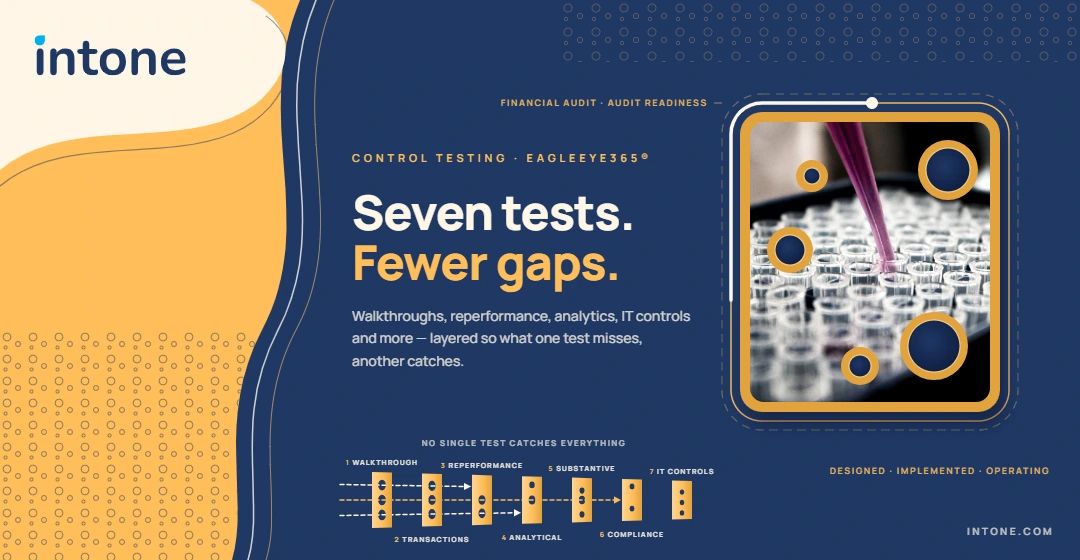
Control testing methods for financial auditors help evaluate whether an organization’s internal controls are properly designed, implemented, and operating effectively. Common methods include walkthrough testing, testing controls over key transactions, reperformance, analytical procedures, substantive testing, compliance testing, and IT controls testing. Together, these methods help identify control weaknesses, financial reporting risks, and opportunities to strengthen audit readiness.
Financial audits play a vital role in evaluating the accuracy, reliability, and integrity of an organization’s financial reporting. To provide reasonable assurance over financial statements and related processes, auditors assess transactions, supporting documentation, and the internal controls designed to prevent or detect errors, misstatements, and other risks.
Control testing is an important part of this process. It focuses on evaluating whether internal controls are appropriately designed, implemented, and operating as intended. Effective control testing can help organizations identify weaknesses before they develop into larger financial, operational, or compliance issues.
As organizations increasingly rely on automated workflows, enterprise applications, and interconnected financial systems, control testing also extends beyond traditional manual procedures. Auditors may need to evaluate access controls, system configurations, automated approvals, data flows, and other technology-enabled controls that influence financial reporting.
This makes it important for audit teams to use a combination of control testing methods and internal control testing techniques rather than relying on a single approach. The right testing strategy can provide a more complete understanding of the control environment while improving financial integrity, compliance, and audit readiness.
For additional guidance on control management, see Best Practices for Internal Controls for SOX Compliance.
Control Testing Methods for Financial Audits
- Walkthrough Testing or Inquiry
Walkthrough testing is one of the most widely used methods for testing internal controls and understanding how business processes operate from beginning to end. Auditors use walkthroughs to understand how a process operates, identify relevant controls, and evaluate whether those controls have been appropriately designed and implemented.
During a walkthrough, an auditor may select a transaction and follow it through each stage of the process. This could include reviewing how a transaction is initiated, approved, recorded, processed, and ultimately reflected in financial reporting.
Auditors may use inquiry, observation, inspection, and documentation review during a walkthrough. These activities can help establish whether employees understand the control procedures and whether the documented process reflects what actually occurs.
For example, an auditor reviewing an accounts payable process might trace an invoice from receipt through validation, approval, recording, and payment. This can reveal whether appropriate approval controls exist and whether responsibilities are properly separated.
Walkthroughs are particularly useful during the planning and risk-assessment stages because they help auditors develop a practical understanding of the organization’s control environment before selecting additional testing procedures.
- Testing of Controls Over Key Transactions
Financial reporting often depends on high-volume or high-impact transactions, making testing controls over key transactions an important part of an audit.
Auditors may identify significant transaction classes such as revenue, purchases, payroll, inventory, or expense recognition and evaluate the controls associated with those activities.
Testing may involve selecting a sample of transactions and determining whether required controls were performed consistently. Depending on the control, auditors might examine evidence of authorization, review, reconciliation, segregation of duties, or exception handling.
For example, revenue transactions may be subject to controls requiring appropriate authorization and review before revenue is recognized. Testing a sample of transactions can help auditors determine whether those controls operate as expected.
The effectiveness of this approach depends on appropriately identifying key risks and relevant controls rather than testing transactions without considering their relationship to financial reporting risk.
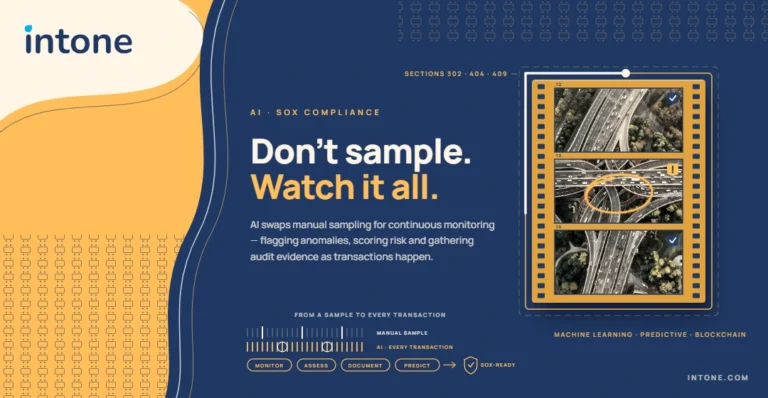
Organizations can complement periodic transaction testing with continuous monitoring to gain more frequent visibility into exceptions and control activity.
- Reperformance Testing
Reperformance testing is a highly reliable internal control testing method that involes an auditor independently executing a control or procedure to determine whether it produces the expected result.
Rather than relying solely on evidence that an employee performed a control, the auditor independently repeats the relevant procedure. This provides direct evidence about whether the control is operating effectively.
For example, suppose an organization performs a monthly bank reconciliation. An auditor may independently recompute the reconciliation using the underlying records and compare the result with the organization’s documented reconciliation.
Reperformance can be particularly valuable when evaluating controls involving calculations, reconciliations, approvals, or other procedures where the auditor can independently reproduce the expected outcome.
If the auditor’s result differs from the organization’s result, the discrepancy may indicate a control deficiency, calculation error, incomplete documentation, or another issue requiring further investigation.
- Analytical Procedures
Analytical procedures are commonly used during financial audits to evaluate financial or operational information by examining relationships, trends, ratios, and unexpected fluctuations.
Auditors may compare current-period information with historical results, budgets, forecasts, industry information, or other relevant expectations. Significant or unexpected differences can indicate areas that require additional investigation.
For example, a sudden increase in expenses without a corresponding change in business activity may prompt an auditor to investigate the underlying transactions and related controls.
Analytical procedures can help auditors identify unusual patterns and potential anomalies that may not be immediately apparent when individual transactions are reviewed separately.
However, analytical procedures should not automatically be treated as proof that a control is effective. They are generally most useful when combined with an understanding of the underlying processes, risks, and supporting evidence.
- Substantive Testing
While substantive testing is not technically a control testing method, it is frequently used alongside control testing in financial audits.
Substantive procedures focus on detecting material misstatements by examining transactions, account balances, disclosures, and supporting evidence. Auditors may inspect documentation, confirm balances, perform calculations, or examine individual transactions.
For example, an auditor may inspect supporting documentation for selected expenses to determine whether recorded amounts are accurate and appropriately supported.
The distinction between control testing and substantive testing is important. Control testing asks whether a control designed to prevent or detect a problem is operating effectively. Substantive testing focuses more directly on whether a financial statement amount or transaction is materially misstated.
Using both approaches can provide auditors with a broader understanding of financial reporting risk and control effectiveness.
- Compliance Testing
Compliance testing evaluates whether an organization is following established policies, procedures, contractual obligations, and applicable regulatory requirements.
Auditors may review documentation, approvals, records, system activity, and other evidence to determine whether required procedures were followed.
For example, an organization may have a policy requiring employees with certain responsibilities to complete periodic reviews or approvals. Compliance testing can determine whether those requirements were consistently met and whether exceptions were appropriately documented and addressed.
Compliance testing is especially important when regulatory or contractual requirements affect financial processes. It can help organizations identify gaps between documented requirements and actual practices.
When compliance exceptions are identified, organizations can investigate the underlying cause, determine whether the issue represents an isolated occurrence or broader control weakness, and implement appropriate remediation.
- IT Controls Testing
As financial reporting increasingly depends on enterprise applications and automated processes, IT controls testing has become an important part of many financial audits.
IT controls can influence the confidentiality, integrity, availability, and reliability of financial information. Auditors may therefore evaluate controls involving user access, system configurations, change management, data processing, system interfaces, backups, and monitoring.
For example, an auditor may test whether users receive access appropriate to their responsibilities and whether access is removed when an employee changes roles or leaves the organization.
IT controls testing may also examine automated controls embedded within financial applications. These controls can include automated calculations, approval workflows, validation rules, system-generated reports, and other technology-enabled procedures.
Because weaknesses in IT controls can affect multiple financial processes simultaneously, understanding the technology environment can be essential to evaluating the broader internal control environment.
Organizations can strengthen this visibility through internal auditing and continuous monitoring capabilities that help identify control exceptions and provide evidence for audit activities.
Why Choose Intone EagleEye365®?
Effective control testing is an important component of a strong financial audit program. By combining multiple testing methods, organizations can develop a more complete understanding of their internal control environment, identify potential weaknesses, and improve audit readiness.
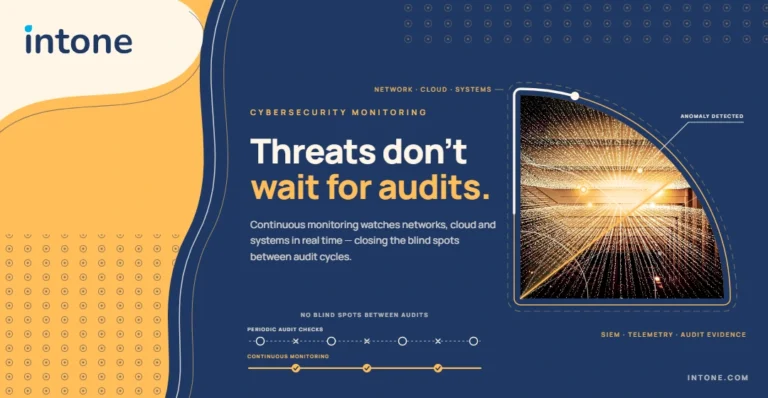
However, relying exclusively on periodic manual testing can make it difficult to identify issues between audit cycles. Continuous control monitoring can provide more frequent visibility into control activity, exceptions, and emerging risks.
Learn more about continuous control monitoring to understand how organizations can move beyond periodic reviews toward more continuous oversight.
EagleEye365® supports continuous control monitoring and audit activities by helping organizations monitor controls, identify anomalies, and improve visibility across complex enterprise environments.
Key capabilities include:
- Continuous control monitoring: Monitor relevant control activity and identify exceptions more frequently.
- Enterprise data connectivity: Connect with more than 1,000 industry-standard data sources and applications.
- Low-code/no-code capabilities: Configure workflows and integrations with reduced dependence on traditional development.
- Automated risk and control response: Support risk identification, control response, incident management, and remediation workflows.
- Real-time reporting: Provide greater visibility into control activity and relevant risk indicators.
- Data security: Apply security measures designed to protect sensitive enterprise information.
- GRC capabilities: Support governance, risk, compliance, continuous auditing, and control monitoring activities across enterprise environments.
With the help of data integration and controls automation, organizations can move toward a more connected approach to control monitoring and audit readiness.
Key Takeaways
- Use multiple testing methods: No single testing procedure provides a complete view of the control environment.
- Understand control design: Walkthroughs help auditors understand how controls are designed and implemented.
- Test key transactions: High-impact transaction classes should receive appropriate attention based on identified risks.
- Reperform important controls: Independent reperformance can provide direct evidence about control operation.
- Use analytical procedures strategically: Trends and unusual fluctuations can help identify areas requiring further investigation.
- Distinguish control and substantive testing: Both approaches serve different purposes within a financial audit.
- Evaluate compliance: Testing whether policies and requirements are followed can reveal control weaknesses.
- Include IT controls: Technology-enabled financial processes require appropriate evaluation of access, systems, and automated controls.
- Strengthen continuous oversight: Continuous control monitoring can supplement periodic audit procedures by providing more frequent visibility into control activity.
FAQ’s
Control testing evaluates whether an organization’s internal controls are appropriately designed, implemented, and operating effectively. Auditors use different testing procedures to determine whether controls are functioning as intended.
Seven commonly used methods discussed are:
- Walkthrough testing or inquiry
- Testing controls over key transactions
- Reperformance testing
- Analytical procedures
- Substantive testing
- Compliance testing
- IT controls testing
Control testing evaluates whether internal controls are operating effectively. Substantive testing focuses on detecting material misstatements in transactions, account balances, or disclosures. Both can play important roles in a financial audit.
Financial reporting increasingly relies on automated systems and technology. IT controls testing helps auditors evaluate controls over areas such as access, system changes, data processing, and automated financial processes that may affect financial reporting.
Continuous control monitoring provides more frequent visibility into control activity and exceptions than periodic testing alone. It can help organizations identify potential issues earlier and support ongoing audit readiness.
EagleEye365® supports continuous control monitoring by helping organizations monitor control activity, identify exceptions and anomalies, automate relevant workflows, and improve visibility across enterprise environments.