

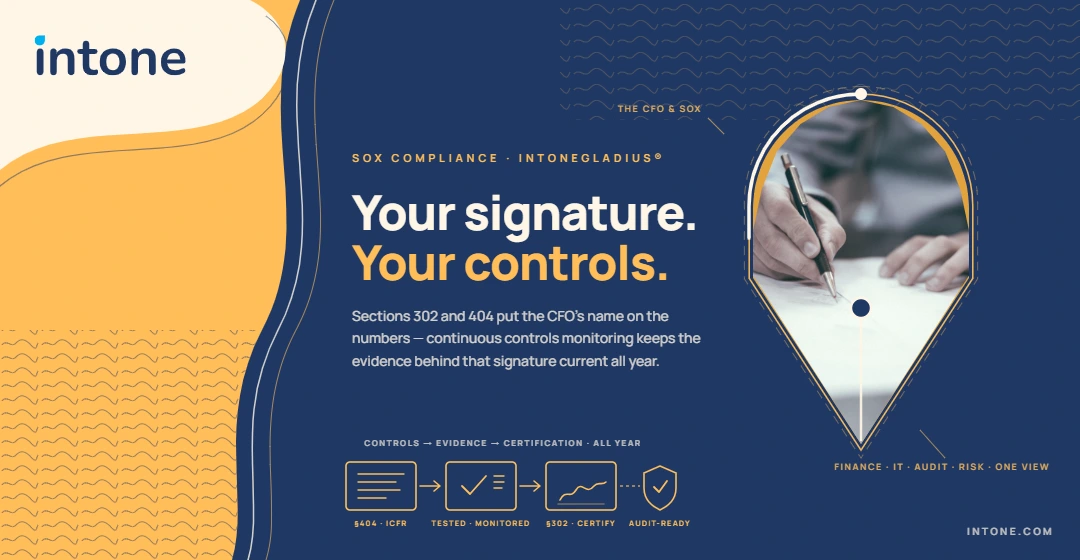
Understand the CFO’s role in SOX compliance, including financial reporting, internal controls, risk management, and continuous monitoring.
The CFO plays a critical role in SOX compliance by overseeing financial reporting, internal controls, risk management, and compliance processes. CFO responsibilities include establishing effective financial controls, ensuring accurate reporting, addressing control deficiencies, supporting audit readiness, and promoting accountability across the organization.
The Sarbanes-Oxley Act of 2002 (SOX) fundamentally changed how public companies approach financial reporting and internal controls. The legislation was introduced to improve corporate accountability and increase confidence in the accuracy and reliability of financial information.
For the Chief Financial Officer (CFO), SOX compliance is not simply an annual reporting requirement. It requires ongoing oversight of financial processes, internal controls, risk management, and reporting practices.
Because the CFO is closely involved in financial reporting and accounting operations, the role carries significant responsibility for ensuring that financial information is accurate, reliable, and supported by appropriate controls.
A strong SOX compliance program also requires collaboration among finance, accounting, internal audit, risk management, IT, and executive leadership. CFOs must therefore understand both the technical requirements of SOX and the broader organizational processes that support compliance.
.
SOX Section 302 and Section 404
SOX Section 302 requires the CEO and CFO of a public company to certify the accuracy and completeness of the company’s periodic financial reports and to attest to the effectiveness of related disclosure controls and procedures. CFOs must therefore understand the processes supporting financial reporting and disclose material control deficiencies when required.
SOX Section 404 focuses on internal control over financial reporting (ICFR). Management is responsible for assessing the effectiveness of these controls, while applicable companies may also be subject to an independent auditor’s attestation. For CFOs, Section 404 involves overseeing the design, documentation, testing, and remediation of financial controls that support reliable financial reporting.
Understanding the CFO’s Role in SOX Compliance
The CFO is one of the key executives responsible for maintaining the integrity of an organization’s financial reporting environment. While SOX compliance is an organization-wide responsibility, the CFO plays a central role in establishing expectations, overseeing controls, and ensuring that financial reporting processes are appropriately governed.
Financial Reporting and Accounting Oversight
One of the CFO’s most important responsibilities is ensuring the accuracy and integrity of financial reporting.
Financial statements must accurately represent the organization’s financial position and performance. To support this requirement, CFOs oversee accounting processes and work with finance teams to ensure that financial information is properly collected, reviewed, recorded, and reported.
Effective oversight includes establishing appropriate review procedures, segregation of duties, reconciliation processes, approval requirements, and documentation standards.
The CFO should also understand the assumptions, estimates, judgments, and accounting policies that materially affect financial reporting. This enables the CFO to identify potential reporting risks and ensure that appropriate controls are in place.
Establishing and Maintaining Internal Controls
SOX requires organizations to establish and maintain effective internal controls over financial reporting (ICFR).
The CFO plays an important role in ensuring that these controls are appropriately designed and operating effectively. This includes understanding key financial processes, identifying control objectives, evaluating risks, and ensuring that control owners understand their responsibilities.
Internal controls can include:
- Authorization controls that ensure transactions receive appropriate approval
- Reconciliation controls that identify discrepancies between financial records
- Access controls that restrict sensitive systems and information to authorized users
- Segregation of duties that reduce the risk of inappropriate activity
- Review controls that help identify errors or unusual transactions
- Documentation controls that provide evidence of control performance
CFOs should also ensure that control deficiencies are identified, evaluated, documented, and remediated appropriately.
Risk Management and SOX Compliance
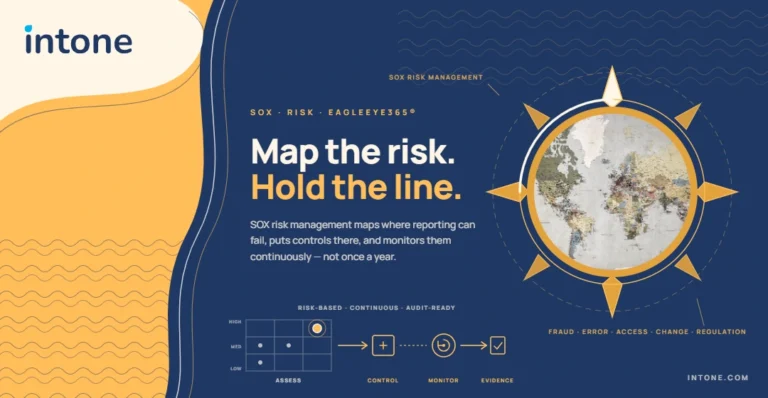
Effective SOX compliance requires organizations to understand where financial reporting risks exist and prioritize controls accordingly.
Identifying Financial Reporting Risks
CFOs should work with finance, accounting, internal audit, risk, and compliance teams to identify risks that could result in material misstatements or inaccurate financial reporting.
Risk assessments may consider areas such as revenue recognition, financial close processes, account reconciliations, journal entries, access to financial systems, and third-party activities.
A risk-based approach helps organizations focus their resources on controls that address the most significant financial reporting risks rather than treating every control as equally important.
Monitoring Control Effectiveness
Establishing a control is only the beginning. Organizations must also determine whether controls continue to operate effectively over time.
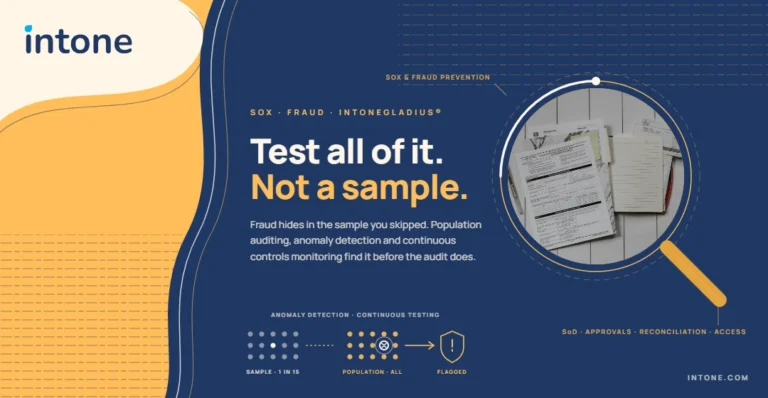
Continuous controls monitoring can provide CFOs and control owners with greater visibility into control activity and potential exceptions. Instead of relying exclusively on periodic manual reviews, organizations can use technology to identify unusual activity, control exceptions, and potential risks more quickly.
Continuous monitoring can support earlier remediation and provide management with a more current view of the organization’s control environment.
CFO Responsibilities for SOX Compliance
Although responsibilities vary by organization, CFOs commonly contribute to SOX compliance through several key activities.
1. Establishing a Strong Control Environment
The CFO helps establish expectations around accountability, financial integrity, documentation, and compliance.
A strong control environment begins with leadership. Employees should understand that accurate financial reporting and adherence to internal controls are organizational priorities rather than administrative requirements.
2. Overseeing Financial Reporting Controls
CFOs should maintain visibility into the controls supporting significant financial reporting processes.
This includes understanding key controls, reviewing control performance, evaluating deficiencies, and ensuring that remediation efforts receive appropriate attention.
3. Supporting Risk Assessments
The CFO should participate in evaluating risks that could affect financial reporting and determining whether existing controls adequately address those risks.
Risk assessments should be revisited when significant changes occur, including changes to business operations, technology, accounting standards, organizational structure, or regulatory requirements.
4. Addressing Control Deficiencies
When a control fails or does not operate as intended, the organization must determine the severity of the deficiency and establish an appropriate remediation plan.
CFO involvement is particularly important when deficiencies affect significant accounts, material processes, or the reliability of financial reporting.
5. Maintaining Audit Readiness
A strong SOX program should support audit readiness throughout the year, rather than relying on a last-minute preparation effort before an external audit.
Organizations should maintain appropriate documentation and evidence demonstrating that controls were designed, implemented, and operated effectively.
Continuous monitoring and centralized documentation can help finance and compliance teams identify gaps earlier and prepare supporting evidence more efficiently.
Best Practices for CFOs Managing SOX Compliance
Build Cross-Functional Collaboration
SOX compliance extends beyond the finance department. CFOs should encourage collaboration among finance, accounting, IT, internal audit, legal, risk, and compliance teams.
Cross-functional collaboration helps ensure that financial reporting controls account for technology dependencies, access management, data flows, and operational risks.
Establish Clear Ownership
Every significant control should have clearly defined ownership. Control owners should understand what the control is designed to accomplish, how frequently it must be performed, what evidence must be retained, and what actions should be taken when an exception occurs.
Clear ownership improves accountability and makes it easier to identify and remediate control deficiencies.
Standardize Documentation
Consistent documentation makes it easier to understand how controls operate and provides evidence for internal and external assessments.
Documentation should explain the purpose of each control, responsible personnel, frequency, procedures, evidence requirements, and remediation process.
Automate Repetitive Compliance Activities
Manual SOX activities can consume significant amounts of time and introduce opportunities for error. Where appropriate, organizations can automate repetitive activities such as evidence collection, control testing, notifications, reporting, and exception identification.
Automation can allow finance and compliance teams to focus more heavily on risk analysis and remediation rather than administrative tasks.
Use Continuous Monitoring
Periodic control testing provides valuable information, but continuous monitoring can provide a more current view of the control environment.
Technology-enabled monitoring can help identify exceptions and potential control failures closer to when they occur. This supports proactive remediation and strengthens overall compliance visibility.
Technology and the Future of SOX Compliance
As organizations become increasingly dependent on technology, SOX compliance is becoming more closely connected to IT systems, data, cybersecurity, and automation.
Financial reporting processes often rely on multiple enterprise applications and databases. Changes to these systems can therefore affect the controls supporting financial reporting.
CFOs should work with technology and compliance teams to understand how systems, integrations, access permissions, and automated processes affect the control environment.
Automation and data-driven monitoring can make SOX compliance more efficient and scalable by reducing manual work and providing greater visibility into control performance.
Benefits of an Effective SOX Compliance Program
A well-designed SOX compliance program provides benefits that extend beyond meeting regulatory requirements.
Improved Financial Reporting Accuracy
Strong internal controls can help reduce errors and improve the reliability of financial information.
Reduced Financial and Compliance Risk
Identifying and addressing control weaknesses can reduce the likelihood that significant issues will go undetected.
Greater Audit Readiness
Consistent documentation, monitoring, and control testing can make it easier to provide evidence during internal and external audits.
Improved Operational Efficiency
Automating repetitive compliance activities can reduce administrative workloads and allow employees to focus on higher-value activities.
Stronger Organizational Accountability
Clearly defined control ownership and management oversight establish greater accountability for financial reporting and compliance.
Why Choose IntoneGladius®?
Managing SOX compliance across complex organizations can become difficult when control information is distributed across multiple systems and teams.
IntoneGladius® provides Governance, Risk, and Compliance (GRC) capabilities designed to help organizations monitor controls, manage compliance activities, and improve visibility into their control environment.
The platform supports capabilities such as:
- Continuous control monitoring
- Automated control testing and monitoring
- Real-time risk and compliance visibility
- Centralized control management
- Customizable controls and workflows
- Compliance support across multiple frameworks
- Automated reporting and dashboards
- Risk and issue management
By combining automated monitoring with centralized visibility, IntoneGladius® can help finance and compliance teams identify exceptions, improve control oversight, and strengthen audit readiness.
For additional insights, see Intone’s resource on SOX Compliance and ESG Reporting: What CFOs Need to Know.
Contact Intone to learn more about IntoneGladius® and continuous controls monitoring.
Key Takeaways
- The CFO plays a central role in SOX compliance, particularly in financial reporting and internal control oversight.
- CFOs should understand key financial reporting risks and ensure appropriate controls address them.
- Effective SOX compliance requires collaboration across finance, accounting, IT, internal audit, risk, and compliance.
- Control owners should have clearly defined responsibilities and documentation requirements.
- Continuous controls monitoring can provide greater visibility into control performance and potential exceptions.
- Automating repetitive compliance activities can improve efficiency and reduce administrative workloads.
- Maintaining audit readiness throughout the year is more effective than preparing only immediately before an audit.
- Technology can help organizations scale SOX compliance across complex environments.
FAQ’s
The CFO plays a key role in overseeing financial reporting, internal controls, risk management, compliance, and remediation activities that support SOX requirements.
SOX compliance helps organizations maintain reliable financial reporting and effective internal controls. Because CFOs are closely involved in financial reporting, they have an important responsibility for maintaining the integrity of the organization’s financial information.
Responsibilities can include overseeing financial reporting, supporting internal control design and testing, evaluating financial reporting risks, addressing control deficiencies, and maintaining audit readiness.
Continuous controls monitoring can provide more frequent visibility into control performance and potential exceptions. This can help organizations identify issues earlier and support timely remediation.
Technology can automate repetitive activities such as control monitoring, evidence collection, testing support, reporting, and exception identification. This can improve efficiency while providing greater visibility into the control environment.
IntoneGladius® provides GRC capabilities for control monitoring, compliance management, risk visibility, automated workflows, and reporting. These capabilities can help organizations strengthen control oversight and audit readiness.