

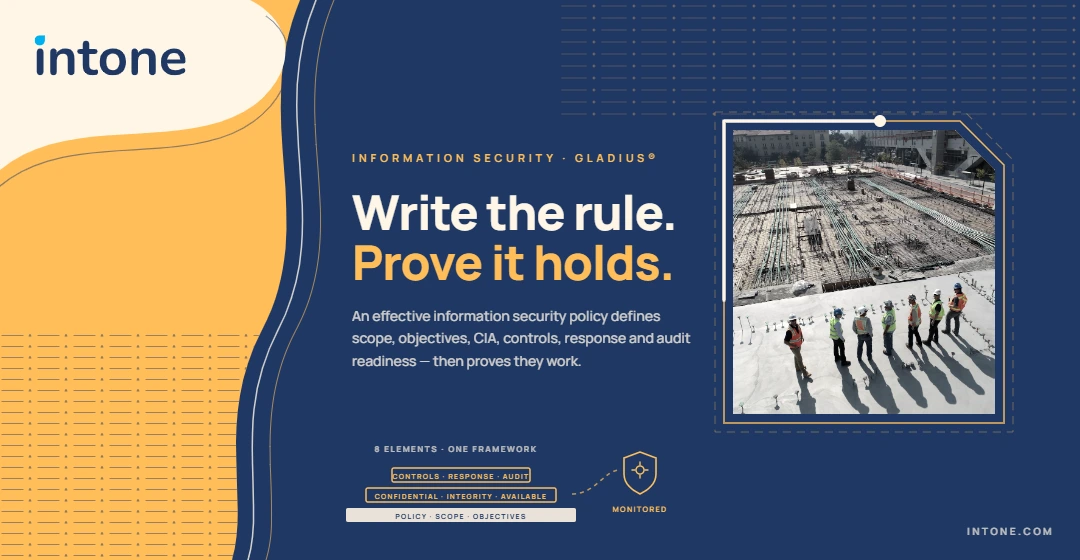
Learn the key elements of an effective information security policy and how organizations can strengthen data protection, cybersecurity, compliance, and audit readiness.
An effective information security policy defines how an organization protects its information, systems, and technology assets. Key elements include scope and applicability, security objectives, confidentiality, integrity, availability, security controls, incident response, and audit readiness. Together, these elements establish a framework for managing information security risks.
In today’s digital environment, information security is a critical concern for organizations of all sizes and industries. The increasing frequency and sophistication of cyber threats make it essential to establish clear policies for protecting sensitive information and technology assets.
An information security policy provides a framework for defining security expectations, responsibilities, controls, and procedures across an organization. A well-designed policy can help organizations protect sensitive information, mitigate cyber risks, support regulatory compliance, and maintain customer trust.
The following elements provide practical insights into the core security topics organizations should address when developing an effective information security policy.
Elements of an Effective Information Security Policy
1. Scope and Applicability
The first element of an effective information security policy is clearly defining its scope and applicability. The policy should identify the people, systems, information, devices, and other assets to which it applies.
Clearly established boundaries help organizations determine which areas require protection, and which employees or third parties are responsible for following the policy.
2. Information Security Objectives
Every organization should establish well-defined information security objectives that align with its broader business goals.
These objectives provide direction for security practices and help organizations determine what they are trying to accomplish through their information security program. Objectives may address areas such as protecting sensitive information, reducing cyber risk, maintaining system availability, and meeting applicable regulatory requirements.
3. Confidentiality
Confidentiality ensures that sensitive information is protected from unauthorized access or disclosure.
An information security policy should establish appropriate measures for protecting confidential data, including access controls, encryption, secure transmission protocols, and authorization requirements. It should also define responsibilities and consequences associated with unauthorized disclosure.
4. Integrity
Data integrity ensures that information remains accurate, complete, consistent, and protected against unauthorized modification.
An effective policy should establish procedures and controls for maintaining data integrity. These may include data validation, checksums, digital signatures, access restrictions, and monitoring mechanisms.
Organizations can also strengthen data integrity by implementing effective data management practices that help maintain consistent and reliable information throughout their lifecycle.
For related data management guidance, see Data Management Checklist: Essential Components.
5. Availability
Information must be available to authorized users when needed to support business operations.
A comprehensive information security policy should address measures for maintaining availability, including redundancy, backups, recovery procedures, and disaster recovery plans. These controls can help organizations minimize disruptions and restore critical services following system failures or security incidents.
6. Security Controls
Security controls form the operational foundation of an information security program. Organizations should identify and implement technical, administrative, and procedural controls appropriate to their risks.
Examples include access controls, network segmentation, firewalls, intrusion detection systems, endpoint protection, and regular security updates. The policy should clearly establish how these controls are implemented, managed, and reviewed.
For more information about firewalls as a security control, see Firewall in Cybersecurity: Role, Types and Protection.
7. Incident Response
Even strong preventive controls cannot eliminate every security incident. An effective information security policy should therefore establish clear incident response procedures.
These procedures should address incident reporting, investigation, containment, recovery, and communication. Clearly defined responsibilities can help organizations respond quickly and consistently when an incident occurs, reducing potential damage and supporting faster recovery.
8. Audit Readiness and Compliance
Organizations should regularly evaluate whether their information security policies and controls are operating as intended. Audit readiness requires maintaining appropriate evidence, reviewing security controls, monitoring compliance, and addressing identified gaps.
Regular internal or external audits and compliance assessments can help organizations identify weaknesses before they become larger risks. The policy should also account for relevant legal, regulatory, and industry requirements.
Maintaining ongoing oversight can make it easier to demonstrate compliance and provide stakeholders with greater confidence in the organization’s security posture.
Why Choose IntoneGladius®?
Implementing an effective information security policy is an important step toward protecting sensitive information and mitigating cyber risks. However, organizations also need visibility into whether security controls are operating effectively across their technology environment.
IntoneGladius® provides cybersecurity capabilities designed to help organizations monitor security activity and strengthen their overall security posture.
Its capabilities include:
- Customizable security controls to support organizational requirements
- Real-time monitoring of endpoints, databases, servers, networks, and data security
- Centralized IT compliance across multiple control frameworks
- Support for frameworks including SOC, NIST, COBIT, COSO, CIS, FedRAMP, and FISMA
- Improved visibility into security risks and compliance activity
By combining clearly defined policies with appropriate security monitoring and controls, organizations can create a stronger foundation for information security, regulatory compliance, and audit readiness.
For additional information, see Intone’s related resource, The Key Elements of an Effective Information Security Policy.
Contact Intone to learn more about IntoneGladius® and cybersecurity solutions for your organization.
Key Takeaways
- An information security policy establishes expectations for protecting organizational information and technology assets.
- Clearly define the policy’s scope, applicability, and security objectives.
- Protect information’s confidentiality, integrity, and availability.
- Implement security controls appropriate to organizational risks.
- Establish clear incident response procedures.
- Regularly review controls and compliance requirements to improve audit readiness.
- Combine policy requirements with continuous security monitoring for stronger visibility and risk management.
FAQ’s
An information security policy is a formal framework that establishes how an organization protects its information, systems, technology assets, and users from security risks.
The key elements include:
- Scope and applicability
- Security objectives
- Confidentiality
- Integrity
- Availability
- Security controls
- Incident response
- Audit readiness
Confidentiality helps ensure that sensitive information can only be accessed or disclosed by authorized individuals, reducing the risk of unauthorized exposure.
A well-defined policy establishes security requirements and responsibilities. Regular control reviews, compliance assessments, and documentation can help organizations maintain evidence and identify gaps before an audit.
IntoneGladius® helps organizations monitor security activity across endpoints, databases, servers, networks, and data while supporting customizable security controls and centralized IT compliance.