

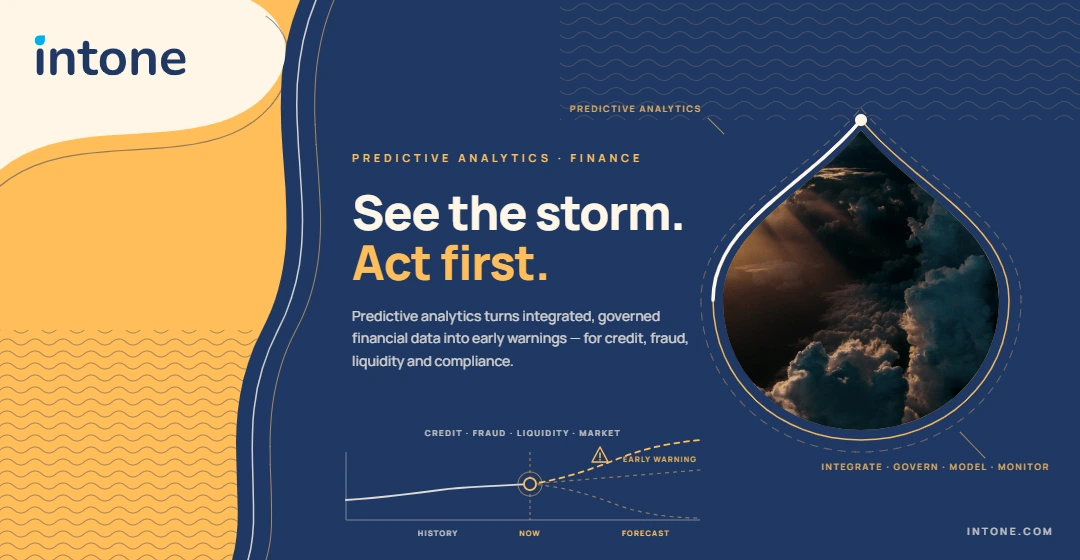
Predictive data analytics in finance empowers financial institutions to move from reactive risk management to proactive foresight. By leveraging historical trends, machine learning algorithms, and real-time data integration, organizations can anticipate potential defaults, detect possible fraud, streamline regulatory compliance, and optimize capital allocation with greater confidence.
Predictive data analytics is becoming increasingly important for modern organizations. It is not just about analyzing past data, but also about using historical trends and insights to forecast potential future outcomes. Financial institutions can use predictive analytics to identify potential credit risks, detect fraudulent activity, anticipate customer behavior, and support better business decisions.
Predictive analytics also enables financial leaders to explore dynamic “what-if” scenarios, such as evaluating the impact of changing interest rates, launching new financial products, or adjusting risk strategies. By combining machine learning models with reliable data, organizations can develop a more proactive approach to financial risk management.
Why Enterprise Leaders Must Embrace Data-Driven Forecasting
To maintain long-term market competitiveness, enterprise leaders must shift from reactive problem-solving toward proactive strategy formulation. Traditional reliance on intuition and lagging indicators may not provide sufficient visibility in volatile financial markets.
Integrating predictive data analytics in finance with modern data management services for banking can help financial organizations establish stronger foundations for forecasting, risk assessment, and decision-making.
When financial data is centralized, governed, and readily available, executive teams can connect everyday operational decisions with broader business goals. This allows organizations to identify emerging trends earlier and allocate resources more effectively.
“Predictive data analytics is transforming how financial institutions manage risk, moving them away from reactive measures and toward highly strategic, proactive interventions.”
The Evolution of Decision-Making in Financial Organizations
The world of finance has long relied on historical information and traditional reporting. However, the increasing availability of real-time information, artificial intelligence, and advanced analytics is changing how financial organizations make decisions.
Financial institutions can now use predictive models to anticipate loan defaults, identify suspicious transactions, evaluate market movements, and understand changing customer behavior.
This evolution is closely connected with the growth of big data analytics in banking, where organizations analyze large volumes of customer, transaction, market, and operational information to generate actionable intelligence.
Instead of waiting for a risk event to occur, organizations can use predictive modeling to identify potential warning signs and take preventive action.
What Financial Leaders Are Really Looking For
Behind every technology investment, executive teams are trying to answer important operational and strategic questions:
- How can we mitigate credit defaults before they materialize?
- How do we catch fraudulent transactions in real time without creating friction for legitimate users?
- Can we tailor financial products and risk rates dynamically to individual customer profiles?
- How do we transform regulatory compliance from a costly obligation into an automated asset?
- What infrastructure is necessary to break down data silos and build accurate forecasting models?
Answering these questions requires a shift from traditional reporting toward continuous, advanced predictive modeling.
Financial organizations must also establish reliable data foundations before deploying sophisticated analytics. Without accurate, integrated, and governed information, even advanced predictive models can produce unreliable results.
The Missing Link: Data Integration and Governance
Most predictive initiatives do not fail simply because analytical models are weak. A major challenge is often the underlying data environment.
Financial institutions typically operate across multiple applications, databases, business units, payment systems, customer platforms, and reporting environments. These systems can create fragmented data that makes it difficult to build a consistent view of financial activity.
This is where seamless data integration becomes essential.
Organizations can use modern data integration tools, features, benefits, and use cases to connect disparate information sources and establish unified data flows.
Centralized data integration can help create a more consistent source of information for predictive models. When information is incomplete, duplicated, outdated, or inconsistent, machine learning models may produce inaccurate predictions.
Data governance is equally important. Strong data governance and data analytics practices help organizations establish policies, ownership, accountability, and controls around critical information.
Together, data integration and governance create the foundation required for trustworthy predictive analytics.
Why Advanced Analytics Matters More Than Ever
The financial services landscape is evolving rapidly due to economic volatility, emerging compliance requirements, cybersecurity threats, and changing consumer behavior.
To navigate these challenges, institutions are applying predictive analytics across several critical operational areas.
Early Warning Systems
Financial organizations can analyze customer financial history, market conditions, economic indicators, and behavioral patterns to identify potential credit vulnerabilities before they become significant problems.
Next-Generation Fraud Detection
Predictive analytics can evaluate large transaction streams to identify unusual patterns and potential fraudulent activity. Real-time analysis can help organizations investigate suspicious transactions more quickly.
Precision Risk Profiling
Instead of relying exclusively on static risk scores, financial institutions can combine multiple variables to develop more dynamic customer and portfolio risk profiles.
Actionable Governance Insights
Predictive models can convert complex datasets into practical performance indicators that help executives evaluate risks, allocate resources, and make informed decisions.
Advanced Scenario Stress Testing
Financial institutions can simulate multiple economic scenarios to understand how changes in interest rates, market conditions, customer behavior, or credit exposure could affect financial performance.
These capabilities demonstrate why Big Data Analytics is becoming an important component of modern financial decision-making.
Core Capabilities to Build Technical Readiness
Organizations looking to successfully deploy predictive models must establish foundational technical and structural capabilities.
Continuous Controls Monitoring
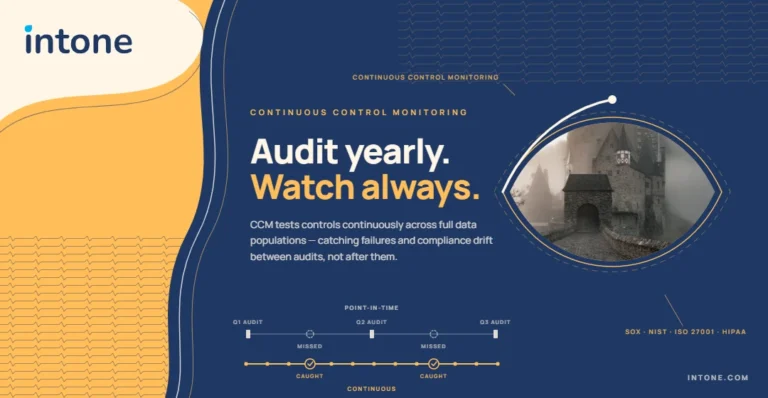
Continuous Controls Monitoring can help organizations track operational effectiveness and compliance activities continuously rather than relying entirely on periodic reviews.
By connecting monitoring processes with predictive analytics, financial institutions can gain greater visibility into control performance and emerging risk indicators.
Automated Regulatory Tracking
Automated monitoring can help compliance teams evaluate operational activities against regulatory requirements and identify potential exceptions more efficiently.
Strong data governance policies for regulatory compliance can further support accountability, consistency, and regulatory readiness.
GRC Advisory Integration
Predictive technologies should not operate independently from governance, risk, and compliance processes. Organizations can integrate predictive insights into broader GRC frameworks to create a more coordinated approach to risk management.
Scalable Storage Pipelines
Predictive analytics requires infrastructure capable of processing large volumes of structured and unstructured information. Scalable data pipelines allow organizations to support growing analytical workloads without creating unnecessary bottlenecks.
Expert Data Management
Specialized data management expertise can support data preparation, model validation, deployment, monitoring, and ongoing optimization.
Reliable data management is particularly important for financial organizations because predictive models often depend on information originating from multiple systems and business units.
How Advanced Predictive Solutions Transform Financial Stability
Modern predictive platforms allow organizations to move beyond reactive risk management and toward quantifiable, data-driven forecasting.
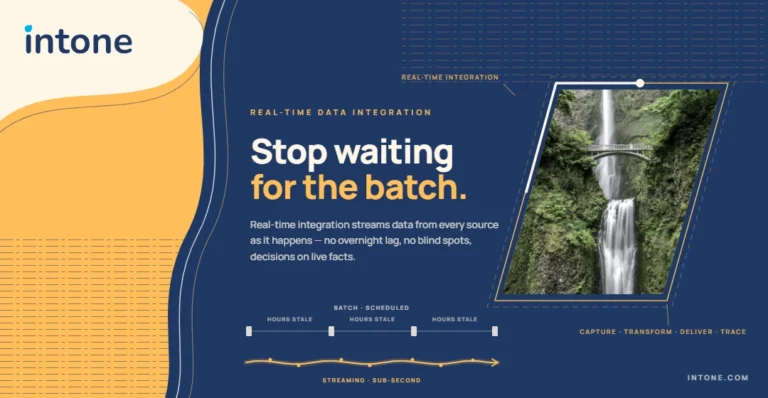
By linking real-time information with predictive engines, financial institutions can identify potential risks before they become material events.
For example, a bank can use predictive analytics to assess borrower transaction patterns, repayment history, income changes, and broader economic indicators to identify customers who may be at higher risk of loan delinquency. The bank could then prioritize early outreach or review for those customers. If this approach helps reduce delinquency rates and prevents a measurable portion of potentially impaired loans, the organization can lower credit losses while improving resource allocation. The exact business impact depends on the quality of the data, model performance, portfolio characteristics, and how effectively the bank acts on the resulting insights.
For example, predictive models can help identify:
- Potential credit deterioration
- Suspicious transaction patterns
- Changes in customer behavior
- Emerging operational risks
- Market volatility indicators
- Compliance exceptions
- Changes in portfolio performance
The effectiveness of these capabilities depends heavily on data quality.
Strong financial data quality management helps organizations validate, cleanse, monitor, and maintain the information used by analytical systems.
When data is accurate and consistent, financial leaders can have greater confidence in predictive outputs and use those outputs to support strategic decisions.
Risk Management and Predictive Data Analytics
Risk management is one of the most important applications of predictive analytics in financial services.
Traditional risk management often focuses on evaluating known exposures and responding after risk indicators become visible. Predictive analytics introduces a more proactive approach by identifying patterns that may indicate future risks.
Financial organizations can combine historical information, customer behavior, transaction activity, market indicators, and operational data to develop more comprehensive risk assessments.
This approach complements established risk management practices in banking by giving decision-makers additional data-driven insights into emerging exposures.
Predictive risk models can support areas such as:
- Credit risk assessment
- Fraud prevention
- Market risk analysis
- Operational risk monitoring
- Liquidity forecasting
- Customer risk profiling
- Compliance monitoring
The objective is not to predict every event with absolute certainty. Instead, predictive analytics provides organizations with earlier indicators that can improve preparedness and decision-making.
Data Governance: The Foundation of Predictive Trust
Predictive analytics is only as reliable as the information supporting it.
Financial institutions need clear ownership, standardized definitions, appropriate access controls, and consistent data management practices to ensure that analytical models receive reliable information.
Data governance also helps organizations establish traceability and accountability across their data environment.
Financial leaders can strengthen this foundation by adopting appropriate data governance tools to improve visibility, data lineage, security, and information management.
Effective governance helps ensure that predictive analytics is not treated as an isolated technology project. Instead, it becomes part of a broader enterprise data strategy.
The Role of Big Data Analytics in Financial Forecasting
Financial institutions generate enormous amounts of information through transactions, customer interactions, digital channels, payment systems, market activities, and operational processes.
Big Data Analytics allows organizations to process and analyze these large datasets to uncover patterns that may not be visible through traditional reporting.
When combined with predictive modeling, big data can support:
- Customer behavior forecasting
- Credit risk prediction
- Fraud detection
- Market trend analysis
- Portfolio optimization
- Operational forecasting
- Financial performance analysis
The combination of big data, predictive analytics, artificial intelligence, and strong governance allows financial institutions to move from simply understanding what happened to evaluating what could happen next.
Cloud Technology and Predictive Analytics
Cloud technology is also changing how financial organizations build and scale analytics environments.
Cloud platforms can provide scalable computing and storage capabilities that support high-volume data processing and advanced analytical workloads.
Financial organizations exploring cloud transformation can also evaluate Microsoft Cloud business transformation capabilities to modernize their data and technology environments.
A modern cloud architecture can support predictive analytics by providing flexible infrastructure for data processing, analytics applications, reporting, and machine learning workloads.
However, cloud adoption must also be accompanied by appropriate governance, security, compliance, and access controls.
The Future of Finance Is Proactive Foresight
Success in modern financial risk management is no longer measured only by how quickly an organization responds to a crisis. Increasingly, it is measured by how effectively the organization can identify and prevent potential risks before they become significant.
- Legacy approaches manage risk after exposure.
- Predictive frameworks identify risk signals before exposure.
- Continuous monitoring provides ongoing visibility.
- Data governance establishes trust in analytical outputs.
- Big data analytics provides broader organizational intelligence.
Organizations that prioritize infrastructure readiness, continuous controls, data quality, and sophisticated predictive analytics can build stronger foundations for sustainable growth and financial resilience.
Key Takeaways
- Predictive data analytics in finance helps financial institutions identify potential risks and opportunities earlier.
- Reliable data integration and governance are essential for producing more trustworthy predictive insights.
- Predictive analytics can support credit risk, fraud detection, compliance, forecasting, and operational risk management.
- Real-world financial value depends on model performance, data quality, and effective action on predictive insights.
- A combination of advanced analytics, continuous monitoring, scalable infrastructure, and strong governance can strengthen financial resilience.
Ready to Elevate Your Risk Governance Framework?
If your organization is ready to transition from reactive decision-making to data-driven forecasting, the first step is to evaluate your data architecture, governance practices, integration capabilities, and analytical maturity.
Modern predictive analytics requires more than sophisticated algorithms. It requires reliable data, scalable infrastructure, effective governance, strong security, and continuous monitoring.
Financial organizations can combine these capabilities to build trusted, audit-ready predictive models that support business objectives while strengthening risk management and compliance.
Ready to explore how predictive analytics can strengthen your financial data strategy? Contact Intone to learn more about data, analytics, governance, and risk management capabilities.
FAQ’s
Predictive data analytics in finance uses historical data, statistical algorithms, and machine learning models to forecast potential financial outcomes, credit risks, customer behaviors, and market trends.
Predictive analytics analyze transaction data and behavioral patterns to identify unusual activities and anomalies. This allows financial institutions to detect potential fraud earlier and investigate suspicious transactions more efficiently.
Continuous Controls Monitoring provides ongoing visibility into operational and compliance controls. Instead of relying only on periodic audits, organizations can identify exceptions and potential control failures more quickly.
Data integration combines information from different systems and sources into consistent data flows. This helps predictive models access more complete and reliable information, improving the quality of analytical outputs.
Early warning systems analyze customer information, financial indicators, transaction patterns, and other relevant variables to identify signs of potential credit deterioration. This enables financial institutions to intervene before risks become significant losses.