

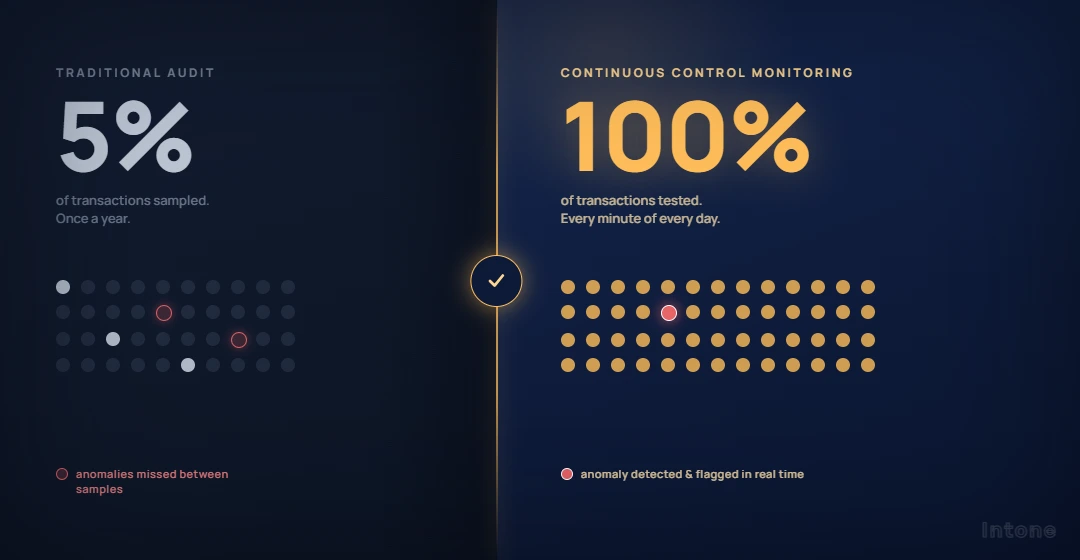
Why continuous monitoring, data lineage, and risk controls matter for enterprise financial stability.
Internal control audits safeguard organizational accuracy by detecting operational risks, preventing financial misstatements, and enforcing regulatory compliance. Establishing continuous control monitoring, clear data lineage, and standardized controls across business units ensures complete financial integrity, audit readiness, and long-term stakeholder confidence.
Financial integrity is the foundation of every successful enterprise. Internal control audits play a central role in maintaining this integrity by systematically evaluating operational processes, preventing fraud, and ensuring accurate reporting. In an environment shaped by complex regulations, distributed teams, and high transaction volumes, robust internal control frameworks are essential for safeguarding company assets and sustaining growth.
Organizations invest heavily in compliance systems and digital workflows to streamline financial reporting and manage operational risks. However, leadership often faces a common obstacle: despite having control routines in place, audit teams and external regulators still demand exhaustive reconciliations and manual verification procedures. Achieving true financial integrity requires moving beyond baseline compliance toward verifiable, transparent, and continuous control environments.
What Are Internal Control Audits?
Internal control audits are systematic evaluations of an organization’s processes, policies, and controls to determine whether they effectively manage risks, protect assets, ensure accurate reporting, and support regulatory compliance. They help organizations identify control weaknesses, prevent errors or fraud, and strengthen the reliability and effectiveness of their operations.
Understanding the Foundation of Internal Control Audits
Internal control audits evaluate how effectively an organization’s policies, procedures, and systems protect financial records from errors, omissions, and intentional manipulation. They provide independent assurance that financial statements accurately reflect true business performance.
A widely recognized approach is the COSO Internal Control—Integrated Framework, which provides organizations with a structured approach to designing, implementing, and evaluating effective internal controls. The framework helps organizations assess controls across areas such as risk assessment, control activities, information and communication, and monitoring.
Mitigating Risks and Preventing Misstatements
Without structured internal audits, undetected processing errors or systemic vulnerabilities can corrupt ledger entries over time. Internal control audits systematically test key controls help identify control failures before they materially impact reporting.enabling teams to correct discrepancies before they result in restatements or severe compliance penalties.
Safeguarding Enterprise Assets
Internal controls protect vital enterprise assets—including liquid capital, intellectual property, and proprietary financial data—from unauthorized access, fraud, or misuse. Establishing rigorous authorization protocols and clear segregation of duties limits internal and external security threats.
Aligning Controls Across Business Units for Financial Transparency
A significant vulnerability in enterprise financial operations is inconsistent control execution across different business divisions. When one division enforces strict automated validation while another relies on manual spreadsheet entry, systemic reporting gaps emerge.
- Standardizing Policy Execution: Establishing uniform controls across business units ensures that every entry point, transaction pipeline, and ledger query adheres to identical validation rules.
- Reducing Fraud Opportunities:Harmonized controls eliminate weak links across subsidiaries that bad actors might exploit to alter financial figures or conceal unauthorized expenditures.
- Streamlining Compliance: Unified frameworks simplify Sarbanes-Oxley (SOX) compliance and regulatory reporting, reducing audit prep time across the entire enterprise.
Replacing Manual PBC Requests with Continuous Control Monitoring
Traditional financial audits rely heavily on Provided by Client (PBC) requests, where internal accounting and IT teams gather flat files, sample receipts, and system screenshots manually.
This legacy approach presents major challenges:
- Resource Strain: Manual PBC requests pull finance and IT professionals away from core strategic initiatives for weeks at a time.
- Data Tampering Risks: Manual handling creates windows where sample data can be altered, misfiled, or incorrectly formatted.
- Delayed Risk Visibility: Periodic manual reviews detect errors long after transactions have cleared.
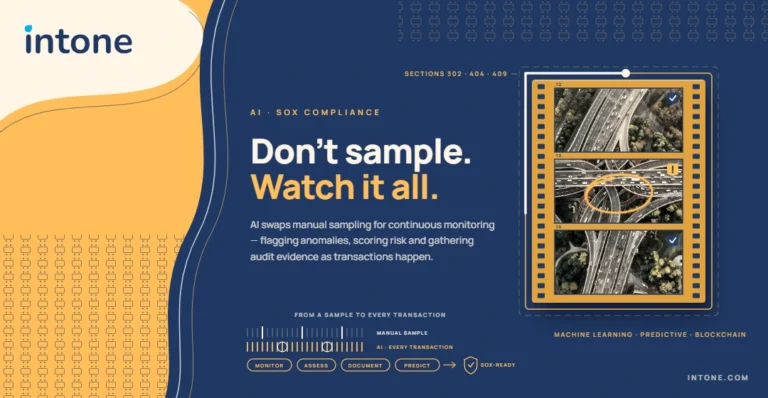
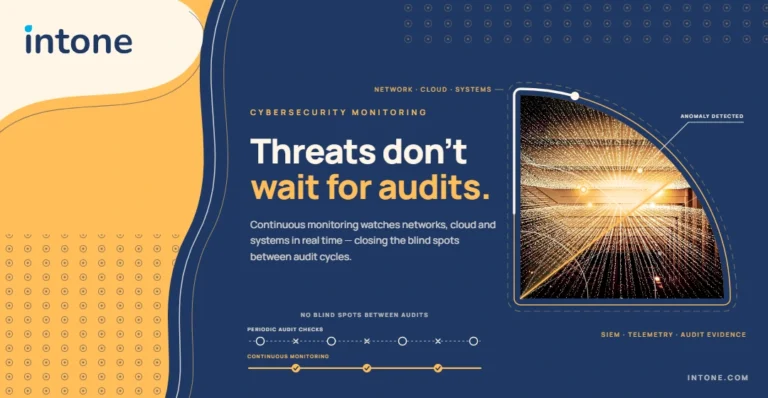
Modern compliance programs replace manual workflows with continuous control monitoring. By pulling tamper-proof logs directly from underlying enterprise systems, organizations maintain real-time visibility into control execution, eliminating manual audit bottlenecks while strengthening auditor trust.
The Critical Role of Data Lineage in Financial Integrity
In modern financial ecosystems, data moves continuously across ERPs, payment gateways, and analytics platforms. Maintaining financial integrity requires total visibility into this journey through comprehensive data lineage.
Data lineage acts as traceable record of data movement and transformation for financial records, tracking:
- Where raw financial data originated.
- Who authorized modifications or ledger entries.
- How data transformations were processed before reaching final financial reports.
Without embedded data lineage, auditors must evaluate financial outputs without clear context into how those numbers were compiled. End-to-end data lineage ensures every calculation, adjustment, and report remains traceable, reproducible, and fully audit-ready.
Leveraging Intone Technologies for Comprehensive Control Assurance
Ensuring total financial integrity requires advanced technology capable of automating control monitoring and unifying complex enterprise data streams. Intone provides purpose-built tools to secure digital architecture and streamline audit management:
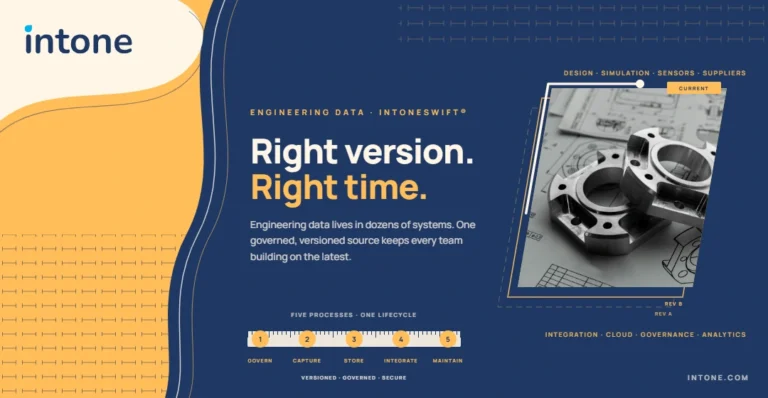
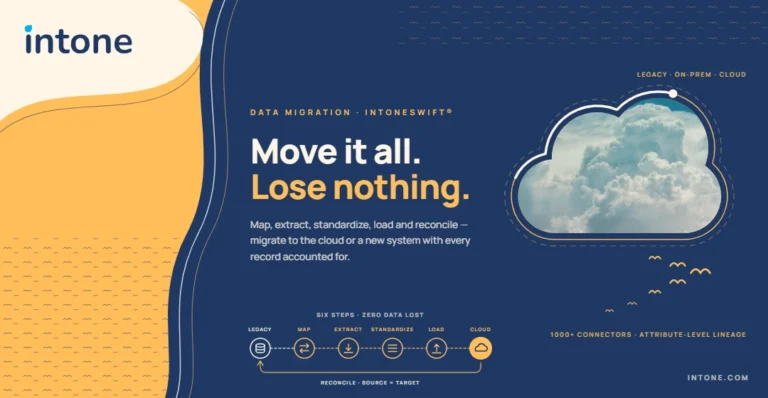
IntoneSwift® delivers robust data integration and traceability through:
- Attribute-Level Lineage: Captures detailed data lineage across every data pipeline to maintain complete auditability.
- Extensive Connectivity: 1000+ connectors unifying heterogeneous data sources under standard control policies.
- High-Speed Operations: Distributed in-memory processing delivering 10X execution speed for real-time validation.
- Comprehensive Security: End-to-end data encryption at rest and in transit alongside centralized credential management.
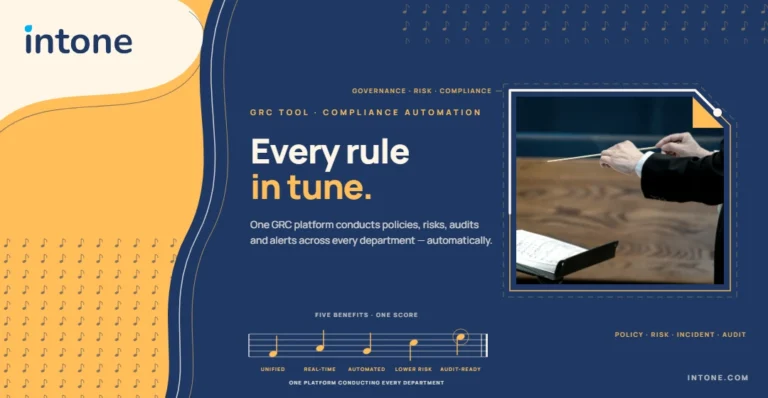
EagleEye365® provides a unified GRC platform featuring:
- Unified Control Management: Integrates risk management, continuous auditing, continuous control monitoring, and incident response into one platform.
- Automated Evidence Generation: Pulls audit-ready evidence directly from 240+ industry-standard data sources, replacing manual PBC requests.
- Enterprise Grade Encryption: SSL and AES 256-bit encryption protecting sensitive financial information from unauthorized modification.
- Microservices Architecture: Delivers uninterrupted background auditing and real-time reporting without impacting live operations.
FAQ’s
An internal control audit assesses the effectiveness of an organization’s internal controls to ensure accurate financial reporting, prevent fraud, and maintain compliance with industry regulations.
Continuous control monitoring tracks system activity in real time, automatically detecting anomalies and control failures before they result in financial misstatements or compliance violations.
Data lineage provides a complete, traceable record of how financial data moves and transforms from source to final report, giving auditors total visibility into evidence provenance.
Automated control platforms capture system logs and execution evidence directly from source applications, removing the need for manual file gathering and reducing audit prep friction.
IntoneSwift® provides high-speed data integration with attribute-level lineage, while EagleEye365® delivers continuous monitoring, automated evidence collection, and unified GRC capabilities across enterprise applications.