

Learn how effective SOX internal controls can strengthen financial reporting, reduce risks, improve compliance, and support audit readiness.
SOX compliance requires organizations to establish and maintain effective internal controls over financial reporting. Key practices include conducting regular risk assessments, enforcing access controls and segregation of duties, maintaining clear documentation and an audit trail, performing control testing, and using automation for evidence collection and continuous monitoring. These practices can strengthen financial reporting, support corporate governance, improve compliance validation, and increase audit readiness.
For publicly traded companies, SOX compliance is an important part of corporate governance and financial reporting. The Sarbanes-Oxley Act established requirements intended to strengthen accountability and improve the reliability of financial disclosures.
A central part of SOX compliance is maintaining effective internal controls that help organizations prevent and detect errors, financial misstatements, fraud, and process weaknesses. Strong controls also provide management and auditors with greater visibility into whether financial processes are operating as intended.
As organizations become more dependent on interconnected applications and digital workflows, managing controls manually can become increasingly difficult. Organizations may need to monitor controls across business units, systems, locations, and regulatory requirements while maintaining consistent documentation and evidence.
This makes it important to establish practical control management practices supported by appropriate technology, monitoring, and governance.
For detailed control testing methods, see 7 Effective Control Testing Methods for Financial Audits.
The Role of Internal Controls in SOX Compliance
Internal controls help ensure the accuracy, reliability, and integrity of financial information. They can also safeguard financial systems and processes against unauthorized activity, errors, fraud, and inefficiencies.
Effective controls commonly include:
- Preventive controls: Designed to prevent errors or unauthorized activity before they occur, such as segregation of duties and access controls.
- Detective controls: Designed to identify problems after they occur, including reconciliations, audits, reviews, anomaly detection, and monitoring.
- Corrective controls: Designed to resolve identified issues and improve procedures after a control deficiency has been discovered.
Together, these controls create a framework for managing financial reporting risk and supporting SOX compliance.
Key SOX Control Practice
Organizations can strengthen their SOX programs by applying consistent practices throughout the control lifecycle. These practices should address risk identification, control design, documentation, testing, monitoring, and remediation.
1. Conduct Thorough Risk Assessments
A strong SOX program begins with a thorough risk assessment. Organizations should identify financial reporting risks and determine which processes, systems, transactions, and controls require greater oversight.
Risk assessments can help organizations prioritize controls based on their potential impact and determine where additional monitoring or control testing may be appropriate.
2. Enforce Segregation of Duties
Effective access controls help ensure that employees have only the permissions necessary for their responsibilities. Restricting access to financial systems can reduce the risk of unauthorized transactions or changes to financial information.
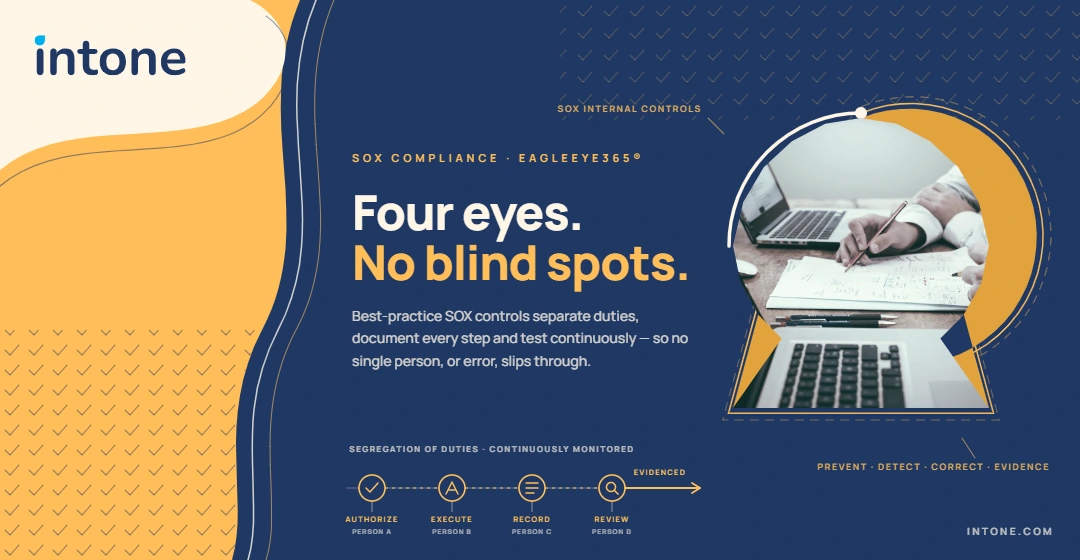
Segregation of duties is another important practice. Responsibilities for authorization, execution, recording, and review should be appropriately separated to reduce opportunities for errors or unauthorized activity.
Organizations can also use privileged activity monitoring to provide greater visibility into actions performed by users with elevated system permissions.
3. Maintain Clear Documentation
Clear documentation helps establish what each control is intended to accomplish, who owns it, how frequently it operates, and what evidence demonstrates its effectiveness.
A reliable audit trail can make it easier to trace control activity and support evidence management throughout the compliance lifecycle. Effective evidence collection also reduces the risk of missing documentation when auditors request support.
Organizations can further improve efficiency by using evidence automation to organize supporting information and automate evidence gathering rather than depending entirely on manual processes.
4. Conduct Regular Control Testing
Regular control testing helps determine whether controls are appropriately designed, implemented, and operating effectively.
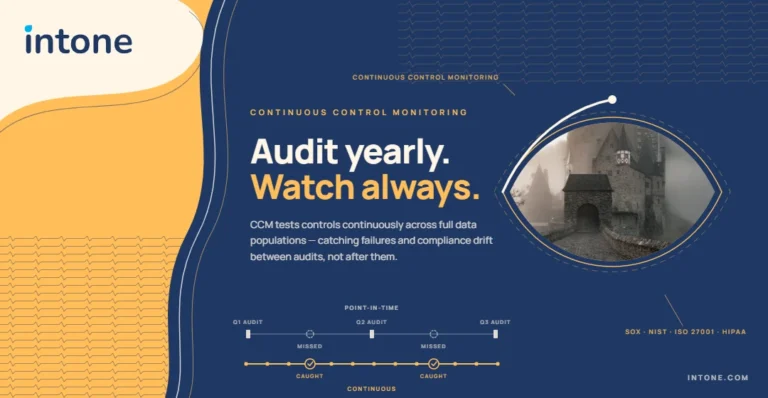
Organizations can supplement periodic testing with continuous controls testing and continuous monitoring. Instead of waiting until a scheduled review to identify a deficiency, continuous control monitoring can provide more frequent visibility into exceptions and potential control failures.
Technology can also support population auditing, allowing organizations to analyze larger volumes of transactions or control activity rather than relying exclusively on limited samples.
5. Use Automation and Technology
Automation can reduce repetitive compliance work while improving consistency across control processes. SOX automation can support activities such as control testing, evidence collection, workflow management, reporting, and issue tracking.
Audit automation and internal audit automation can also reduce administrative effort for internal audit teams. Automating repetitive processes may reduce reliance on manual PBC requests and allow teams to spend more time reviewing exceptions and higher-risk areas.
The objective is not to automate every control activity. Instead, organizations should identify appropriate processes where technology can improve efficiency, consistency, monitoring, and audit readiness.
6. Establish Control Standardization and Change Management
As organizations grow, maintaining consistent controls can become challenging. Control standardization can help establish common expectations for control design, ownership, testing, documentation, and remediation.
At the same time, organizations need effective change management. Changes to financial applications, business processes, access permissions, organizational structures, or regulatory requirements can affect existing controls.
Organizations operating across multiple regions should also consider regional compliance requirements and differences in applicable regulations when designing their control environment.
7. Build a GRC Monitoring Roadmap
A structured GRC monitoring roadmap can help connect governance, risk, and compliance activities with broader business objectives.
A centralized approach can provide visibility into controls, risks, issues, evidence, and compliance requirements. Executive dashboards can further support executive accountability by giving leadership a clearer view of control performance, outstanding issues, and compliance activity.
Regulatory compliance monitoring and vendor compliance monitoring can extend oversight beyond internal processes and help organizations maintain visibility into external requirements and third-party risks.
8. Integrate Controls Across the Enterprise
Modern SOX environments often depend on multiple financial applications, databases, workflows, and business systems. Native enterprise integration can help connect relevant data and control activity without requiring organizations to manage isolated monitoring processes.
Integrated monitoring can provide a more consistent view of controls across business units and help organizations identify exceptions that may otherwise remain distributed across separate systems.
Why Choose EagleEye365®?
Managing SOX compliance across complex environments requires visibility into controls, risks, evidence, and monitoring activities.
EagleEye365® provides a cloud-native platform designed to support SOX compliance, internal audit, and enterprise risk management. Its capabilities can help organizations move from periodic, manually intensive compliance processes toward a more continuous and technology-enabled approach.
The platform supports capabilities such as:
- Continuous control monitoring
- Automated control testing and monitoring
- Compliance and risk visibility
- Centralized control management
- Automated evidence collection
- Risk and issue management
- Customizable workflows
- Compliance monitoring and reporting
- Executive dashboards
- GRC monitoring
These capabilities can help organizations improve control visibility, strengthen compliance processes, support audit readiness, and reduce manual administrative work.
For additional information, see Intone’s related resource on Best Practices for Internal Controls for SOX Compliance.
Key Takeaways
- Effective internal controls are essential for SOX compliance and reliable financial reporting.
- Risk assessment helps organizations identify and prioritize financial reporting risks.
- Access controls and segregation of duties can reduce unauthorized activity and strengthen control environments.
- Clear documentation, evidence collection, and evidence management support audit readiness.
- Regular control testing helps organizations evaluate whether controls operate effectively.
- Continuous monitoring and continuous controls testing can provide more frequent visibility into control exceptions.
- Automation can support SOX compliance, audit automation, evidence gathering, and internal audit activities.
- Control standardization and change management can help maintain consistency as organizations evolve.
- GRC monitoring can connect governance, risk, compliance, controls, and evidence in a centralized environment.
- Technology can help organizations improve monitoring, reduce manual work, and strengthen compliance oversight.
FAQ’s
Internal controls for SOX compliance are processes and procedures designed to support the accuracy and reliability of financial reporting while preventing or detecting errors, unauthorized activity, and other risks.
The three common categories are preventive controls, detective controls, and corrective controls. Organizations may use these controls together to address different financial and operational risks.
Access controls help ensure that only authorized individuals can access financial systems and information. They can reduce the risk of unauthorized transactions, inappropriate changes, and misuse of privileged permissions.
Continuous control monitoring provides ongoing visibility into control activity and potential exceptions. This can help organizations identify weaknesses sooner than relying only on periodic control reviews.
Automation can support control testing, evidence collection, reporting, monitoring, and issue management. This can reduce repetitive manual work and improve the consistency of compliance activities.
Audit readiness refers to an organization’s ability to demonstrate that relevant controls are appropriately designed, implemented, documented, and operating effectively when an audit or assessment occurs.
Organizations can improve audit readiness by maintaining clear documentation, conducting regular control testing, maintaining an audit trail, organizing evidence, monitoring controls throughout the year, and addressing identified deficiencies promptly.
SOX compliance services can provide specialized guidance for risk assessment, control design, testing, documentation, monitoring, remediation, and compliance management. Technology-enabled services can also support evidence management and ongoing monitoring.
Consistent control documentation, testing, monitoring, and evidence can provide auditors with clearer information about how controls operate. This can support more efficient audit procedures and provide greater transparency into the control environment.
EagleEye365® provides capabilities for continuous control monitoring, automated control testing, evidence collection, risk management, compliance monitoring, and reporting to help organizations strengthen control oversight and maintain audit readiness.